


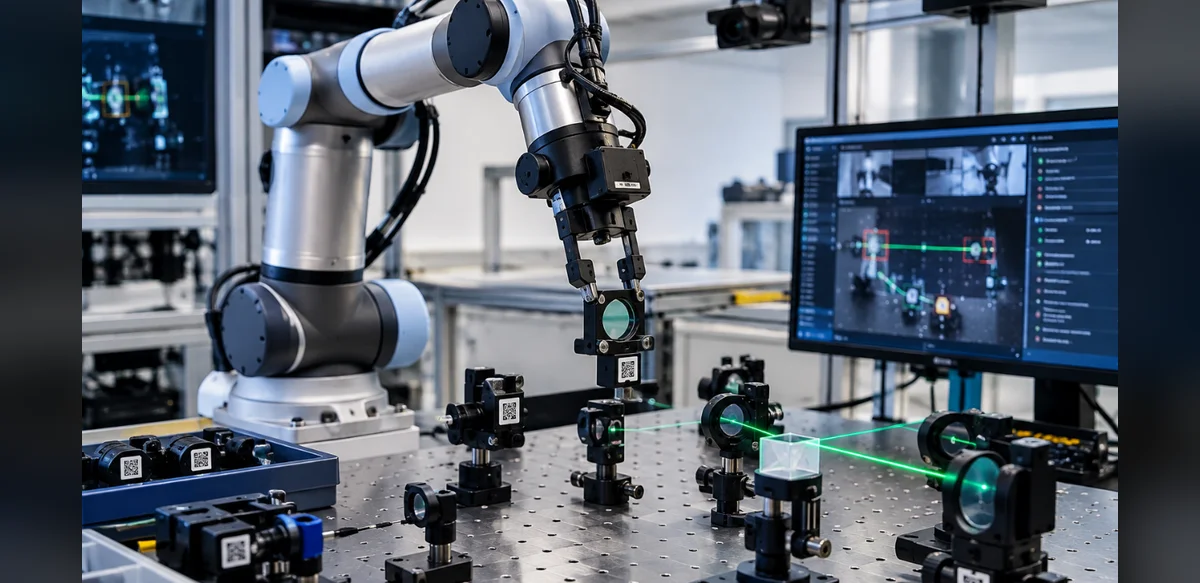
Researchers at the Massachusetts Institute of Technology have created an automated system designed to handle the assembly and alignment of laser cavities. The robotic optics laboratory operates independently to complete these tasks with high accuracy. In one demonstration the machine finished the process using fifty separate actions completed in less than thirty minutes.
The platform is also capable of restoring order to an experiment once external interference has altered the arrangement. After a disruption occurs the robot identifies the changes and performs the necessary adjustments to return the setup to a functional state. This ability reduces the need for constant human oversight during delicate optical work.
Such automation holds promise for speeding up the evaluation of different optical devices and materials. Laboratories could run more tests in shorter periods because the robot manages repetitive alignment steps without fatigue. The approach may prove especially useful in environments where precision is critical and manual handling risks introducing errors.
Looking ahead developers see opportunities for remote operation of these automated research spaces. Scientists located far from the physical equipment could direct experiments through digital interfaces while the robot executes the physical tasks on site. This model could expand access to advanced optical testing for teams without local specialized facilities.
The system integrates sensors and control algorithms that allow it to monitor component positions continuously. When misalignment is detected the robot calculates corrective movements and applies them methodically. Each maneuver is recorded so that the entire sequence can be reviewed or repeated if required.
By handling both initial construction and subsequent repairs the technology addresses two common challenges in optics research. Traditional methods often require skilled technicians to spend hours fine tuning equipment. The robotic alternative shifts that workload to an autonomous unit freeing personnel for other aspects of the project.
Testing has shown consistent results across multiple trials. The robot reliably produces working laser cavities and recovers from simulated disturbances without external guidance. These outcomes suggest the platform could serve as a foundation for broader automation in scientific laboratories focused on light based technologies.
Continued refinement of the control software may further reduce the time needed for each assembly cycle. Additional sensors could enhance the robot ability to detect subtle shifts in component placement. Over time such improvements might make fully unattended optical experiments a standard practice in research settings.
The development reflects a growing trend toward integrating robotics into experimental science. Automated systems like this one aim to increase throughput while maintaining the exacting standards demanded by optics work. As the technology matures it could influence how laboratories organize their daily operations and allocate human resources.
Overall the robotic optics laboratory represents a step toward more resilient and efficient research workflows. Its capacity to build align and restore laser cavities autonomously points to practical benefits for both academic and industrial applications involving optical components.


