

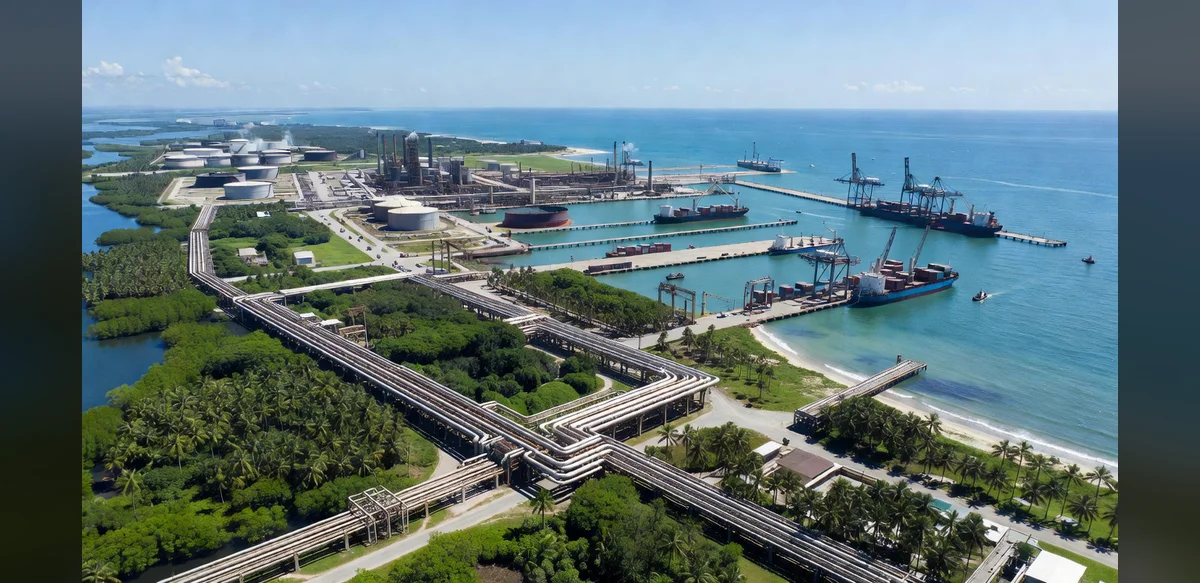
Mozambique has long been associated with a single major narrative in global energy discussions. Attention is now shifting toward broader economic developments that could reshape its role in the region. For years the focus remained on large offshore natural gas finds in the Rovuma Basin. International companies including TotalEnergies and Eni committed substantial capital to these projects, placing the country among leading African nations in future energy supply.
Beyond energy extraction, Mozambique is developing supporting industries that aim to create a more diversified platform. Infrastructure upgrades at ports and roads are underway to handle increased cargo volumes. Local processing facilities are being planned to convert raw resources into higher value products before export. These steps are intended to retain more economic benefit within the country rather than shipping unprocessed materials abroad.
Government policies have emphasized partnerships between foreign investors and domestic firms. Training programs for local workers focus on technical skills required in construction, engineering and operations. Such initiatives seek to build capacity that extends beyond individual projects and supports long term industrial growth.
Regional connectivity also plays a part. Improved links with neighboring countries facilitate trade in manufactured goods and agricultural products. Mozambique serves as a potential gateway for landlocked economies seeking access to maritime routes. This positioning strengthens its emerging status as an industrial platform for southern Africa.
Challenges remain, including the need for stable regulatory frameworks and continued investment in power generation. Addressing these areas is viewed as essential for sustaining momentum. Observers note that successful execution could position Mozambique as a model for resource rich nations transitioning toward broader manufacturing bases.
Recent data indicate rising interest from additional sectors such as logistics and light assembly. Investors cite competitive labor costs and improving business environments as factors. While progress is gradual, the combination of energy resources and infrastructure development provides a foundation for continued expansion.
Analysts project that by the end of the decade Mozambique could see measurable increases in industrial output if current trends hold. Emphasis on local content requirements aims to ensure communities benefit directly from new facilities. Environmental considerations are also being integrated into project planning to balance growth with sustainability.
Overall the narrative around Mozambique is evolving from a singular focus on gas discoveries toward a more comprehensive view of industrial potential. This shift reflects both the scale of investments already committed and the strategic choices being made to leverage those resources across multiple sectors.


