

The National Aeronautics and Space Administration has announced support for an innovative proposal involving groups of small spherical devices designed to navigate the subsurface environments of Saturn’s largest moon. These compact units would rely on ion propulsion to move through the complex network of caverns believed to exist beneath the surface.
The concept centers on deploying multiple lightweight aerobots that could operate in coordinated swarms. Each unit is envisioned as a sphere equipped with systems allowing controlled flight in low-gravity and dense atmospheric conditions. The approach aims to enable detailed examination of areas that are difficult to reach with conventional landers or orbiters.
Engineers involved in the project emphasize the advantages of using ion-based thrust for sustained movement inside enclosed spaces. This method offers precise maneuvering without the need for large fuel reserves, making it suitable for extended operations in challenging terrain. The spherical shape is intended to provide stability and protection while allowing the devices to roll or float as needed.
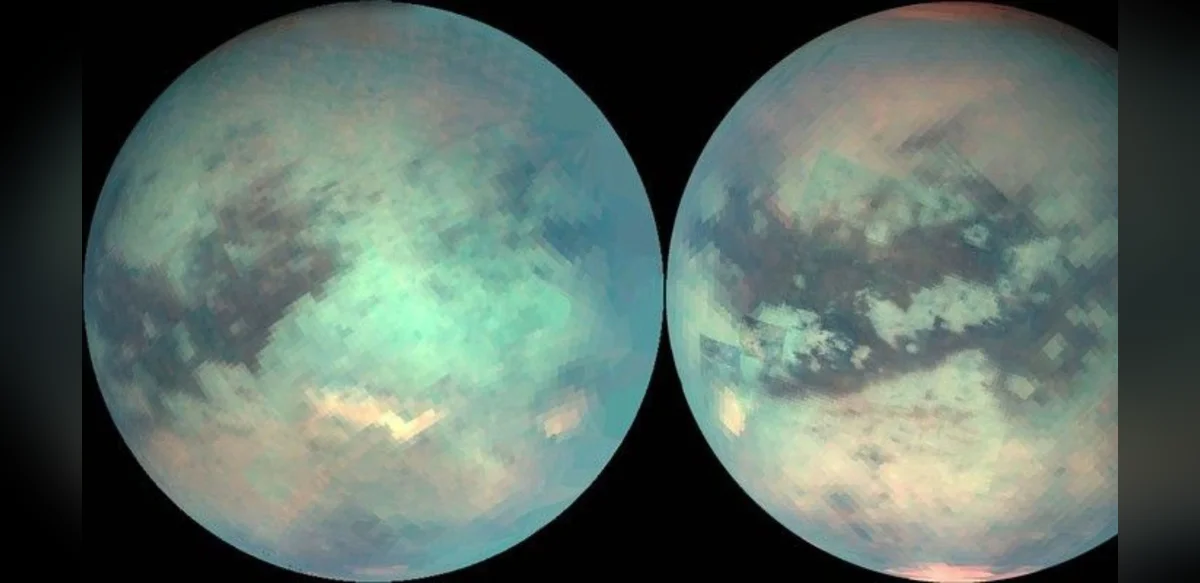
Titan presents unique environmental features including thick haze layers and potential liquid hydrocarbon lakes on the surface. The underground caves add another layer of complexity that requires specialized exploration tools. The funded study will assess whether such aerobots can withstand the cold temperatures and chemical composition found in these regions.
Initial phases of the work will focus on computer modeling and laboratory tests to refine the propulsion and navigation systems. Researchers will examine how the devices might communicate with each other and with a parent spacecraft overhead. Data collection priorities include mapping cave structures and identifying any signs of geological activity.
The proposal builds on prior missions that have studied Titan from orbit and during brief surface contact. By shifting focus to aerial swarms, the effort seeks to gather information from multiple locations simultaneously. This could improve understanding of the moon’s internal structure and its potential to harbor complex chemistry.
Funding for the concept comes through a program that supports early-stage ideas with high scientific promise. Teams will now work to demonstrate key technologies in simulated conditions that replicate Titan’s atmosphere. Success in these tests could lead to further development toward a future mission.
The overall goal remains to expand knowledge of outer solar system bodies through creative engineering solutions. Spherical aerobots represent one possible tool for accessing environments that have remained largely unexplored. Continued progress on this project will depend on results from the current study phase.


