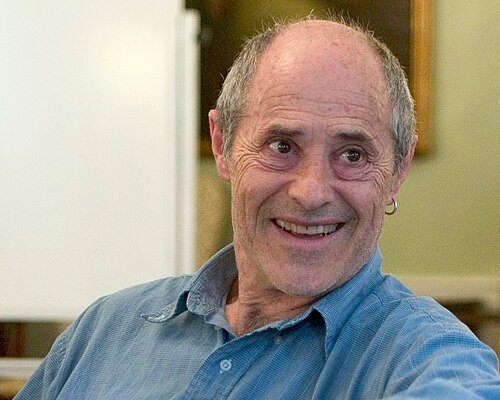
Brian Rotman, a mathematician, semiotician, and occasional playwright, passed away at 87. He influenced perspectives on mathematics as a cultural framework through seven books published from 1966 to 2008. His 1987 book, Signifying Nothing, presented a novel interpretation of zero, illustrating how the concept of absence exposes structures in human understanding. Ad Infinitum … The Ghost in Turing’s Machine, released in 1993, suggested that symbols and voids operate more like spectral elements than tangible objects. As a cultural theorist, he investigated the roles of written marks and physical movements in shaping cognition. His forward-thinking 2008 publication, Becoming Beside Ourselves, analyzed how online technologies convert individual identity into a multifaceted, networked form. Born to a Jewish family in London’s East End, Rotman was the child of Bessie (née Roberts) and Joseph Rotman, who operated a small shop below their residence on Brick Lane. He attended Central Foundation Boys’ School in Shoreditch and became the first family member to complete high school and pursue higher education. Rotman earned his bachelor’s degree in mathematics from the University of Nottingham in 1959. He then taught at Sir John Cass College (now London Metropolitan University) while obtaining a master’s from the University of London. During his doctoral studies, which he completed at the University of London in 1967, he joined the mathematics faculty at Bristol University, remaining there for 20 years. In 1978, he wed Lesley Ferris, an American theater director and academic, and they had two children, Phoebe and Ben. In the early 1980s, the couple operated the Mouth and Trousers theater group at the York and Albany pub in Camden, with Rotman writing scripts and constructing sets while Ferris directed. His later work, A Land Without People, was staged at London’s Courtyard theater in 2015. The family relocated to Memphis, Tennessee, in 1990, where Rotman pursued independent research, including a fellowship at Stanford University. He took a professorship in interdisciplinary studies at Louisiana State University in 1996, followed by a position in comparative studies at Ohio State University in 1998. Rotman authored over 30 scholarly papers and delivered talks at institutions such as the Massachusetts Institute of Technology, Duke University, and the University of California, Berkeley. Known for his wit, intellect, and kindness, he attracted dedicated graduate students, many of whom formed lasting friendships with him. Peers recall him as an astute commentator fond of debating politics and philosophy. Shortly after returning to London with his wife in 2021, Rotman received a diagnosis of advanced kidney disease. He is survived by Lesley, his children Phoebe and Ben, three grandchildren—Froy, Kolo, and Zemi—and his sister, Helen.