

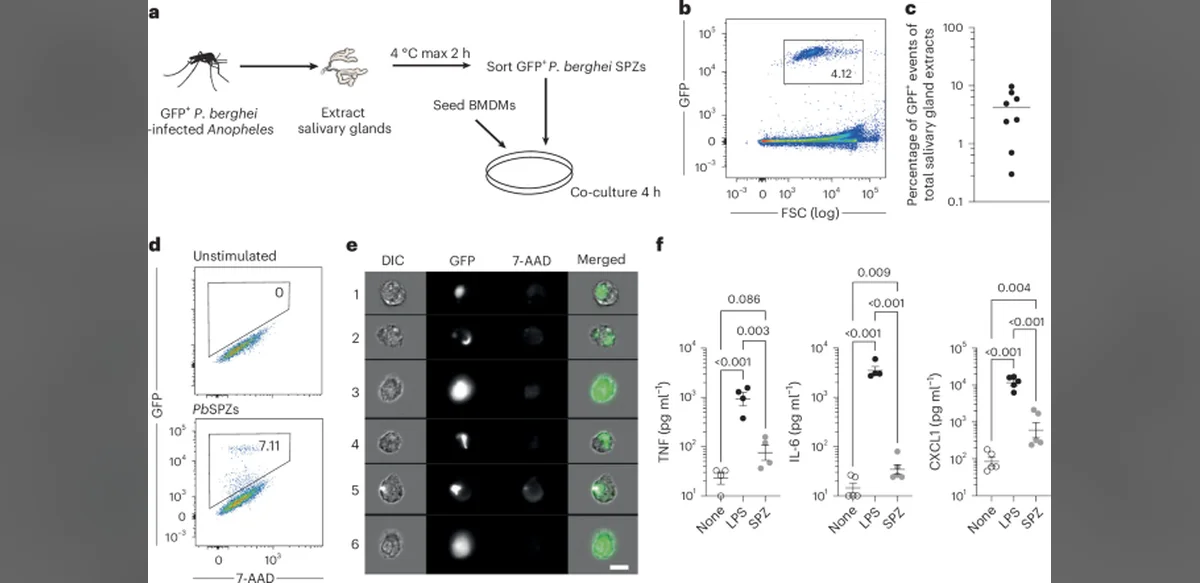
A recent study published in Nature Microbiology has shed new light on the early immune responses triggered by the malaria-causing parasite Plasmodium. Researchers found that sporozoites, the infectious form of the parasite transmitted by mosquitoes, initiate innate immune activation specifically through the damage they cause while traversing host cells.
This cell traversal process leads to membrane wounding in affected tissues. The resulting damage is detected by the immune system, particularly through the involvement of gamma delta T cells. These cells play a critical role in sensing the injury and initiating a cascade that supports the development of protective responses.
The findings indicate that this wounding response is essential for the priming of CD8 positive T cells, which are key components of adaptive immunity. Without this initial sensing step, the full protective potential of the sporozoites appears diminished. The mechanism helps explain why sporozoites can elicit strong immune reactions despite their brief presence in the body.
Scientists note that the process underscores the inherent immunogenicity of these parasite stages. By linking membrane damage directly to T cell activation, the research provides a clearer picture of how natural exposure or certain vaccine candidates may confer protection against malaria infection.
The study emphasizes the importance of innate immune pathways in bridging to longer-term adaptive defenses. It suggests that strategies aiming to mimic or enhance this traversal-induced signaling could improve future immunization approaches. Further investigations are expected to explore how this pathway operates across different host environments and parasite strains.
Overall, the work contributes to a deeper understanding of malaria immunology and may inform efforts to develop more effective interventions against the disease.


