

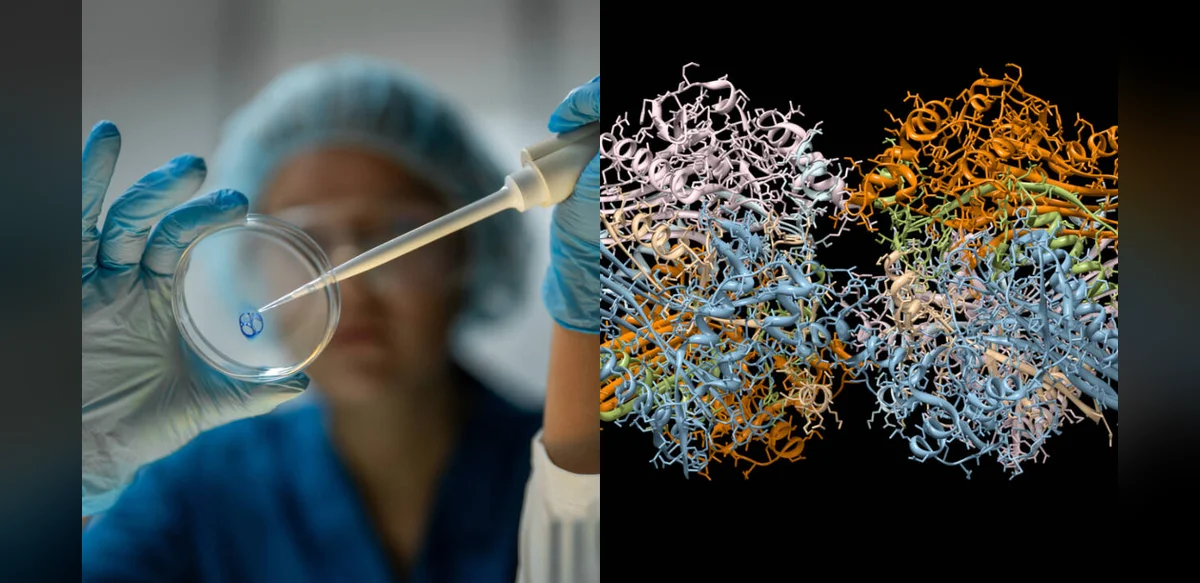
A team of researchers has successfully reconstructed proteins dating back approximately 160 million years in an effort to address the growing challenge of antibiotic-resistant bacteria. The work focuses on ancient molecular structures that may offer new mechanisms for combating infections that current drugs can no longer treat effectively.
Antibiotic resistance has become a major global health concern, with many common infections proving increasingly difficult to cure. Health organizations worldwide have highlighted the urgent need for novel approaches, as the pipeline of new antibiotics remains limited. This latest study explores an unconventional source by looking far into the evolutionary past.
The scientists selected protein sequences from organisms that lived during the Jurassic period. Using computational methods and genetic databases, they inferred the likely amino acid structures of these ancient molecules. Laboratory synthesis then allowed them to produce functional versions of the proteins for testing.
Initial experiments showed that several of the revived proteins exhibited strong activity against a range of modern bacterial strains, including those resistant to multiple existing antibiotics. The proteins appeared to disrupt bacterial cell membranes in ways that differ from conventional treatments, potentially reducing the likelihood of rapid resistance development.
Researchers emphasized that the approach does not involve bringing back extinct organisms but rather recreating specific molecular components based on evolutionary data. This distinction is important for both scientific accuracy and public understanding of the project.
Further laboratory tests are underway to determine the stability, safety, and precise mode of action of the proteins. Animal studies will be required before any consideration of human clinical trials. The team noted that translating these findings into usable medicines could take many years.
The study contributes to a broader field known as paleogenomics or ancient biomolecule research. Similar techniques have previously been applied to understand historical diseases and evolutionary biology. In this case, the focus remains squarely on practical medical applications.
Experts in microbiology have welcomed the research as an innovative addition to ongoing efforts against antimicrobial resistance. They caution, however, that many promising early-stage discoveries do not ultimately reach clinical use due to issues of toxicity, production costs, or limited effectiveness in living organisms.
Funding for the project came from public research grants aimed at supporting high-risk, high-reward scientific inquiries. The team plans to publish detailed results in a peer-reviewed journal and share sequence data with the wider scientific community to encourage further investigation.
If successful, the method could open new avenues for drug discovery by systematically exploring molecular diversity across deep time. It may complement rather than replace traditional screening of natural products and synthetic chemistry approaches.
Public health authorities continue to stress the importance of responsible antibiotic use alongside the search for new treatments. Measures such as improved diagnostics, vaccination programs, and infection control remain essential components of any comprehensive strategy.
The current work represents one example of how interdisciplinary methods, combining evolutionary biology, bioinformatics, and microbiology, can generate fresh ideas for longstanding medical problems. Continued monitoring of results will determine whether these ancient proteins advance beyond the laboratory stage.


