

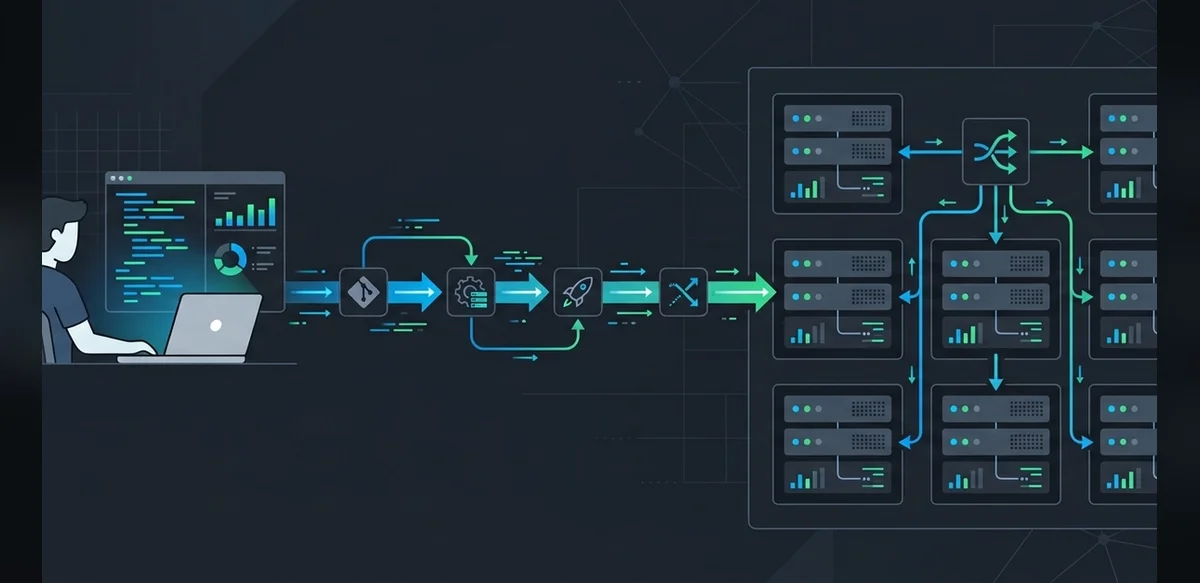
After development comes deployment, whether on-premise or in a cloud based environment. And then we face the critical task of determining the right amount of computing resources an application needs to run efficiently. Many teams still rely on rough estimates, which can lead to either over-provisioning that wastes money or under-provisioning that causes slowdowns and outages.
Accurate resource planning begins with understanding the application’s behavior under different loads. Developers and operations teams should collect baseline data during testing phases. This includes measuring CPU usage, memory consumption, disk input output rates, and network traffic patterns. Without these measurements, any allocation decision remains speculative.
Cloud platforms offer tools that simplify this process. Auto scaling features can adjust capacity automatically based on real time demand. However, these mechanisms work best when initial thresholds are set correctly. Teams must analyze historical usage data to establish sensible starting points rather than default values.
On premise deployments present additional challenges because hardware purchases involve longer lead times and higher upfront costs. Capacity planning here requires forecasting future growth more carefully. Organizations often conduct stress tests that simulate peak traffic to identify breaking points before they occur in production.
Monitoring solutions play a central role in ongoing optimization. Continuous observation of resource utilization helps detect trends that might not appear during initial testing. Alerts can notify teams when consumption approaches limits, allowing proactive adjustments instead of reactive firefighting.
Container orchestration systems have changed how resources are assigned. These platforms allow fine grained control over the amount of processing power and memory allocated to each service. Proper configuration prevents one component from starving others of necessary resources during high demand periods.
Cost management also benefits from precise sizing. Overestimating requirements leads to unnecessary expenses that accumulate over time. Underestimating can result in service level agreement violations and lost user trust. Both scenarios affect the overall return on investment for the application.
Best practices include running load tests that mirror expected production traffic as closely as possible. Synthetic workloads should incorporate realistic data volumes and user behaviors. Results from these tests provide the foundation for initial resource specifications.
Regular reviews of allocated resources remain essential even after deployment. Application usage patterns can shift due to new features, seasonal events, or changes in user base size. Periodic audits ensure that allocations stay aligned with actual needs rather than outdated assumptions.
Documentation of resource decisions helps maintain consistency across teams. Recording the rationale behind each choice allows future staff to understand why certain limits were set. This knowledge transfer reduces the risk of repeating past mistakes during scaling operations.
Security considerations intersect with resource planning as well. Insufficient capacity can make systems more vulnerable to denial of service attacks. Adequate headroom provides buffer against unexpected spikes, whether malicious or organic in nature.
Training for development and operations personnel improves outcomes in this area. Understanding how code changes affect resource consumption enables better predictions during the design phase. Cross functional collaboration between these groups leads to more reliable applications overall.
Industry standards and benchmarks offer reference points when internal data is limited. Comparing similar applications in comparable environments can guide initial estimates. These external references should always be validated against the specific context of the current project.
Ultimately, moving away from guesswork requires investment in measurement, testing, and continuous improvement processes. The effort pays dividends through stable performance, controlled costs, and reduced operational incidents over the application’s lifetime.


