


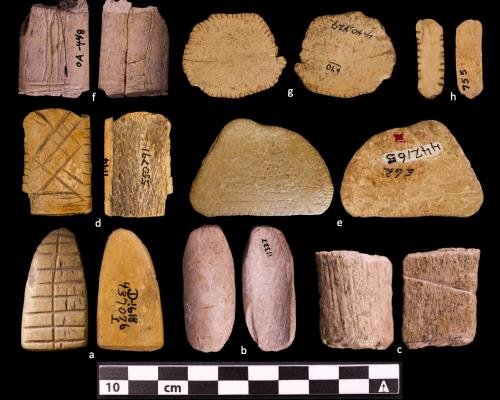
According to a new study, Native American hunter-gatherers engaged in games involving dice for entertainment and wagering over 6,000 years before such activities emerged elsewhere. The research claims these items were produced and utilized on the western Great Plains of North America toward the close of the last ice age, exceeding 12,000 years ago. Previously, experts believed the oldest dice originated in Bronze Age civilizations in Mesopotamia and the Indus Valley.
Study author Robert Madden stated that historians have typically viewed dice and concepts of probability as developments from the Old World. However, archaeological evidence reveals that ancient Native American communities intentionally created tools to generate random results and applied them in organized games millennia earlier than thought. This implies these groups had a fundamental grasp of chance, randomness, and probability, making them pioneers in humanity’s development and use of these ideas.
The research highlights how games of chance and betting enabled unrelated groups to connect, trade items, share knowledge, form partnerships, and build social ties. Madden, a doctoral candidate in archaeology at Colorado State University, noted that while these early people were not conducting formal studies in probability, they deliberately produced, observed, and depended on random results through consistent, rule-driven methods that utilized probabilistic principles, like the law of large numbers. This is significant for comprehending the worldwide evolution of probabilistic reasoning.
The study identifies the earliest instances from Late Pleistocene sites in Wyoming, Colorado, and New Mexico. These two-sided dice, up to 12,800 years old, were made from wood or bone and likely thrown in sets onto a surface. Madden’s work involved reevaluating artifacts in collections, often misidentified as game pieces or disregarded entirely, arguing they functioned as dice.
In an interview on CSU’s The Audit podcast, Madden described methodically searching online databases and libraries for these items, likening it to a treasure hunt. After three years, he assembled a dataset tracing the practice from the documented historical period over the past 2,000 years back to the Late Pleistocene, about 12,000 years ago—over 6,000 years earlier than Old World examples.
Although the paper refers to gambling, it differs from modern versions, such as casino betting where odds favor the house. Instead, these were direct contests between individuals with equal chances, serving as a means of exchange, especially among infrequently interacting groups. The study, titled Probability in the Pleistocene, appears in the journal American Antiquity.

