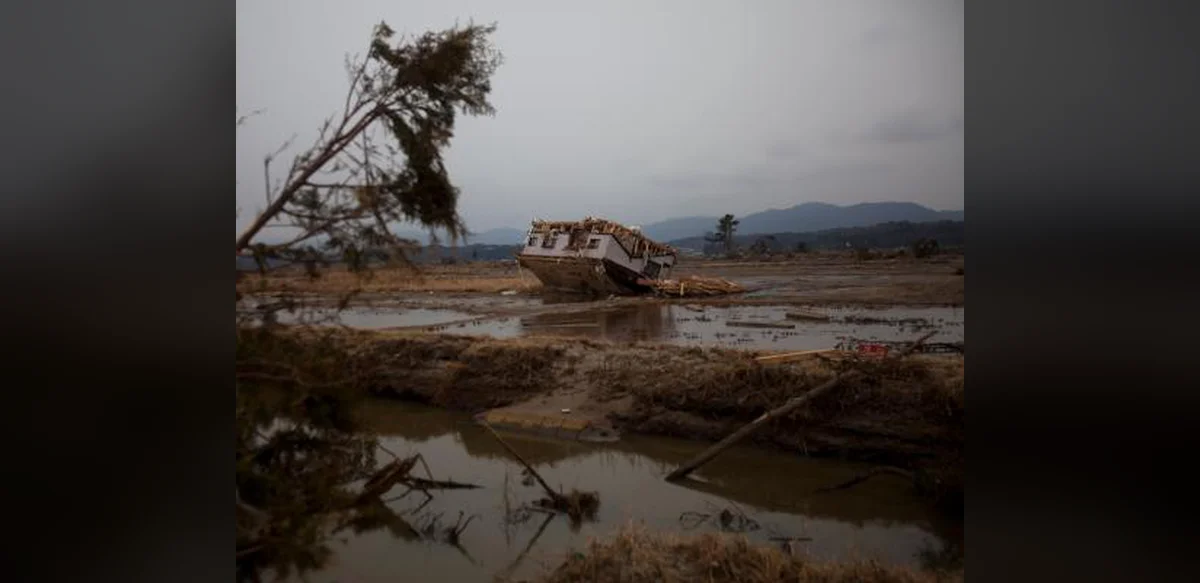
More than 15 years have passed since the catastrophic Tohoku earthquake and tsunami hit Japan, claiming nearly 20,000 lives and causing the Fukushima Daiichi nuclear accident. A new examination of video recordings indicates that the region’s sediment-heavy shoreline significantly increased the tsunami’s destructive impact. Researchers led by Patrick Sharrocks at the University of Leeds analyzed aerial videos and satellite imagery from before and after the event to assess the wave’s velocity, form, and strength. They observed that as the surge moved across paddy fields rich in mud, it shifted from a swift, transparent water stream to a viscous, sludge-filled mass. In a report published in the Journal of the Geological Society, the team describes how this heavy, rapid mud mixture applied much greater pressure than a pure water flow, leading to extensive structural damage and higher casualty rates. Such flows resemble the hazardous mudslides that occur on volcanic slopes when water combines with loose material. The scientists suggest revising evaluations of tsunami risks to account for the heightened dangers in sediment-rich coastal areas, and applying these insights to guide development choices in vulnerable zones.