


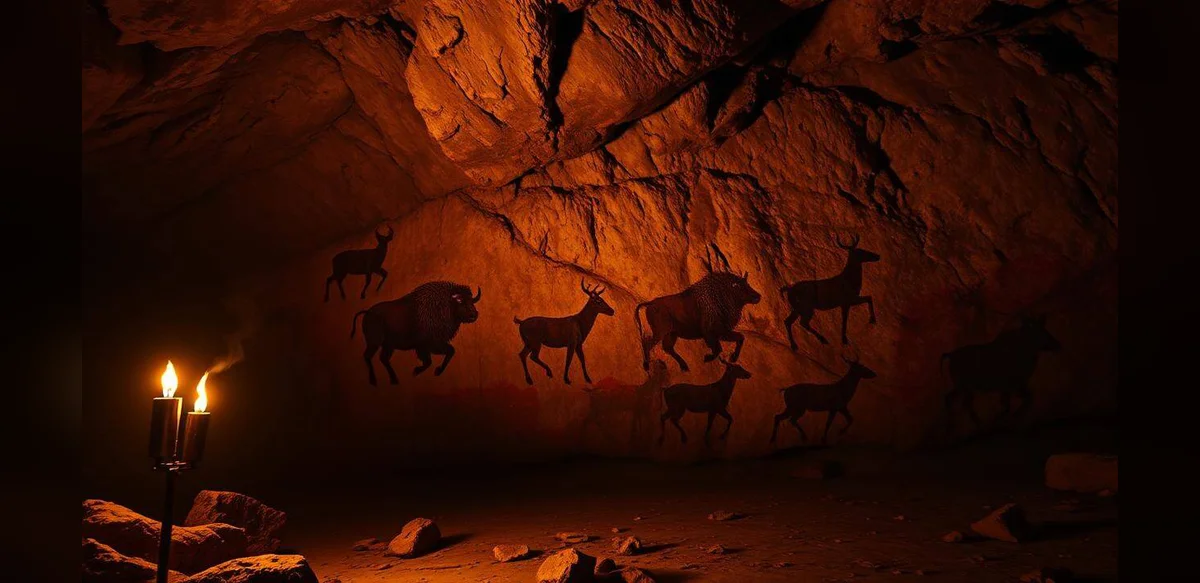
In 1940, four teenagers and their dog named Robot accidentally found the Lascaux Cave in the French countryside. This site contained remarkable prehistoric artworks, often called the ‘Sistine Chapel of Prehistory,’ created approximately 17,000 years ago.
The discovery occurred near Montignac when the dog investigated a hole left by a fallen tree. The young people widened the opening and entered a vast underground chamber. Using lights, they saw walls covered in colorful images of animals in motion.
These artworks demonstrated the advanced skills of Upper Paleolithic humans. The cave holds around 2,000 figures, including horses, deer, and the notable Hall of the Bulls, made with natural pigments like red ochre and charcoal. Experts view it as a key example of Ice Age art, offering insights into ancient European wildlife and symbolism.
Recognized by UNESCO as part of the Prehistoric Sites and Decorated Caves of the Vézère Valley, Lascaux represents a major archaeological landmark.
After World War II, the cave attracted numerous visitors, but human presence caused damage through increased carbon dioxide and humidity, leading to mold and crystal growth. To protect it, officials closed the original site to the public in 1963.
Replicas were constructed nearby, allowing people to view the art without harming the originals. This approach has become a global standard for preserving cultural heritage.
The story highlights how an ordinary outing led to an extraordinary find, driven by curiosity and exploration.

