

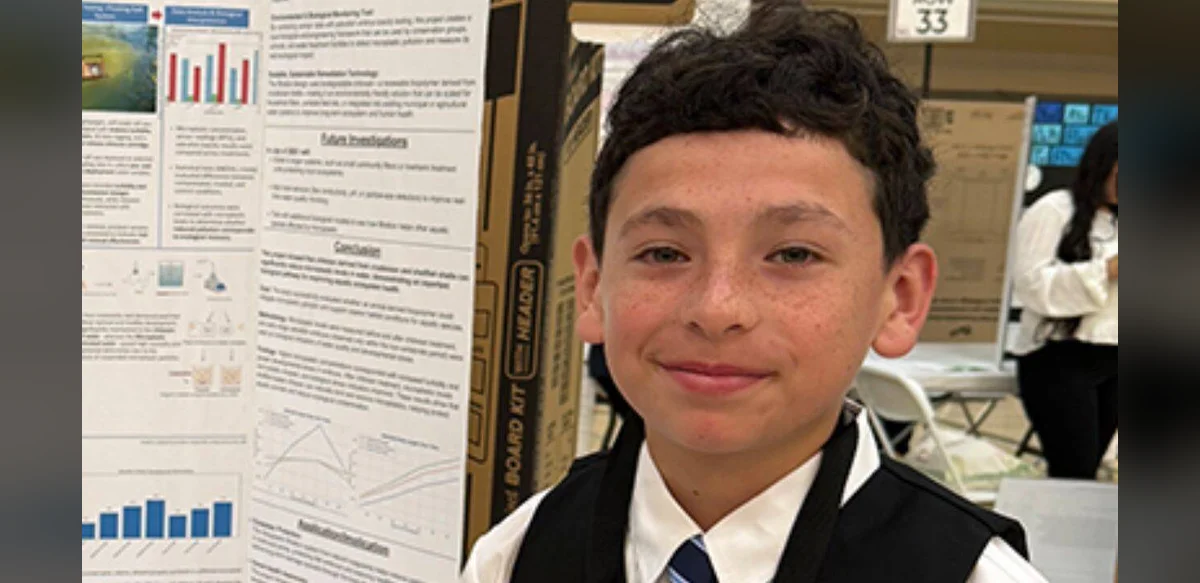
A seventh-grade student from La Joya, Texas, has developed an innovative approach to address water pollution by repurposing waste from shellfish. The project centers on the extraction and application of chitosan, a substance derived from discarded shells. Through careful collection of these shells, the student produced chitosan powder and conducted tests to evaluate its impact on contaminated water sources.
The experiments demonstrated that the chitosan powder enhanced water clarity when introduced to polluted samples. Additional observations involved zebrafish embryos, where the treated water showed positive effects compared to untreated conditions. These results highlighted the potential of the material in improving water quality under controlled laboratory settings.
Building on the initial findings, the student designed a prototype raft intended to support automated processes for monitoring and treating water bodies. The device aims to integrate the chitosan application with ongoing assessment tools, allowing for more efficient handling of environmental challenges in aquatic environments.
The work reflects a hands-on exploration of sustainable practices by utilizing readily available waste materials. By focusing on shellfish shells that would otherwise be discarded, the project illustrates a practical method for resource recovery. The testing phases provided measurable outcomes related to clarity and biological responses, contributing to a better understanding of the powder’s properties in real-world applications.
Further details of the prototype include features for deployment in various water settings, emphasizing automation to reduce manual intervention. This aspect of the project combines elements of material science with engineering principles to create a functional tool. The overall effort underscores the role of student-led initiatives in exploring solutions to pressing issues like water contamination.
Throughout the development process, the student gathered shells from local sources and processed them into a usable powder form. Subsequent trials involved systematic introduction of the powder into different water samples to track changes over time. The clarity improvements were noted through visual and instrumental assessments, while the embryo studies offered insights into biological compatibility.
The prototype raft represents an extension of these laboratory results into a potential field application. Its design incorporates mechanisms for continuous monitoring, ensuring that treatment levels can be adjusted based on detected conditions. This integration aims to streamline the purification process and make it more adaptable to varying pollution levels.
In summary, the project showcases a methodical approach to transforming waste into a beneficial resource for water treatment. The combination of material production, experimental validation, and prototype development provides a comprehensive view of the student’s contributions. Such initiatives highlight opportunities for young researchers to engage with scientific methods and environmental concerns in meaningful ways.


