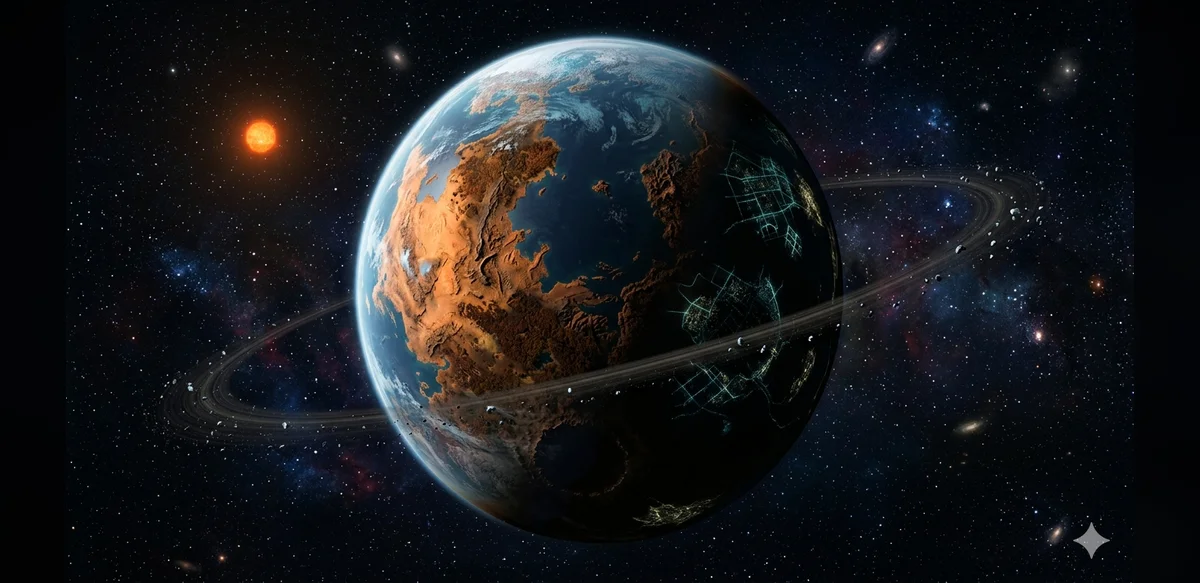
New research highlights how carbon cycles operate on planets beyond our solar system. This has significant implications for identifying worlds capable of supporting life. Water plays a vital role not just in fostering life but also in regulating planetary climates. Studies of distant planets show that insufficient water prevents the formation of a reliable carbon cycle, essential for managing atmospheric carbon dioxide. On Earth, this is known as the carbonate-silicate cycle, acting like a natural climate control system. It involves interactions among the atmosphere, surface, and interior. Rainfall absorbs carbon dioxide, forming mild acid that erodes rocks, incorporating carbon into minerals. These are then subducted via plate tectonics, with volcanoes later releasing carbon dioxide back into the air. A recent study on carbon cycling and habitability of large Earth-like exoplanets emphasizes this connection, noting that limited surface water reduces rock weathering, weakening the mechanisms that ensure climate steadiness. Without adequate water, the cycle falters, potentially leading to extreme freezing or heating. Researchers stress that even planets in the habitable zone—where liquid water could theoretically exist—may not support life if water is scarce. The study suggests that habitability assessments for rocky worlds should consider active geological processes, not just orbital distance from their star. This shifts the focus in the hunt for extraterrestrial life. Traditionally, astronomers prioritize planets in the habitable zone. However, these findings indicate that orbital position alone is insufficient; planets need enough water to maintain geological cycles that stabilize atmospheres. As experts from NASA observe, enduring climate balance requires equilibrium in carbon flows. Water is key to this equilibrium, and its absence causes severe climate swings. Going forward, astronomers will evaluate additional factors beyond location when assessing exoplanets. Upcoming missions will aim to identify atmospheres and geological features that support steady carbon cycles. Ultimately, water is critical for both life and planetary equilibrium. Planets with appealing traits but inadequate water cannot sustain habitability long-term due to disrupted carbon processes. Ongoing research is refining criteria for potential habitability, moving past basic water presence to include intricate chemical, geological, and climatic dynamics. This advances efforts to address a fundamental question: Is there life elsewhere in the cosmos?