

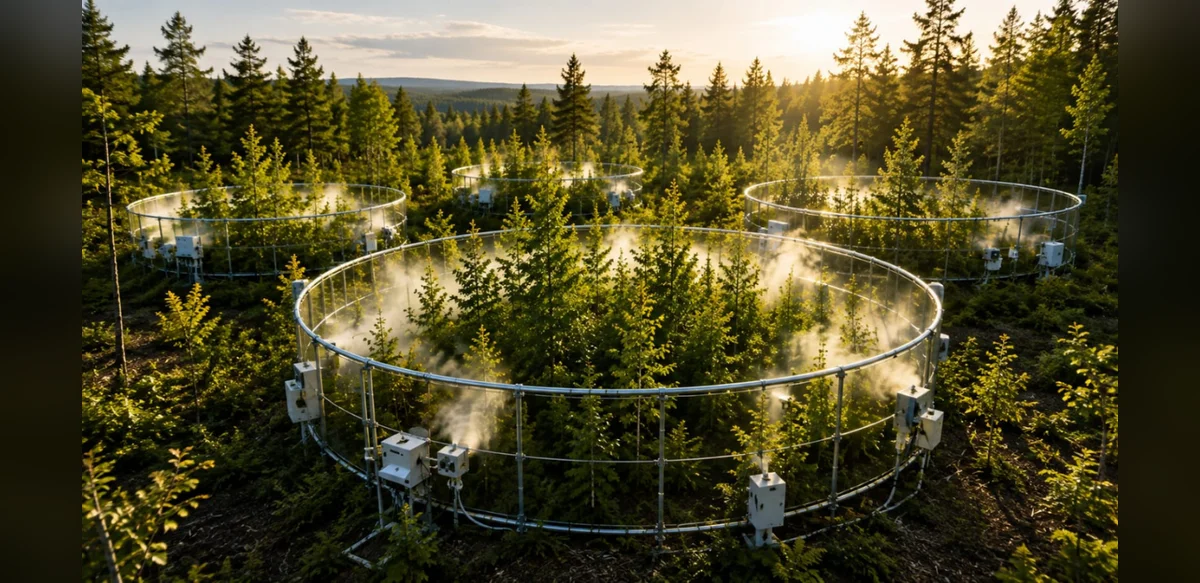
A long-running experiment conducted in a Wisconsin forest examined how elevated levels of carbon dioxide and ozone affect tree communities and overall ecosystem function. Researchers exposed sections of the woodland to increased concentrations of these gases for a period of eleven years, tracking changes in growth rates and carbon storage.
Results indicated that higher carbon dioxide levels led to a notable rise in forest productivity, with gains reaching thirty-nine percent compared to control areas. This increase also supported greater amounts of carbon being held within the ecosystem over the full duration of the study.
In contrast, elevated ozone produced the opposite outcome. Areas with added ozone showed clear reductions in productivity and lower overall carbon content in the ecosystem. The presence of ozone appeared to counteract some of the benefits observed from carbon dioxide alone.
When both gases were increased together, the pattern remained consistent with carbon dioxide promoting growth while ozone acted as a limiting factor. The combined exposure demonstrated how these atmospheric components interact in opposing ways within forest environments.
The findings underscore the intricate ways forests respond to shifts in air composition. Such responses involve multiple processes that can either enhance or diminish the capacity of woodlands to store carbon, depending on the balance of gases present.
Over the eleven-year span, measurements consistently captured these dynamics across different forest communities. The data provided insight into long-term patterns rather than short-term fluctuations, offering a clearer view of sustained impacts.
Scientists noted that productivity gains from carbon dioxide were measurable yet not uniform across all conditions. Ozone exposure introduced variability that reduced net benefits in affected zones.
This type of controlled exposure helps clarify the role of individual atmospheric factors in shaping forest health and carbon cycles. The experiment highlighted both stimulatory and inhibitory effects without suggesting simple outcomes.
Overall, the Wisconsin study contributes to understanding how ongoing changes in air quality might influence natural systems. Forests serve as important carbon reservoirs, and their reactions to multiple gases illustrate the complexity involved in predicting future ecosystem behavior.
The eleven-year timeframe allowed observation of cumulative effects that shorter studies might miss. Productivity increases tied to carbon dioxide were evident, yet ozone consistently moderated those advances in the tested plots.
Such research emphasizes the need to consider interactions among atmospheric elements when assessing environmental influences on vegetation. The results from this project remain focused on the measured changes in growth and carbon content within the forest setting.


