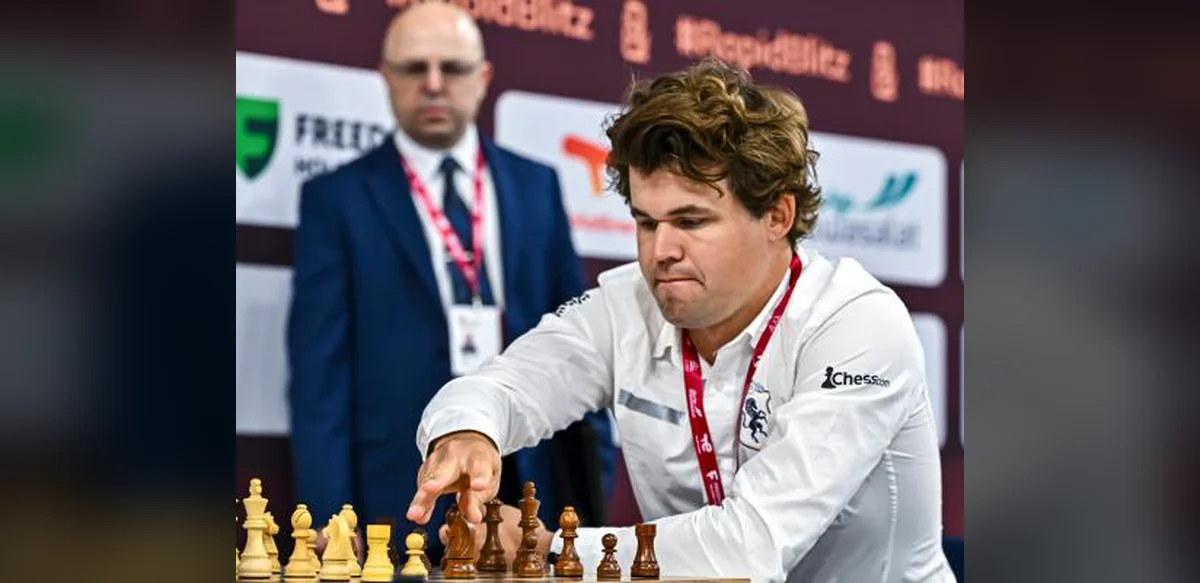
Magnus Carlsen, ranked number one globally, posted his weakest performance since 2015 last week. The 35-year-old finished fourth among six players in the $178,000 Norway Chess tournament in Oslo, dropping four of ten games. Several factors contributed to the result. Earlier editions took place in remote Stavanger, away from local expectations in Oslo. Carlsen, now father to an infant son, appeared underprepared for several rounds and spent excessive time on early moves. The time control allowed 40 moves in two hours, then ten seconds per move thereafter. Drawn games moved to Armageddon format, granting White ten minutes and Black seven, with a draw counting as a win for Black. Scoring awarded three points for a classical win, one for a draw, zero for a loss, half a point for an Armageddon win and zero for an Armageddon loss. Carlsen occasionally used the confession booth to share reflections. In one lost game he described his day as waking, breakfast, a nap and feeling old. He prepared carefully against Indian prodigy Gukesh Dommaraju, the 20-year-old who succeeded him as world champion yet finished last in Oslo. Their final-round encounter featured precise endgame technique with bishop against knight and an outside passed pawn, despite time pressure. Gukesh’s compatriot Praggnanandhaa Rameshbabu recovered from last place after six rounds with four consecutive wins, aided by the scoring system, to claim first place. Praggnanandhaa’s form remains inconsistent; strong results in 2025 positioned him among 2026 Candidates favorites, yet he did not contend there. His Oslo performance lifted him to eleventh in live ratings while Gukesh sits twenty-fifth. Carlsen has held the top ranking unchallenged for fifteen years. His next event is the Fide World Team Rapid and Blitz championships beginning 17 June in Hong Kong. Last year’s edition occurred in central London, where the blitz title went to the top-seeded WR team backed by German sponsor Wadim Rosenstein. Six-player teams must include women, junior and amateur boards. WR again leads seeding and fields the highest-ranked woman, Hou Yifan, alongside Carlsen. The €500,000 event also showcases three young prospects expected to shape chess in the 2030s: Turkey’s Yagiz Kaan Erdogmus, fifteen, Argentina’s Faustino Oro, twelve, and Russia’s Roman Shogdzhiev, eleven. Erdogmus and Oro have already earned grandmaster titles. Shogdzhiev set an age record last week by securing his first of three required grandmaster norms at the Asian Championship in Ulaanbaatar, Mongolia. He remained unbeaten against six grandmasters and drew confidently against India’s Krishnan Sasikiran in the final round. Shogdzhiev now targets the record held by the United States’ Abhimanyu Mishra at twelve years and four months. He has roughly twelve months to complete two further norms and reach a 2500 rating. The milestone would carry added significance after Oro missed his final norm earlier this year in Moscow before qualifying in Sardinia last month. Shogdzhiev, born in Elista, Kalmykia, learned chess from his father at age four. His mother paused work to homeschool him, and the family relocated to Moscow for better opportunities. He received special coaching, including exclusive blitz events against established masters. Historical parallels exist with Soviet support for Mikhail Botvinnik in the 1930s and Anatoly Karpov in the 1960s. Russia, currently without players in the global top ten, appears focused on restoring dominance, positioning Shogdzhiev as a central figure. The eleven-year-old works with seven grandmaster coaches.