

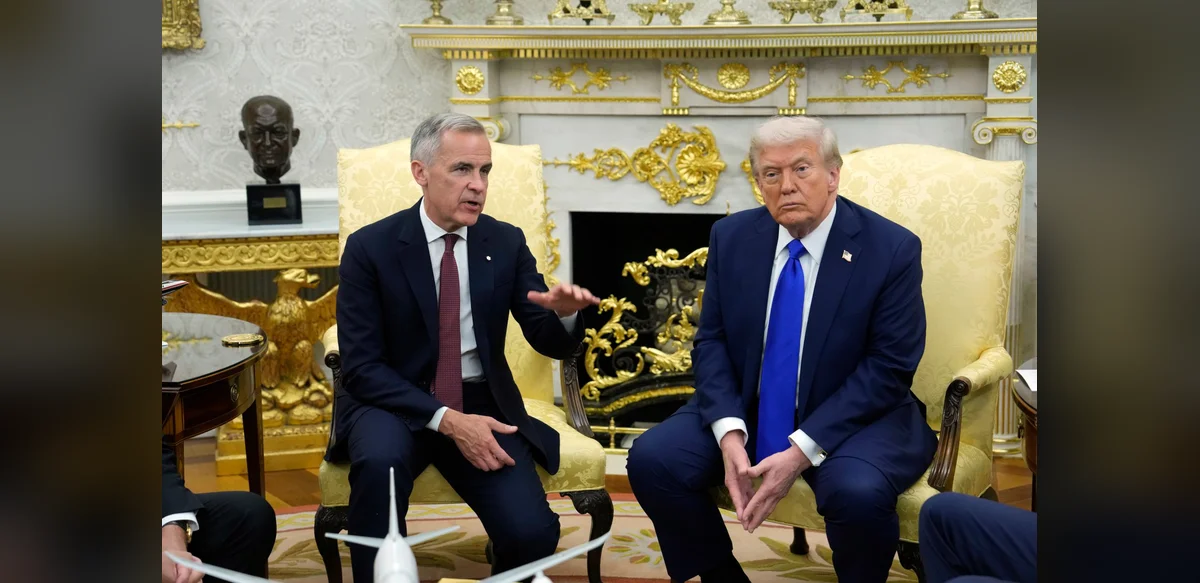
Relations between the United States and Canada face potential further strain if new tariffs take effect at one minute past midnight on Wednesday. Officials from both nations are engaged in final discussions aimed at preventing the application of fifty percent duties on approximately twenty billion dollars in Canadian goods. The talks represent an attempt to reach an understanding before the deadline passes and the measures begin.
The proposed tariffs have prompted urgent conversations between the two countries as the cutoff time draws near. Both sides appear focused on finding common ground that could lead to a pause or cancellation of the planned taxes. Such an outcome would help preserve existing trade flows and avoid immediate economic pressure on affected sectors.
Observers note that the current deadline creates a narrow window for resolution. Any agreement reached in these hours could stabilize cross border commerce and reduce uncertainty for businesses on both sides of the border. Failure to reach a truce might lead to the tariffs being applied as scheduled, altering the cost structure for a wide range of imported items.
The situation underscores the role of direct communication in managing trade disputes. Representatives continue to exchange proposals in the hope of securing a temporary halt to the new duties. This process reflects standard diplomatic practice when economic measures threaten to disrupt established partnerships.
Market participants are monitoring developments closely for any sign of progress. A successful conclusion to the talks would likely ease immediate concerns about supply chain costs and pricing adjustments. Conversely, an impasse could introduce new variables into ongoing commercial relationships between the neighboring countries.
Throughout the day, statements from government sources have emphasized the importance of continued dialogue. The focus remains on identifying terms that satisfy both parties and allow the tariffs to be set aside. This approach aligns with previous instances where last minute negotiations have altered the trajectory of proposed trade actions.
The volume of goods involved represents a significant portion of bilateral trade. Any change in tariff status would therefore carry measurable consequences for exporters and importers alike. The current effort to secure a truce seeks to mitigate those effects before they materialize.
As the deadline approaches, attention centers on whether the discussions will produce a mutually acceptable framework. Both nations have expressed interest in maintaining stable economic ties, and the present negotiations offer one avenue toward that goal. Updates are expected as the talks proceed through the remaining hours.


