


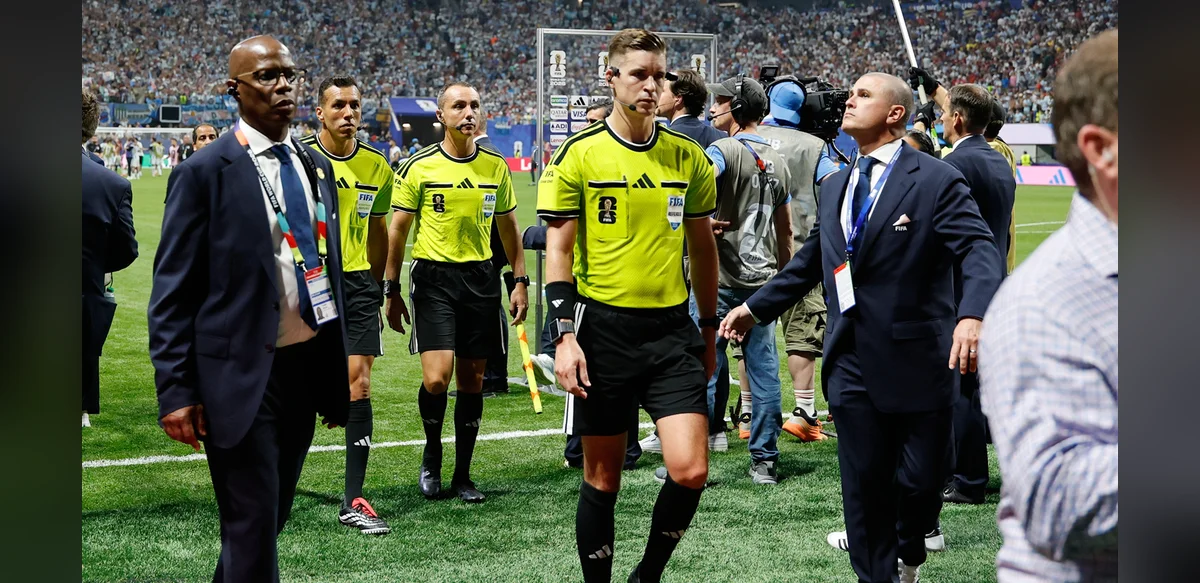
Egypt briefly believed they had secured a place in the quarterfinals. Mostafa Ziko celebrated after scoring to make the score 2-0 against Argentina, but the goal was disallowed. Seventeen seconds earlier, Marwan Attia had appeared to step on Lisandro Martínez during a challenge far from the play. VAR reviewed the incident and sent the referee to the monitor. The goal was ruled out because Egypt were judged to have gained possession illegally, despite a long sequence of play afterward.
The ruling renewed discussion about the limits of VAR reviews. Rules allow checks on fouls in the attacking phase before a goal, yet questions arose over whether the earlier tackle remained connected enough to the finish, given the distance and time gap. Similar controversies have affected other matches.
In Ghana’s 0-0 draw with England, a possible penalty for a challenge by Ezri Konsa on Prince Kwabena Adu was not awarded after VAR declined to intervene. Ghana’s coach criticized the decision.
Brazil’s goal against Scotland was disallowed following a VAR review of a minor foul in the build-up, prompting debate on the threshold for intervention.
Germany’s opening goal against Ecuador stood despite a high boot by Aleksandar Pavlovic on Pedro Vite, as VAR took no action. The call drew comparisons with Brazil’s disallowed goal.
The United States’ Folarin Balogun received a red card after VAR review for stepping on an opponent’s calf. In contrast, a similar challenge by Lionel Messi on an Algerian player drew no card or review, leading to complaints about inconsistent standards.
Belgium were awarded a penalty against Senegal after a lengthy VAR check in extra time, completing a comeback.

