

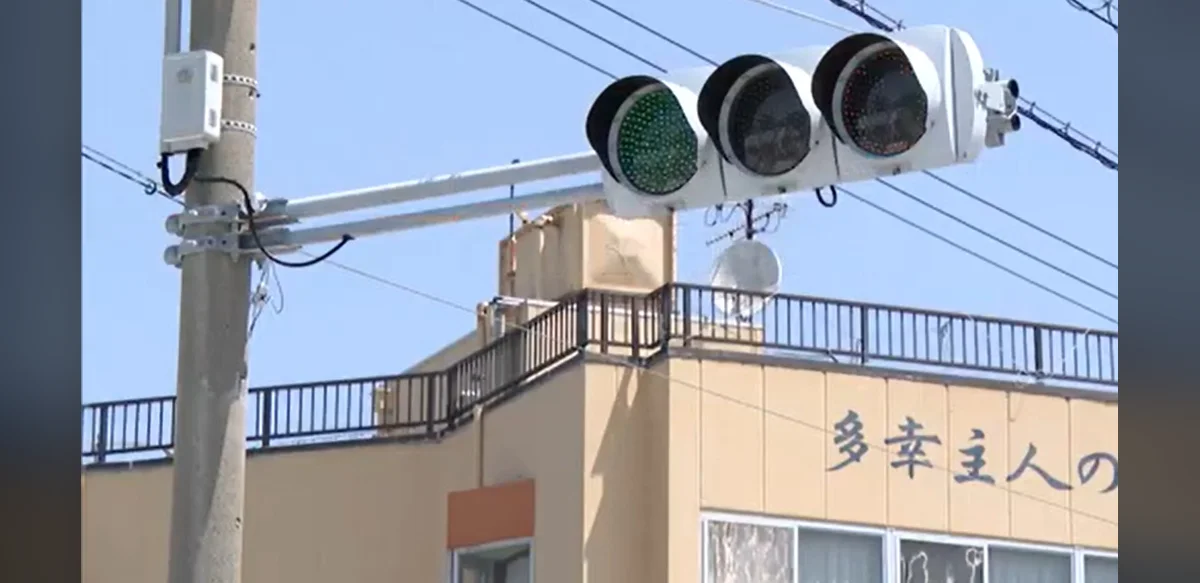
In a small island settlement located off the coast of Japan, residents maintain a distinctive approach to road safety instruction that centers on a single traffic signal. The device activates its green phase just once each year, providing an opportunity for local schoolchildren to practice crossing the street under controlled conditions. This method ensures that young pedestrians gain familiarity with traffic signals in a setting where such infrastructure is otherwise minimal.
The community in question features limited vehicular traffic due to its size and isolation. With only one traffic light present, daily operations do not require constant color changes. Instead, the signal remains in a non-green state for most of the year, preserving its function primarily as an educational tool. Once annually, the light shifts to green, allowing instructors to demonstrate proper crossing procedures to students.
Schoolchildren participate in supervised sessions that emphasize timing, attention to signals, and safe movement across roadways. Organizers focus on building awareness of pedestrian responsibilities without relying on frequent real-world exposure. The event occurs in a predictable manner, enabling teachers to integrate it into the curriculum as a practical exercise.
Local authorities view the practice as an effective way to address road safety in areas with sparse traffic controls. By limiting activations, the signal retains its novelty and instructional value. Participants learn to interpret the green indication as permission to proceed while remaining vigilant for any vehicles.
The approach aligns with broader efforts to promote cautious behavior among young residents in rural or island environments. Educators note that hands-on experience with the signal helps reinforce lessons about yielding and observation. The annual timing allows for preparation and reflection both before and after the session.
Residents of the settlement maintain the light as part of standard municipal upkeep. Its infrequent use reduces wear while still serving the designated purpose. Community members support the tradition because it provides consistent, low-risk training opportunities for successive groups of students.
Discussions around the signal often highlight its role in adapting standard traffic management to local needs. In places with minimal infrastructure, creative applications like this one can fulfill educational requirements effectively. The single activation per year underscores the priority placed on deliberate instruction rather than continuous operation.
Observers from outside the area have occasionally documented the event, noting its uniqueness compared to urban traffic systems. The practice demonstrates how small populations can tailor safety measures to available resources. Emphasis remains on practical skills that children can apply in various settings.
Overall, the annual green phase serves as a focal point for pedestrian training in the island town. It combines simplicity with targeted learning, ensuring that the next generation understands basic traffic protocols. This method continues without alteration, preserving its established function within the community.
Further examination reveals that the signal installation dates back several decades, chosen for its straightforward design suited to low-volume roads. Maintenance involves periodic checks to confirm functionality during the designated period. Families in the area appreciate the structured opportunity for their children to engage with the concept of controlled crossings.
The educational sessions typically include group discussions following the crossing exercise. Students review what they observed and discuss potential variations in other locations. This reinforces retention of the core principles taught during the activation.
In summary, the traffic light in this Japanese island setting operates on an annual cycle specifically to facilitate school-based road safety lessons. The limited use maximizes its value as a teaching aid while fitting the needs of a small population. Such adaptations illustrate practical responses to infrastructure constraints in remote areas.


