

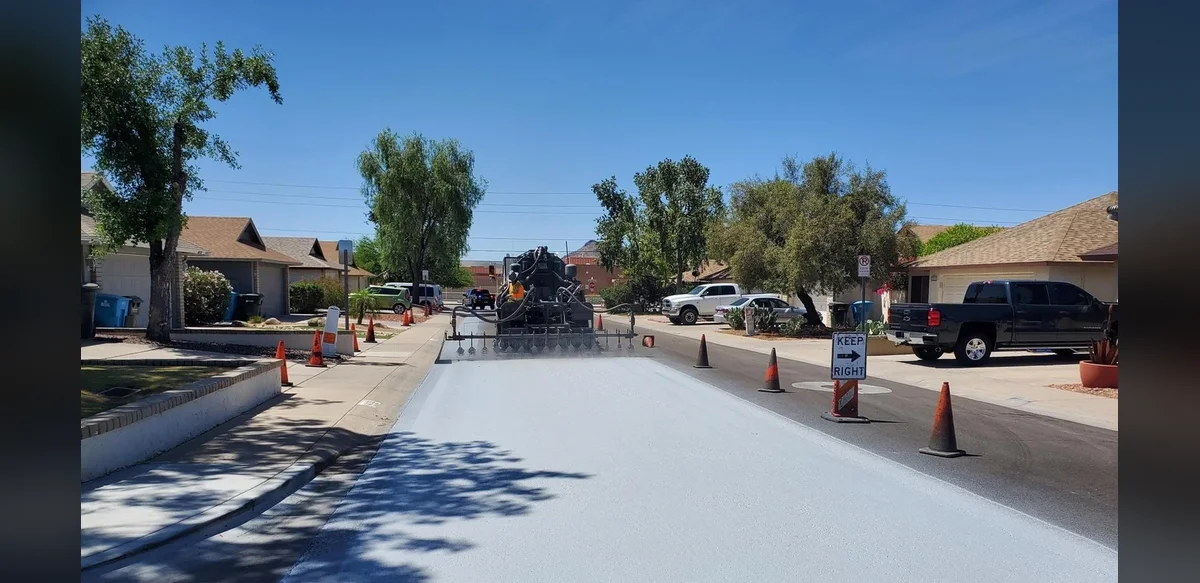
In an effort to address extreme heat conditions in urban areas, Arizona implemented reflective coatings on select road surfaces. The approach aimed to lower the temperature of the pavement itself by increasing the amount of sunlight reflected away from the ground. This change produced noticeable effects on surface temperatures, particularly after sunset when the coated roads remained cooler than traditional dark asphalt.
The reflective treatment works by altering how solar energy interacts with the roadway. Instead of absorbing most of the incoming radiation, the lighter surface bounces a larger portion back into the atmosphere. As a result, the pavement does not retain as much heat throughout the day. Measurements taken during nighttime hours showed reduced warmth radiating from the treated sections compared with untreated roads nearby.
However, the same property that cools the road surface creates a different outcome for the air directly above it during daylight. Because more sunlight is reflected, a greater share of that energy stays within the lower atmosphere rather than being absorbed by the ground. This leads to higher air temperatures in the immediate vicinity of the coated pavement while the sun is up.
Local transportation officials noted that the project was part of broader initiatives to manage heat in densely populated regions. The coatings were applied to several stretches of highway and city streets as a test. Early data indicated clear differences in thermal behavior between treated and untreated areas, prompting further study of both benefits and drawbacks.
Engineers involved in the evaluation explained that the daytime warming of ambient air occurs because the reflected energy has nowhere else to go except into the surrounding atmosphere. This effect is most pronounced in the hours of peak sunlight. At night, the absence of stored heat in the pavement allows temperatures to drop more quickly, which can improve comfort for residents in adjacent neighborhoods.
The findings have sparked discussion among urban planners and climate researchers about the trade-offs involved in such interventions. While surface cooling offers advantages for pedestrian comfort and reduced heat stress after dark, the increase in daytime air temperature raises questions about overall effectiveness during the hottest parts of the day. Additional monitoring is planned to determine whether the approach should be expanded or modified.
Arizona’s experience highlights the complex interactions between infrastructure materials and local climate conditions. Reflective coatings represent one tool among many being tested to adapt to rising temperatures, yet their impacts must be weighed carefully across different times of day and seasons. Future projects may combine this method with other strategies such as increased vegetation or modified urban design to achieve more balanced results.
Residents living near the treated roads have reported mixed observations. Some noted cooler evenings when walking or driving, while others mentioned feeling greater warmth during afternoon hours. These anecdotal accounts align with the technical measurements collected by state agencies. Officials continue to gather feedback as part of an ongoing assessment process.
The study of reflective road treatments continues to evolve as more data becomes available. Researchers emphasize the importance of considering both surface and air temperature metrics when evaluating success. Arizona’s trial provides valuable insights that could inform similar efforts in other hot-climate regions facing comparable challenges with urban heat management.


