

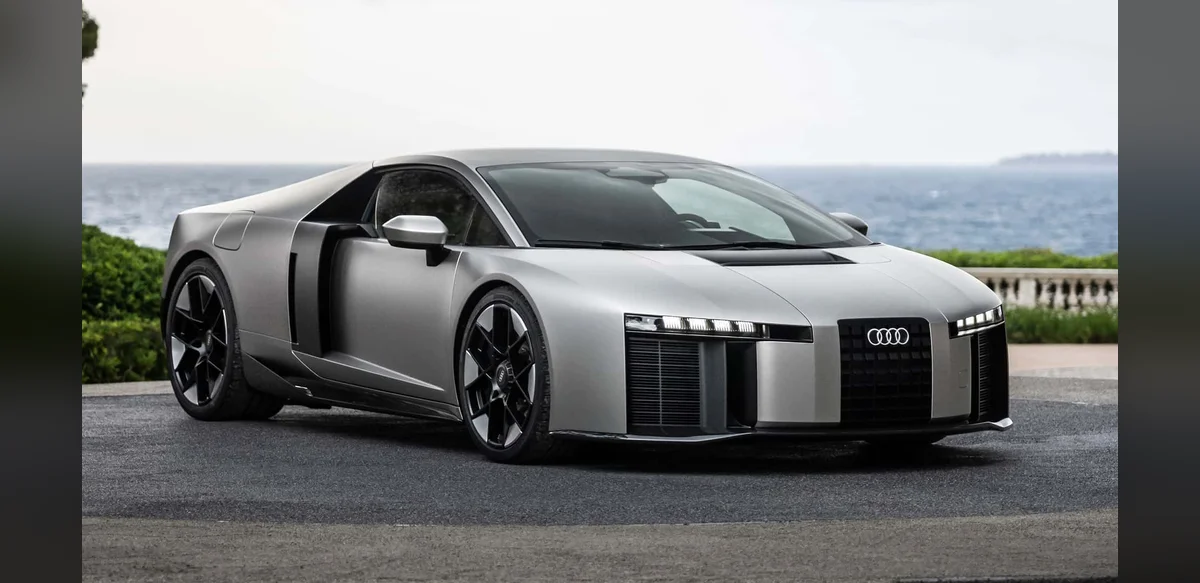
Audi has finished work on its Nuvolari prototype after a development period of 405 days. The vehicle represents a hybrid supercar that integrates a 4.0-liter twin-turbo V8 engine with three electric motors and a battery rated at 7.3 kilowatt-hours. This combination allows the prototype to blend traditional combustion power with electric assistance in a single platform.
The project timeline stands out because it compressed multiple phases of design, testing, and integration into just over a year. Engineers focused on balancing the output of the V8 unit with the electric components to maintain performance while managing energy flow. The battery size supports short electric-only operation and assists the engine during acceleration.
Industry observers note that such rapid cycles can influence how manufacturers approach future models. By completing the Nuvolari in 405 days, Audi demonstrated streamlined processes that coordinate mechanical and electrical systems. The hybrid setup uses the V8 for primary propulsion and the motors for torque fill and efficiency gains.
The 4.0-liter twin-turbo V8 provides the core power, while the three electric motors contribute additional drive and regenerative capabilities. The 7.3 kilowatt-hour battery stores energy recovered during braking and supplies it back to the motors when needed. This architecture keeps the overall system compact yet capable of supercar-level output.
Development teams worked through successive prototypes to refine cooling, weight distribution, and software calibration. The 405-day schedule required parallel workstreams so that chassis, powertrain, and electronics teams could advance simultaneously. The result is a vehicle that merges high-performance engineering with hybrid technology.
The Nuvolari prototype illustrates ongoing shifts in automotive design toward electrified powertrains. Even with a conventional V8 at its heart, the addition of electric motors and a modest battery pack shows how manufacturers are exploring mixed propulsion without abandoning established engine families. The 7.3 kilowatt-hour capacity keeps the electrical system focused on support rather than full electric range.
Further testing will determine durability and real-world efficiency. The 405-day achievement provides a benchmark for other programs seeking to accelerate hybrid vehicle introduction. Audi’s approach combined proven V8 architecture with three electric motors to deliver balanced performance characteristics.
Overall, the project underscores the feasibility of short development windows when teams align on clear technical targets. The integration of the 4.0-liter twin-turbo V8, electric motors, and 7.3 kilowatt-hour battery forms the technical foundation of the Nuvolari prototype.


