

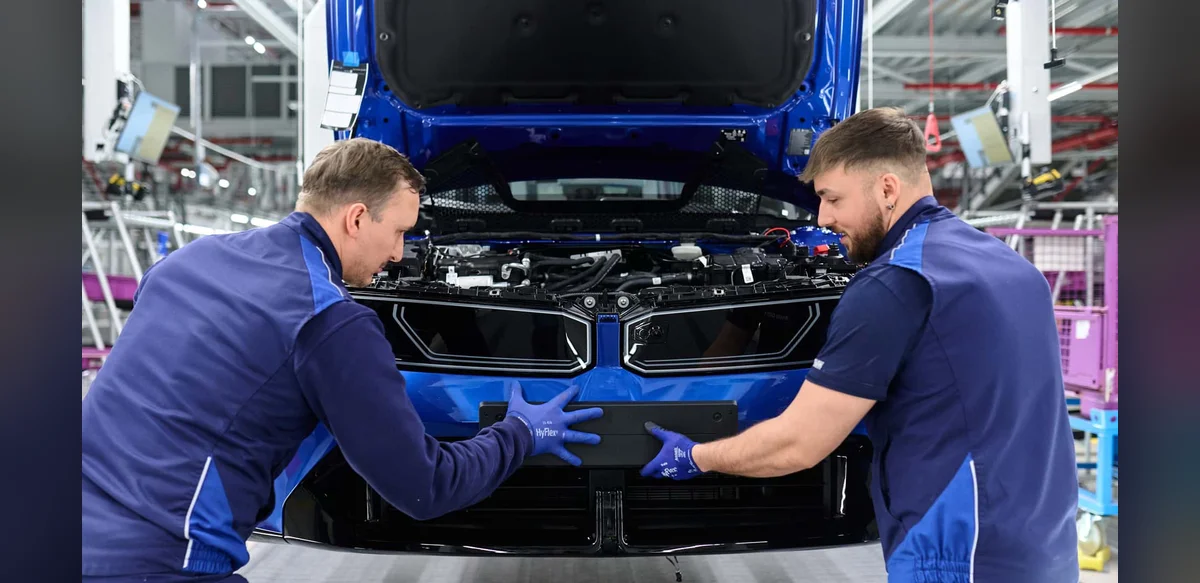
The automotive manufacturer has initiated series production of its i3 model at the Munich facility. This development is expected to reduce overall manufacturing expenses by approximately ten percent. The move represents an important milestone in the company’s Neue Klasse initiative, which aims to transition toward fully electric vehicle output beginning in twenty twenty seven.
Production activities at the site now focus on integrating the i3 into regular manufacturing schedules. Officials indicate that the process incorporates updated assembly techniques designed to enhance efficiency. As a result, the plant anticipates achieving the stated cost reductions while maintaining quality standards across the vehicle lineup.
The Neue Klasse program outlines a broader strategy for electrification. Under this framework, the company plans to shift its entire production toward battery electric models by the target year. The current start of i3 series manufacturing serves as an early indicator of progress toward those objectives.
Industry observers note that locating the production in Munich allows the firm to leverage existing infrastructure and workforce expertise. This approach minimizes the need for extensive new investments while supporting the cost saving targets. The ten percent reduction is viewed as a measurable outcome of these localized efforts.
Looking ahead, the transition to all electric output will require further adjustments in supply chains and component sourcing. The i3 production launch provides a practical test bed for these changes. Company statements emphasize that lessons learned here will inform subsequent model introductions aligned with the twenty twenty seven timeline.
The Munich plant has historically been central to the manufacturer’s European operations. Its role in the i3 rollout underscores continued investment in the location. Production volumes are projected to scale gradually as processes stabilize and efficiency gains materialize.
Overall, this step aligns with wider sector trends toward sustainable mobility solutions. By commencing i3 series production now, the company positions itself to meet evolving regulatory and market demands for electric vehicles. The associated cost efficiencies further support long term competitiveness.
Additional details regarding specific production volumes or supplier partnerships remain limited at this stage. Focus remains on executing the initial rollout smoothly and verifying the anticipated manufacturing savings. Future updates are expected as the program advances toward full electric vehicle goals.
In summary, the initiation of i3 series production at Munich marks a concrete advancement in the Neue Klasse roadmap. With a projected ten percent cost trim and a clear path to all electric manufacturing by twenty twenty seven, the development offers insight into the company’s strategic direction without introducing unrelated elements.


