

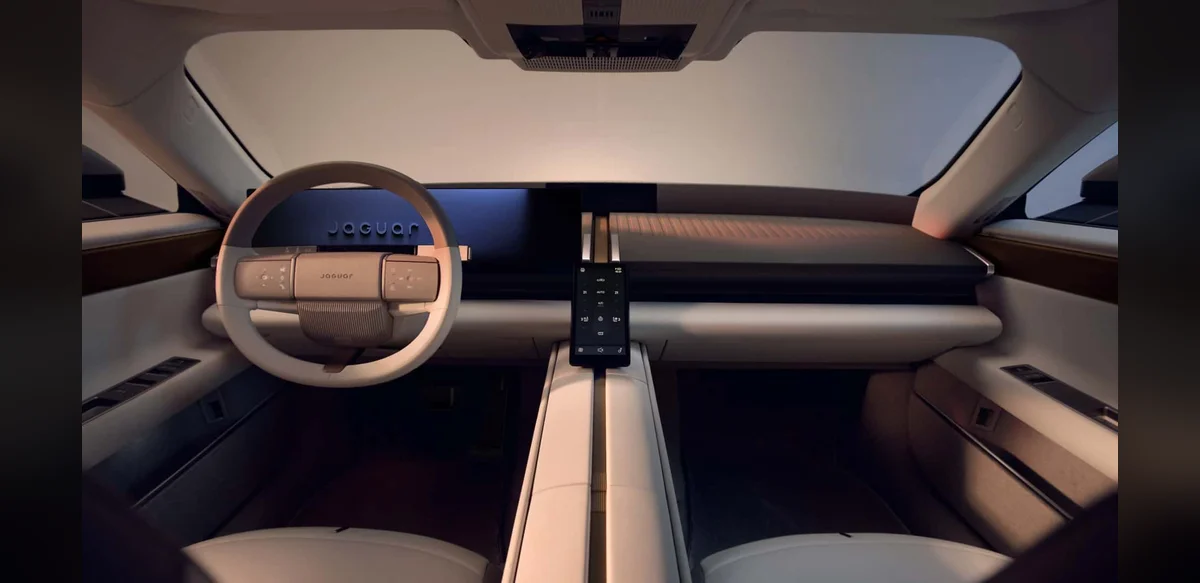
The latest update from Jaguar focuses on the interior layout of its upcoming electric grand tourer known as the Type 01. This model stands out due to its unconventional cabin design that omits both a rear window and a traditional rear view mirror. Instead the vehicle relies on alternative systems for visibility which aligns with its overall forward looking approach to automotive engineering.
At the core of the cabin are four individual seats arranged to provide each occupant with personal space. A distinctive central spine extends from the front of the vehicle all the way to the rear creating a structural and visual element that runs the full length of the interior. This feature not only separates the seating areas but also contributes to the overall architectural feel of the space.
The absence of a rear window represents a deliberate choice that changes how passengers experience the environment inside the car. Without this opening the design emphasizes privacy and a sense of enclosure while the central spine adds a sense of continuity and flow throughout the cabin. Observers have noted that these elements together produce a unique atmosphere that differs from conventional grand tourers.
Jaguar has positioned the Type 01 as a controversial entry in the electric vehicle segment. The interior choices reflect broader trends in automotive design where manufacturers explore new ways to balance aesthetics functionality and regulatory requirements. The four seat configuration with the prominent spine suggests an emphasis on individual comfort rather than maximum passenger capacity.
Details released so far highlight how the central spine serves both practical and stylistic purposes. It houses necessary components while acting as a defining visual line that guides the eye from one end of the cabin to the other. This approach allows the vehicle to maintain a streamlined profile without compromising on the structural integrity needed for a grand tourer.
Industry analysts have discussed how such interior innovations could influence future models across the sector. By removing the rear window and mirror the Type 01 challenges established norms and invites discussion about how drivers and passengers interact with their surroundings. The four individual seats further support this shift toward personalized experiences within a shared vehicle space.
Overall the reveal underscores Jaguar’s commitment to exploring distinctive design solutions in the electric grand tourer category. The combination of the central spine four seats and eliminated rear visibility elements creates a cabin that prioritizes a modern enclosed feel. As more information becomes available the full implications of these choices will become clearer to enthusiasts and the wider public.
The design decisions also touch on themes of sustainability and efficiency common in electric vehicle development. By rethinking traditional components the Type 01 may achieve better weight distribution or improved aerodynamics though specific performance data remains limited at this stage. The interior presentation serves as an early indicator of the vehicle’s intended character.
In summary the Type 01 interior stands as a bold statement in automotive styling. Its four seats and continuous central spine paired with the lack of a rear window and mirror set it apart from many contemporaries. This configuration is likely to generate ongoing conversation about the direction of luxury electric vehicles in the coming years.


