

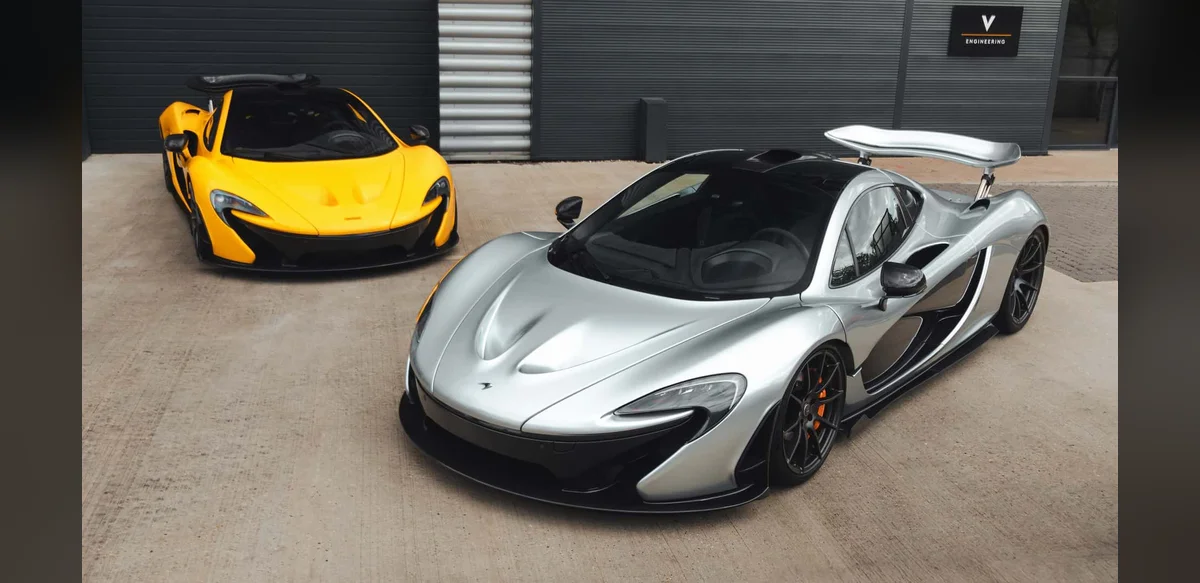
The McLaren P1, recognized as an early example of plug-in hybrid technology in the hypercar category, is undergoing a significant update to its energy storage system. This modification aims to expand the battery capacity to three times the original specification, leveraging advancements in battery engineering to maintain the vehicle’s relevance more than a decade after its introduction.
Introduced over ten years ago, the P1 helped establish the trend of combining high-output combustion engines with electric assistance in limited-production performance vehicles. The original design featured a relatively modest battery pack suited to the era’s technology constraints, providing supplementary power and limited electric-only range.
Recent progress in energy density and cell chemistry now allows for a substantially larger battery installation. The upgrade preserves the car’s fundamental architecture while extending its electric capabilities. Engineers involved in the project emphasize compatibility with existing systems to avoid extensive redesigns.
Owners of the P1 have expressed interest in such enhancements as battery technology continues to evolve rapidly. The increased capacity could support longer periods of electric operation and improved energy recovery during use, aligning with broader shifts toward electrification in the automotive sector.
The process involves careful integration to ensure thermal management and weight distribution remain balanced. Specialists note that modern battery modules offer better efficiency per unit volume, enabling the tripling of capacity without proportional increases in mass or space requirements.
This development reflects ongoing efforts within the industry to refresh older high-performance models through targeted component updates. Rather than full vehicle replacement, incremental improvements like this battery enhancement allow continued operation with updated performance characteristics.
Discussions around the upgrade highlight potential benefits for daily usability alongside track-focused attributes. The larger battery supports more versatile driving scenarios while retaining the core driving dynamics that defined the original model.
Industry observers point to similar initiatives across other manufacturers as evidence of a maturing approach to hybrid powertrains. The P1’s role in pioneering these concepts makes its current update particularly noteworthy within enthusiast communities.
Technical details released so far indicate the new battery pack utilizes improved lithium-ion formulations for enhanced longevity and charge rates. Installation is expected to require specialized facilities to maintain safety and precision standards.
The project underscores the adaptability of early plug-in hybrid designs when paired with contemporary components. As battery costs decline and performance metrics improve, such upgrades become increasingly feasible for legacy vehicles.
Further information on availability and exact specifications is anticipated in coming months. The initiative demonstrates how foundational models from the previous decade can incorporate new technology to extend service life.
Overall, the battery enhancement represents a practical response to advancements in energy storage, ensuring the P1 remains aligned with current expectations for hybrid hypercars without fundamental alterations to its established identity.


