


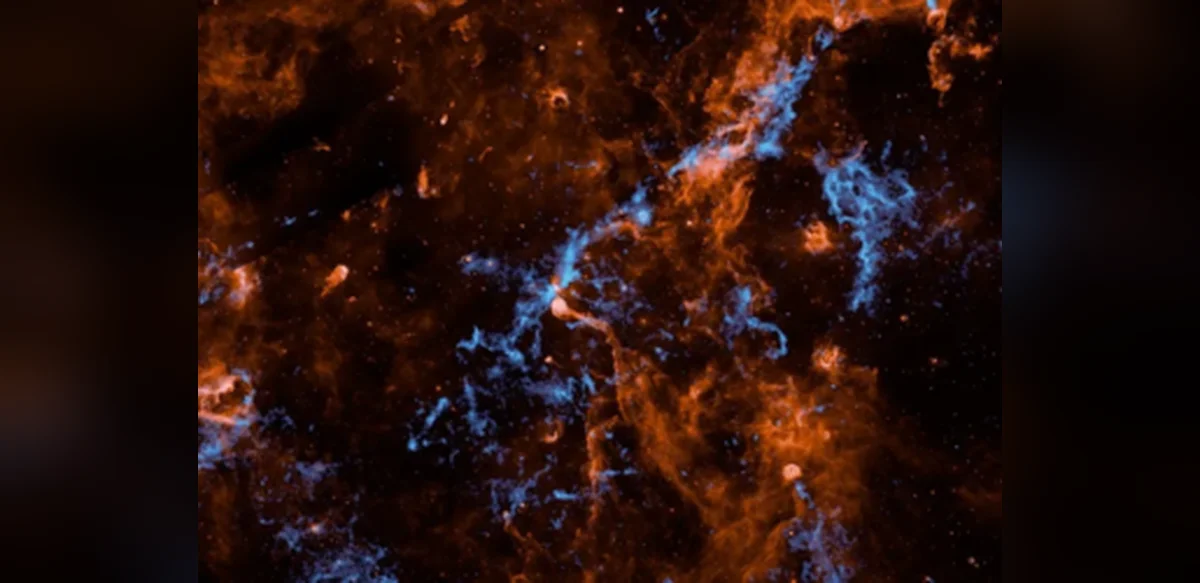
Scientists are gaining new insights into the origins of Earth’s water through observations from space. NASA’s SPHEREx telescope has identified extensive water ice reserves in Cygnus X, a turbulent region for star formation in the Milky Way, located 4,500 light-years from Earth. These formations, dubbed interstellar glaciers, contain essential compounds for life.
Dust Acting as a Protective Barrier
The research, detailed in The Astrophysical Journal on April 15, 2026, was led by astronomer Joseph Hora from the Harvard-Smithsonian Center for Astrophysics. Launched in March 2025, SPHEREx surveys the sky using 102 infrared wavelengths and is completing the first of four full-sky mappings. Its data from Cygnus X reveals ice spread across a vast molecular cloud, reaching farther than previously estimated. Regions with dense ice feature shadowy lanes of fine dust particles, tinier than those in cigarette smoke.
Influencing Emerging Planets
This finding may reshape views on extraterrestrial life, as these space-based ice reserves are thought to aid in forming new planetary systems. As gravity draws in gases and materials to developing worlds, the ice delivers key elements that could support life. The two-year mission aims to document ice distribution variations throughout the galaxy.

