

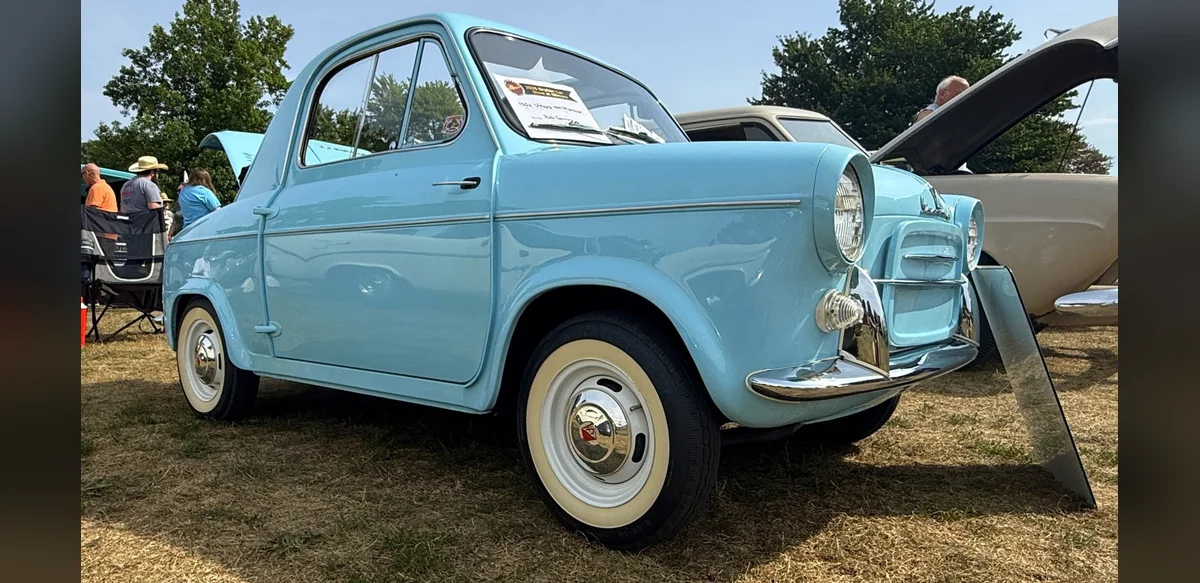
Following the conclusion of World War II, the automotive landscape in Europe featured several compact vehicles designed for efficiency and affordability. Models such as the British Mini, the French Citroen 2CV, and the Italian Fiat 500 had already established strong positions in the market for small cars. Into this environment came the Vespa 400, a microcar produced by Piaggio that sought to offer similar practicality.
The Vespa 400 entered production in the late 1950s as an extension of Piaggio’s existing expertise in lightweight transportation. Its design emphasized modest dimensions and economical operation, aligning with the needs of consumers recovering from wartime conditions. However, the presence of established competitors created significant challenges for gaining market share.
Industry observers noted that the Vespa 400 faced ongoing difficulties in distinguishing itself amid the variety of small vehicles already available. Sales remained limited as buyers gravitated toward more familiar options from other manufacturers. This competitive pressure contributed to decisions about the model’s future.
Piaggio ultimately chose to discontinue the Vespa 400. Company leadership determined that resources would be better allocated toward the development and production of scooters, an area where the firm had already achieved considerable success. This strategic shift allowed Piaggio to focus on its core strengths in two-wheeled vehicles rather than sustaining a broader range of automobile products.
The decision reflected broader trends in the European automotive sector during that period, where specialization often proved more viable than diversification for smaller manufacturers. By prioritizing scooters, Piaggio maintained its position in a growing segment of personal transportation that emphasized simplicity and accessibility.
Historical accounts of the era indicate that the Vespa 400 represented an attempt to enter the microcar segment but encountered structural obstacles related to market saturation. The withdrawal of the model marked the end of Piaggio’s brief involvement in four-wheeled passenger vehicles.
In retrospect, the move aligned with the company’s long-term trajectory, which continued to emphasize scooters and related mobility solutions. Consumers interested in small cars turned to other available models that had secured stronger footholds in the postwar economy.
The story of the Vespa 400 illustrates the competitive dynamics that shaped automotive manufacturing in the mid-twentieth century. Limited production runs and strategic pivots were common as companies adapted to evolving consumer preferences and economic conditions across Europe.
Today, the Vespa 400 remains a point of interest for enthusiasts of historical vehicles, though its commercial lifespan proved short compared with more enduring designs from the same period. Piaggio’s emphasis on scooters proved enduring and contributed to the brand’s lasting identity in transportation.
This episode underscores how external market factors and internal corporate priorities intersected to determine the fate of individual vehicle models. The Vespa 400’s discontinuation allowed Piaggio to streamline operations around products with greater established demand.


