


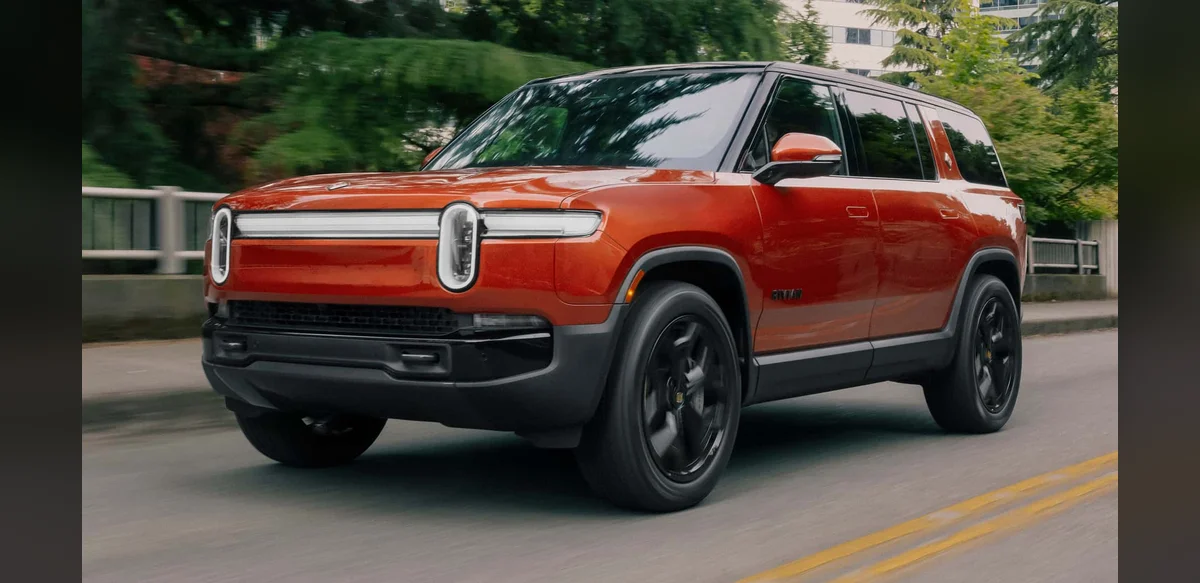
Rivian has experienced a notable rise in the United States electric vehicle market, advancing from tenth position to second place in recent quarterly sales figures. This shift comes amid strong third-quarter performance driven by increased deliveries of its existing models alongside the introduction of the new R2 vehicle line. Commercial van sales have also contributed positively, helping to balance out reduced volumes reported by several competing manufacturers during the same period.
The company’s progress reflects broader trends in the electric vehicle sector where consumer interest continues to grow despite varying economic conditions. Rivian’s strategy focuses on expanding its product range to appeal to both individual buyers and fleet operators. The R2 series represents an effort to reach a wider audience with more accessible options while maintaining emphasis on performance and utility features.
Industry observers note that third-quarter results showed Rivian delivering thousands of units across passenger and commercial segments. This volume increase allowed the firm to surpass multiple established players that faced production constraints or softer demand. Commercial vans in particular have found favor with delivery services seeking zero-emission alternatives for urban routes.
Market data indicates that overall electric vehicle adoption in the United States remains on an upward trajectory even as some brands report quarterly declines. Factors such as charging infrastructure improvements and policy incentives continue to support buyer decisions. Rivian’s ability to scale output and introduce refreshed models has positioned it favorably within this competitive landscape.
The R2 launch marks a significant milestone for the automaker as it seeks to build on earlier success with its first-generation trucks and SUVs. Early customer feedback highlights the vehicle’s design balance between range capability and everyday practicality. Production ramp-up is expected to continue through the coming months with additional variants planned.
Commercial operations have provided a steady revenue stream separate from retail sales. Partnerships with logistics companies have enabled Rivian to secure larger orders that help stabilize manufacturing schedules. These fleet-focused vehicles incorporate specialized features suited to high-mileage daily use.
Other manufacturers have encountered challenges including supply chain disruptions and shifting consumer preferences toward certain vehicle sizes. Rivian’s targeted approach appears to have mitigated similar issues through focused engineering and supplier relationships. The resulting sales gains demonstrate the effectiveness of adapting product offerings to current market needs.
Looking ahead, analysts anticipate continued competition as more models enter the segment. Rivian’s recent performance underscores the potential for newer entrants to capture meaningful share when execution aligns with demand signals. The company plans further investments in production capacity to support projected growth.
Overall the third-quarter results illustrate how a combination of new product introductions and diversified sales channels can drive rapid ranking improvements. Rivian’s move from tenth to second place highlights the dynamic nature of the electric vehicle market where timely innovation plays a central role.
Stakeholders will monitor upcoming quarters to assess whether this momentum sustains amid evolving regulatory and economic conditions. The emphasis on both consumer and commercial segments provides multiple avenues for expansion while addressing different segments of the transportation transition.

