


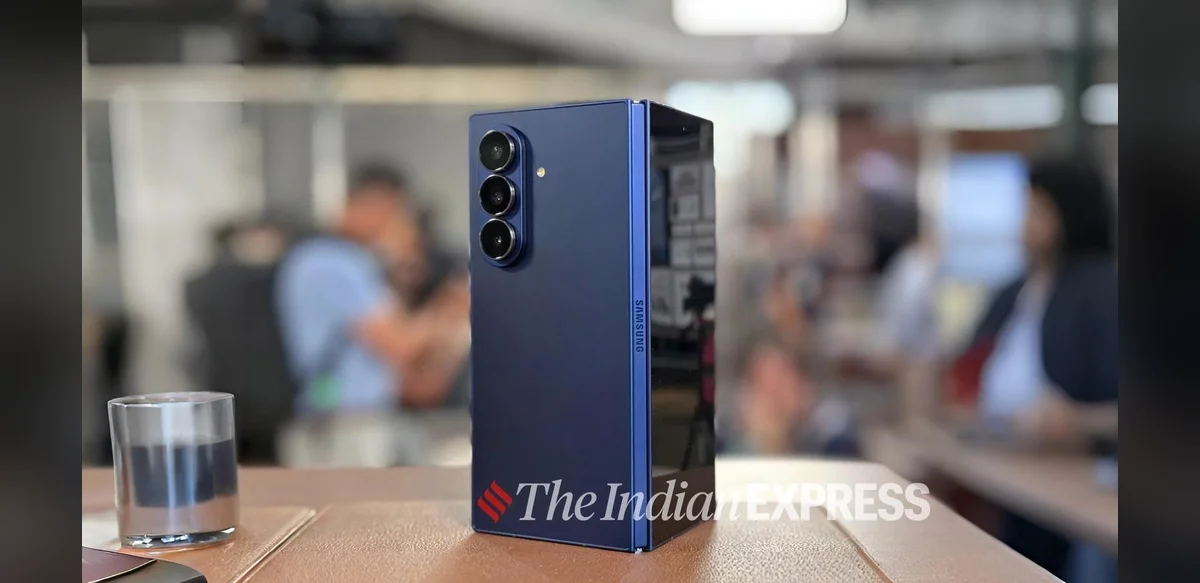
Smartphones have reached a point where buyers either ignore small improvements or seek a distinctly different experience worth a higher price. Samsung, the leading smartphone manufacturer, faces a major challenge in offering an ultra-premium device that shifts perceptions and alters the market amid weak demand and few notable releases. It requires a flagship model to address these issues, even as a memory chip shortage and regional tensions risk raising costs and limiting expansion.
The South Korean company will soon rely on wealthy buyers ready to pay more for a phone wide enough when folded to open into a tablet-sized screen. The premium handset, expected to have a passport-like aspect ratio and boxy shape, will debut at Samsung’s event in London with other new devices.
Samsung has experience with foldables, having introduced one of the first in 2019 and later offering the book-style Galaxy Z Fold and clamshell-style Galaxy Z Flip.
Earlier this year the firm tested a costly tri-fold model that opened into a tablet-sized screen but ended sales after less than two months. It now appears ready to try a wider foldable, possibly named the Galaxy Z Fold 8 Wide.
Wide phones are not new. Microsoft launched the Surface Duo in 2020 with two separate screens, while BlackBerry’s 2014 Passport matched the size of a paper passport and included a keyboard but did not fold. Huawei recently released the Pura X Max, a wide foldable available only in China.
Samsung may not lead in wide foldables but could popularize the passport shape in major markets including the US, UK and India. Huawei’s model has a compact closed shape with a 5.4-inch cover screen opening to 7.7 inches inside; a similar shorter, wider profile is anticipated for Samsung’s device.
The company is not dropping its book-style foldables. The new passport design targets general consumers with better video and content ratios and a larger unfolded canvas, though it remains awkward in a pocket and less practical for typing when closed, according to IDC analyst Francisco Jeronimo.
Book-style models mimic regular phones when shut and suit productivity users, while the passport version appeals to those focused on media. Jeronimo noted the market will likely support both formats rather than converge on one, with Samsung preparing for varied buyer needs.

