


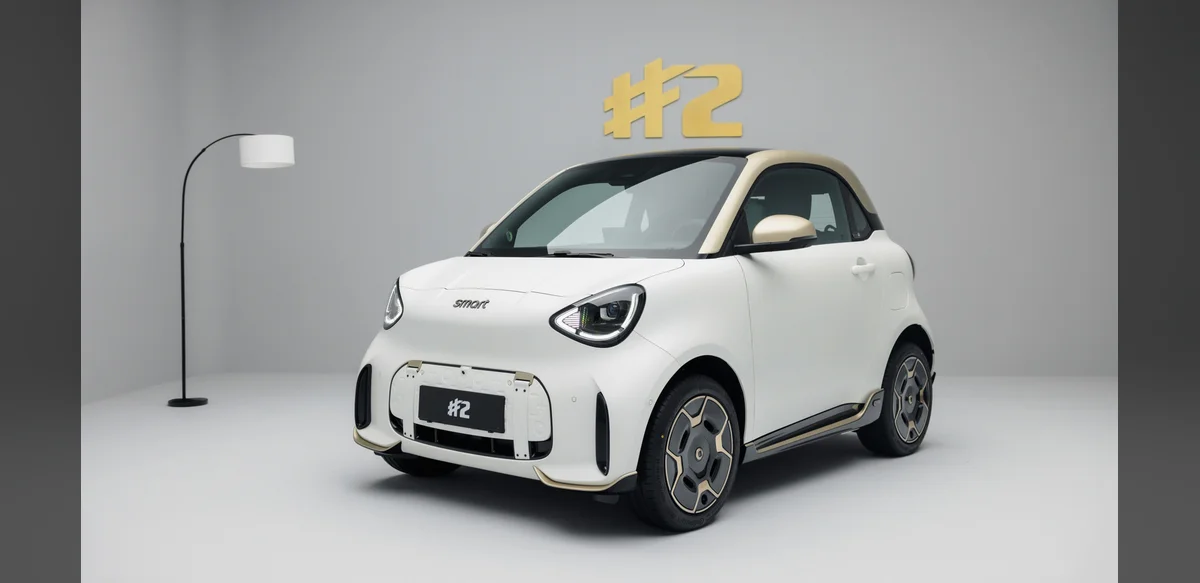
The automotive industry continues to see innovation in the small vehicle segment with the introduction of the Smart #2. Measuring 108 inches in length, this model maintains an exceptionally compact footprint suited for dense city environments. It builds directly on the legacy of the Fortwo by preserving key practical elements such as the bench seat configuration and the splitgate rear access.
Designers focused on enhancing urban usability while keeping the overall size minimal. The result is a vehicle that offers improved maneuverability compared to earlier iterations without sacrificing interior flexibility. The bench seat allows for adaptable passenger arrangements, making it practical for daily commutes or short trips with multiple occupants. Meanwhile, the splitgate provides convenient loading options for cargo, a feature carried over to support everyday utility.
Engineers emphasized efficiency in the powertrain to align with modern expectations for low-emission transport. The compact dimensions contribute to easier parking and navigation through narrow streets, addressing common challenges faced by city drivers. Early observations suggest the Smart #2 delivers a refined driving experience tailored to short-range needs.
Market analysts note that such vehicles fill an important niche where space constraints limit larger options. By retaining signature elements from its predecessor, the new model aims to appeal to existing fans while attracting new users seeking simple, efficient transportation. Production details indicate a focus on sustainable materials and streamlined assembly processes.
Safety features have been updated to meet current standards, including advanced driver assistance systems integrated into the small chassis. The overall package prioritizes visibility and responsiveness, essential for mixed traffic conditions. Owners can expect straightforward maintenance due to the simplified mechanical layout.
In terms of interior space utilization, the bench seat and splitgate combination maximizes versatility within the limited footprint. This approach avoids unnecessary complexity while delivering functional benefits. Comparisons with competing microcars highlight the Smart #2’s edge in accessibility and ease of use.
Future iterations may explore additional customization options, though the core design philosophy remains centered on compactness. The model’s arrival signals continued interest in specialized city cars amid broader shifts toward electrification. Industry observers anticipate positive reception in markets with high urban density.
Overall, the Smart #2 represents a thoughtful evolution that honors proven attributes while adapting to contemporary requirements. Its dimensions and retained features position it as a capable option for those prioritizing agility over capacity. Continued monitoring of real-world performance will provide further insights into its long-term viability.


