

Many keyboard users have noticed the shift key, marked with an upward arrow and present on both sides. On mobile keyboards it sometimes appears only as the arrow symbol. This key allows switching between lowercase and uppercase letters as well as symbols.
The shift key did not originate with computers. It first appeared in the late 1800s during the era of typewriters. Early machines either offered only capital letters or required two separate sets of keys for upper and lower case, making them large and cumbersome.
In 1878 the Remington No. 2 typewriter introduced the first shift key. Instead of adding another full keyboard, designers created a single set of keys paired with a mechanical shift function. Each key carried both a lowercase letter and an uppercase or special character. Pressing the shift key moved the type mechanism so the uppercase character struck the paper. Releasing it returned the mechanism to lowercase.
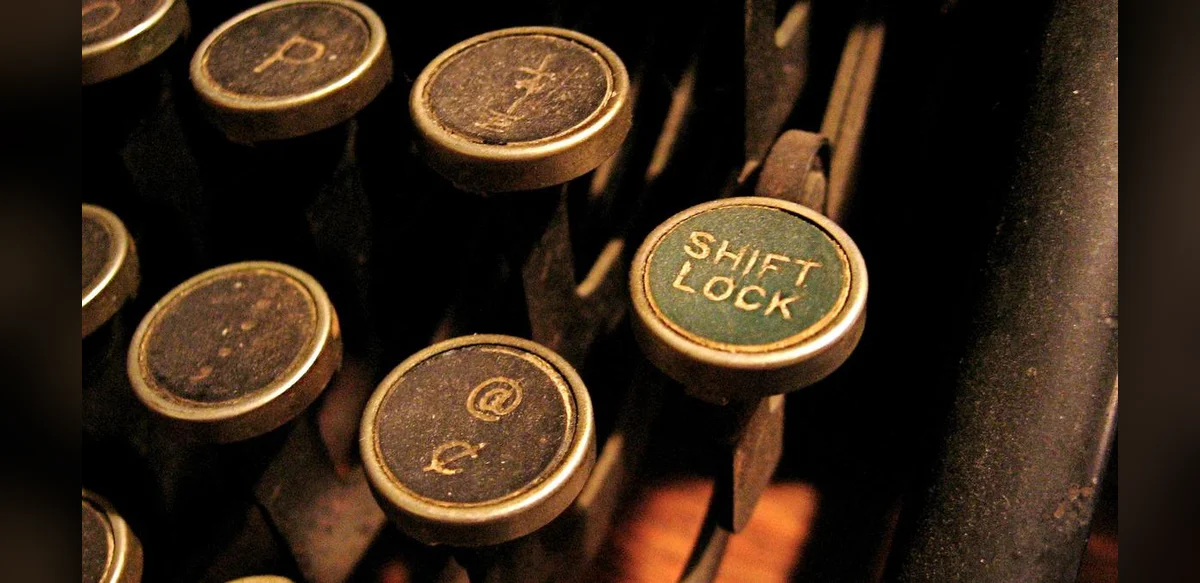
This change improved efficiency by reducing the total number of keys needed. Over the following years, typewriters commonly added a second shift key for convenience, and some included a shift lock that held the mechanism in the raised position, similar to today’s caps lock.
Modern keyboards retain the same layout and names, yet the technology has moved from mechanical parts to electronic signals. The keyboard controller now detects the shift key press and sends a different code to the computer, which the operating system interprets as a capital letter or symbol.


