

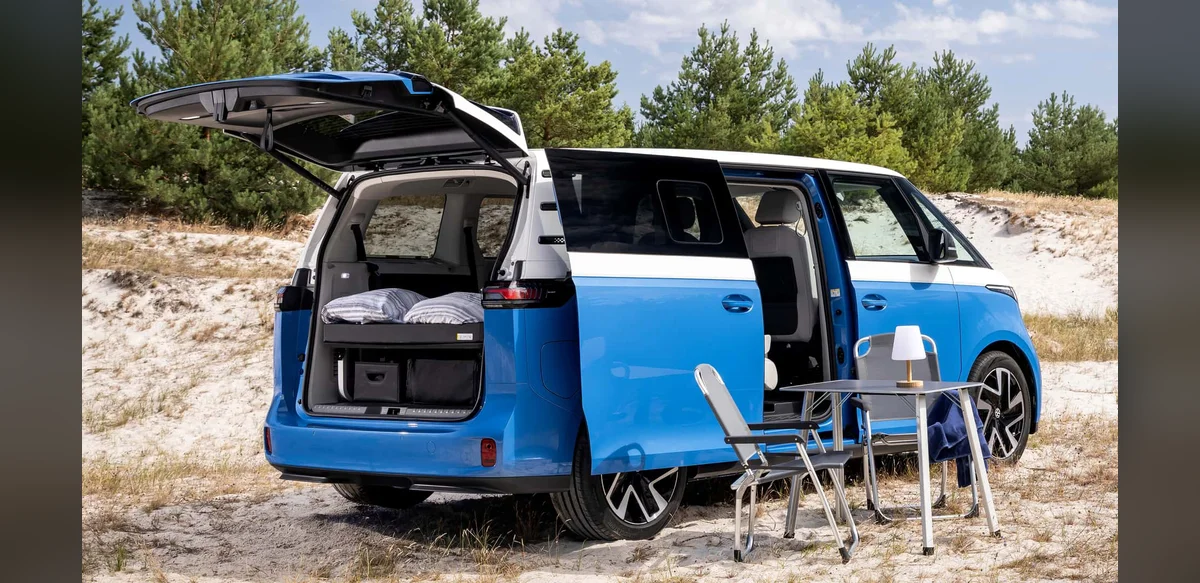
Volkswagen has introduced its first electric camper vehicle derived from the ID. Buzz model. This new offering provides sleeping space for two individuals and incorporates several specialized features designed for travel and outdoor use.
The vehicle includes a function referred to as California mode, which enhances usability during stops. A dedicated application supports owners in managing various aspects of the camper experience. Additionally, the model features vehicle-to-load capability, allowing power to be supplied to external devices.
This development marks a step in adapting traditional camper designs to electric powertrains. The base platform offers a modern foundation suited for such conversions, focusing on efficiency and practicality for extended trips.
Industry observers note that electric campers can reduce emissions compared to conventional fuel-based versions. The integration of battery power supports quiet operation at campsites and enables new ways to power accessories without running an engine.
The sleeping arrangement accommodates two people comfortably within the redesigned interior space. Storage solutions have been optimized to maintain accessibility while preserving the electric components.
The accompanying application provides users with controls and information related to the vehicle’s camper-specific functions. This digital tool aims to simplify setup and monitoring during journeys.
Vehicle-to-load functionality permits the battery to supply electricity to items such as portable appliances or lighting. This feature extends the utility of the camper beyond basic transportation.
Overall, the model represents an effort to blend established camper traditions with contemporary electric technology. Further details on availability and specifications are expected in upcoming announcements.
The shift toward electric options in the recreational vehicle segment reflects broader trends in sustainable mobility. Manufacturers continue to explore adaptations that maintain core functionalities while incorporating new power sources.
Users interested in this type of vehicle may appreciate the combination of compact design and electric performance. The ID. Buzz foundation allows for a balanced approach to range and interior space.
Continued innovation in this area could lead to additional electric camper variants in the future. Volkswagen’s entry provides one example of how established brands are addressing evolving consumer preferences for low-emission travel solutions.
The California mode enhances the living area by adjusting elements for stationary use. This contributes to a more versatile experience when the vehicle is not in motion.
With these elements combined, the electric camper offers a distinct option for those seeking modern alternatives in the camping category. The focus remains on practical features that support daily needs during travel.
As electric vehicle infrastructure expands, models like this may become more accessible for a wider range of users. The emphasis on functionality ensures that core camper benefits are retained alongside new technological additions.
This announcement highlights ongoing developments in automotive design tailored to leisure activities. The integration of electric systems opens possibilities for reduced environmental impact without sacrificing essential amenities.


