

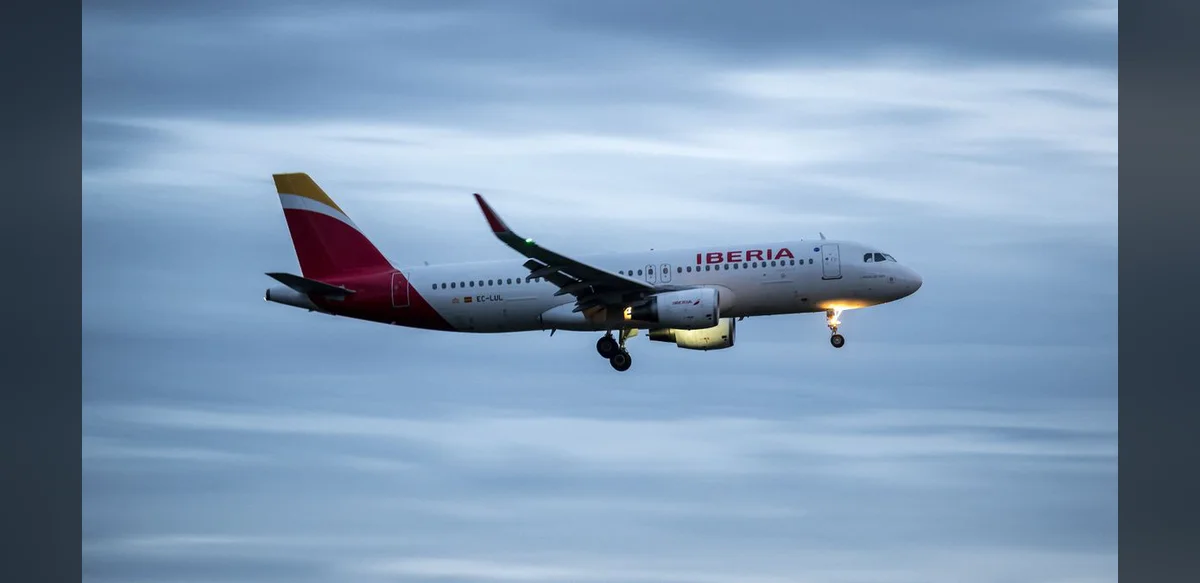
An airline has arranged a dedicated charter service that will ascend several thousand meters to provide passengers with an unobstructed view of the total solar eclipse occurring over Spain. The aircraft will follow a carefully planned route designed to maximize visibility of the celestial event from an altitude of approximately ten thousand meters. In addition to the onboard experience, the company will broadcast the proceedings live so that audiences on the ground can follow the progression of the eclipse in real time.
The decision to operate the flight stems from the unique advantages offered by high-altitude observation. At ten thousand meters, the plane will fly above much of the Earth’s atmosphere and any potential cloud cover that might otherwise obstruct ground-based viewing. This positioning allows for clearer and longer-lasting observations of the moon passing in front of the sun, creating the temporary darkness associated with totality. Organizers emphasize that the route has been coordinated with aviation authorities to ensure safety while optimizing the viewing window.
Passengers on the charter will have the opportunity to witness the gradual stages of the eclipse, from the initial partial phase through the brief period of totality and back to partial coverage. The cabin environment will be adapted to facilitate comfortable viewing, with dimmed lighting and designated observation areas. Experts accompanying the flight are expected to provide contextual explanations about the astronomical mechanics involved, although the primary focus remains on the visual spectacle itself.
The accompanying livestream will be accessible to the general public through standard online platforms. This broadcast aims to extend the reach of the event beyond those physically present on the aircraft, allowing remote viewers to experience the same sequence of celestial changes. Technical arrangements include multiple camera angles mounted on the exterior of the plane to capture both the solar phenomenon and the surrounding atmospheric conditions.
Spain has been identified as a favorable location for this particular eclipse due to its geographic position along the path of totality. The timing of the flight has been synchronized with the predicted duration of the event to ensure participants are in the optimal position when the moon fully covers the sun. Weather forecasts and atmospheric data have been reviewed in advance to support the chosen trajectory.
Such specialized flights represent one method by which airlines seek to offer distinctive travel experiences tied to natural phenomena. The combination of aerial positioning and live transmission reflects an effort to blend scientific observation with broader public engagement. Details regarding ticket availability and broadcast access have been released through the airline’s usual communication channels.
Observers note that viewing a total solar eclipse from altitude can extend the apparent length of totality slightly compared with surface locations, owing to the reduced atmospheric interference. The livestream component further democratizes access, enabling educational institutions, astronomy enthusiasts, and casual viewers worldwide to participate without the need for specialized equipment or travel.
The charter service underscores ongoing interest in celestial events and the ways commercial aviation can intersect with public science outreach. By maintaining a neutral operational focus on safety and visibility, the airline intends to deliver a reliable platform for experiencing the eclipse. Further updates on flight status and broadcast scheduling will be provided as the date approaches.


