


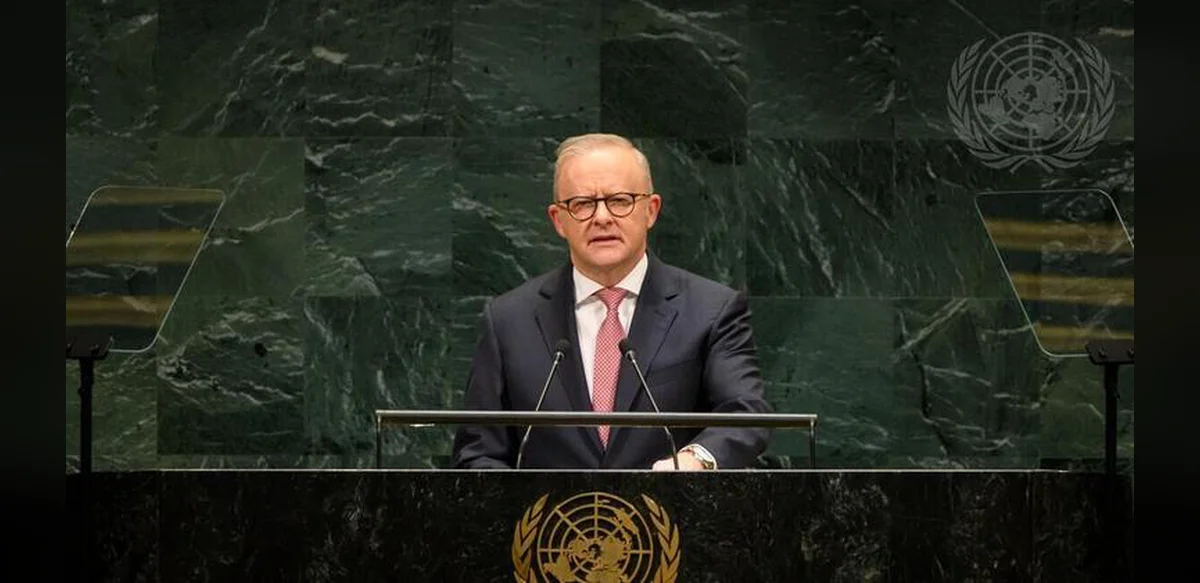
Australian leadership emphasized the importance of collective international action during a major address at the United Nations General Assembly. The remarks focused on three critical areas requiring urgent global attention: the ongoing climate crisis, the rapid development of artificial intelligence, and the weakening of established international legal frameworks.
The speech highlighted how nations must unite to confront environmental challenges that transcend borders. Rising temperatures, extreme weather events, and shifting ecosystems demand coordinated policies and shared commitments from all countries. Without such unity, progress on reducing emissions and protecting vulnerable regions will remain limited.
Attention also turned to emerging technologies, particularly artificial intelligence. The address noted that these tools offer significant benefits but also pose risks if left unregulated. International guidelines and cooperative oversight were presented as essential to ensure responsible innovation that serves humanity rather than creating new divisions or threats.
A third theme centered on the erosion of international rules. The speaker stressed that respect for established norms and treaties forms the foundation of stable global relations. When these principles are ignored, conflicts and instability increase, affecting security and development worldwide.
Delegates from various regions listened as the need for renewed multilateral engagement was outlined. The address called for practical steps, including regular dialogues and joint initiatives, to rebuild trust and effectiveness in international institutions.
Observers noted that the message aligned with broader discussions at the assembly about shared responsibilities. Climate finance, technology standards, and legal accountability were among the topics expected to feature in follow-up meetings.
The intervention comes at a time when multiple global challenges intersect. Environmental degradation continues to accelerate in many areas, while advances in computing power raise questions about governance and ethics. Simultaneously, disputes over territorial claims and treaty obligations test the limits of existing agreements.
Australian representatives expressed hope that the assembly would serve as a catalyst for concrete outcomes. They pointed to past successes in collective problem-solving as evidence that progress remains possible when countries work together.
Further sessions at the gathering are scheduled to explore these themes in greater detail. Working groups may be formed to develop proposals on climate targets, AI safety protocols, and mechanisms to strengthen compliance with international law.
The overall tone of the address was constructive, focusing on opportunities for partnership rather than assigning blame. Emphasis was placed on inclusive approaches that consider the needs of both developed and developing nations.
In the days ahead, diplomatic channels are expected to carry forward the ideas presented. Bilateral and regional discussions will likely build on the call for cooperation, aiming to translate words into measurable actions.
This intervention reflects a consistent position that global problems require global solutions. By addressing climate, technology, and legal order together, the speech sought to encourage a comprehensive response from the international community.


