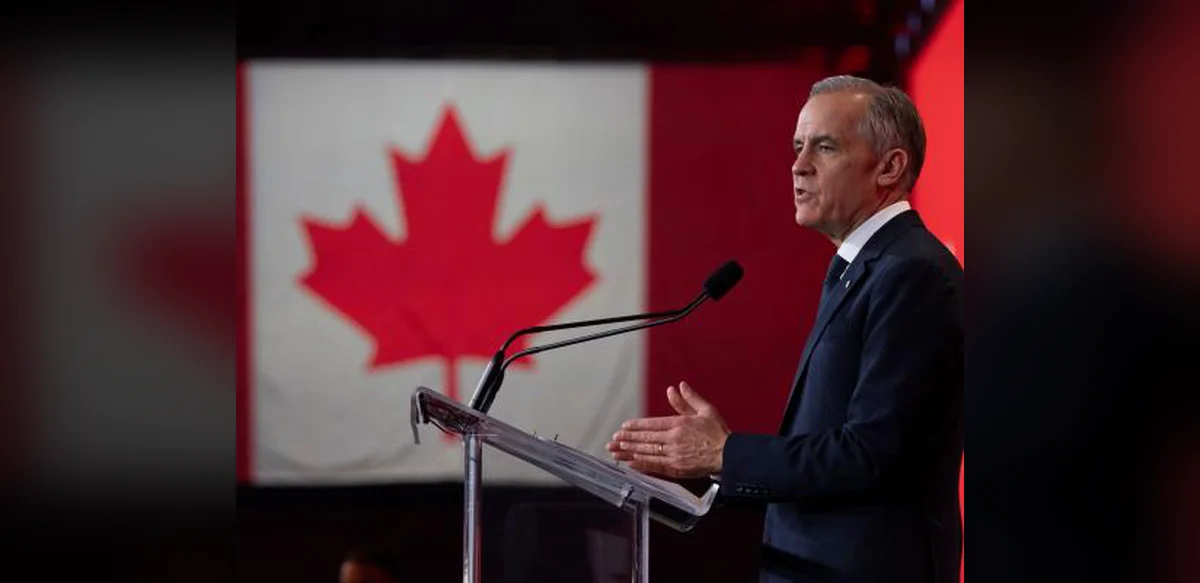
Canada’s Prime Minister Mark Carney appears set to achieve a majority government, as his Liberal Party is expected to succeed in at least two key byelections and has attracted several defections from opposing parties. This shift from a solid minority to a slim majority via election wins and crossovers has enhanced Carney’s image as a practical leader who rises above partisan conflicts. However, his strategy of recruiting politicians from various backgrounds has ignited internal discussions within the Liberals about the party’s core principles and the dangers of amassing greater authority.
Results from three byelections on Monday are anticipated to grant the Liberals control of parliament. Two of these contests are in reliable Liberal areas, while the third is projected to be extremely close. These votes come after multiple recent party switches. Last week, Conservative Marilyn Gladu became the fourth from her party to defect to the Liberals. Additionally, Nunavut MP Lori Idlout from the New Democratic Party has joined Carney’s group. The deputy leader of Ontario’s NDP is also running as a Liberal in a Toronto byelection, where she is favored to win comfortably.
Political advisor Scott Reid, who previously served as communications director for former Liberal Prime Minister Paul Martin, described the recruitment of individuals from varied political backgrounds during a vulnerable minority government as nearly without precedent. He suggested it warrants careful analysis. Reid attributes this trend partly to the ongoing influence of Donald Trump, including his threats against Canada and economic pressures. This prolonged dispute with a key ally has prompted some politicians to move away from strict party lines and adopt a more unified national stance.
Reid noted that Trump’s actions helped elevate Carney’s distinctive skills. He added that current events reflect a public desire for steadiness, viewing Carney as a leader suited for challenging times. This process resembles the subtle formation of a coalition government.
Conservatives have condemned these defections, accusing Carney of engineering a majority through secretive agreements rather than voter approval. Conservative leader Pierre Poilievre shared on social media that such crossovers should prompt byelections to let voters decide, referencing Gladu’s earlier stance on the issue.
Gladu’s departure, as a social conservative, represents a setback for Poilievre, who faces growing unrest in his party despite a strong leadership endorsement. Rumors suggest more Conservatives may switch to the Liberals. Reid views this as a major risk to Poilievre’s position, outlining a scenario where significant leads and seats are lost, leading to political downfall.
Within the Liberal Party, Gladu’s inclusion has raised concerns about expanding the party’s inclusivity and the potential compromise of ideals. Gladu backed the freedom convoy amid the pandemic and holds anti-abortion positions that conflict with Liberal standards. Under previous Prime Minister Justin Trudeau, candidates had to support abortion rights.
Columnist Supriya Dwivedi, a former advisor to Trudeau, questioned on social media whether the party’s values are being overlooked, referencing Carney’s 2021 book. Carney told reporters that Gladu agrees to align with the government on women’s reproductive rights. He emphasized that the Liberal Party’s principles remain unchanged and that defectors contribute valuable insights and vigor during a critical period.
Gladu stated she has always supported women’s right to choose, despite her faith background, and pledged to vote accordingly to safeguard women’s freedoms and rights. Jordan Leichnitz, a former senior strategist