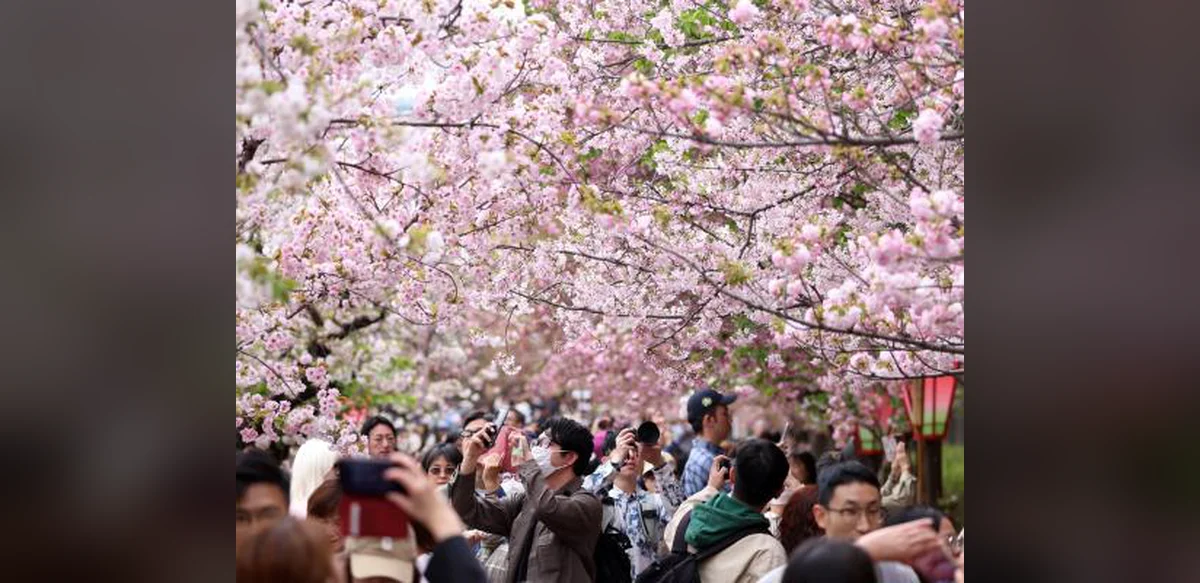
In his last months, a professor dedicated to tracking cherry blossom seasons anticipated the arrival of spring flowers. Yasuyuki Aono from Osaka Metropolitan University compiled one of the globe’s oldest records of seasonal climate patterns by documenting the blooming dates of cherry trees in Japan. Drawing from historical documents starting in the 9th century, his research demonstrated that these blooms have shifted earlier over recent years, serving as a key indicator of global warming.
Last April, Aono shared an image of his data table on social media, noting April 4 as the peak bloom for the mountain cherry species, Prunus jamasakura, in 2025. He prepared an entry for 2026 but passed away on August 5 of that year, as confirmed by former associates reached by journalists.
Tuna Acisu, a data expert at Our World in Data, which features a graph from Aono’s information, observed his intent to persist with the work. She found it touching. Concerned that the ancient record might end, Acisu initiated a search last week for a successor. A Japanese scholar has now volunteered to monitor the blooms formally.
This individual is reviewing the same historical materials as Aono to determine this year’s peak and will announce it soon. The researcher prefers anonymity until details are settled. Acisu’s team discovered Aono’s death after his university profile vanished in January, with no apparent continuation of his efforts. Spring passed without updates on the mountain cherry.
After Acisu’s appeal, numerous responses arrived, and she expressed relief and thanks that the dataset will endure. Importantly, the new observer is based in Japan and will track the identical species in the same spot: Arashiyama, Kyoto. While other initiatives follow cherry blooms nationwide for cultural and tourism reasons, they focus on different varieties, such as the 19th-century Somei-yoshino cherry (Prunus x yedoensis), monitored by the Japan Weather Association.
The exceptional length of Aono’s 1,200-year dataset on the mountain cherry underscores its value, Acisu noted. Researchers have identified climate change signals in various records, including tree growth rings, ocean sediment pigments, and historical notes from church organ maintainers in Britain.
Aono’s findings included the earliest recorded blooms in 2021 and 2023, on the 85th and 84th days of those years. Toshio Katsuki, a tree specialist at the Forestry and Forest Products Research Institute in Ibaraki, praised Aono’s contributions as vital and supported ongoing observations for scientific merit.
Richard Primack, a biology professor at Boston University who encountered Aono in Japan in 2006, recalled how Aono mastered ancient Japanese to assemble his dataset. By examining old archives for mentions of Kyoto’s cherry festivals, he pinpointed bloom dates back to 812, despite some gaps.
Primack described the interaction as remarkable, highlighting Aono’s commitment. In a recent study, Primack and Katsuki examined Somei-yoshino cherries from 1965 to 2024, finding that warmer winters in southern Japan lead to diminished blooms, with many buds dropping unopened, resulting in lackluster displays.