


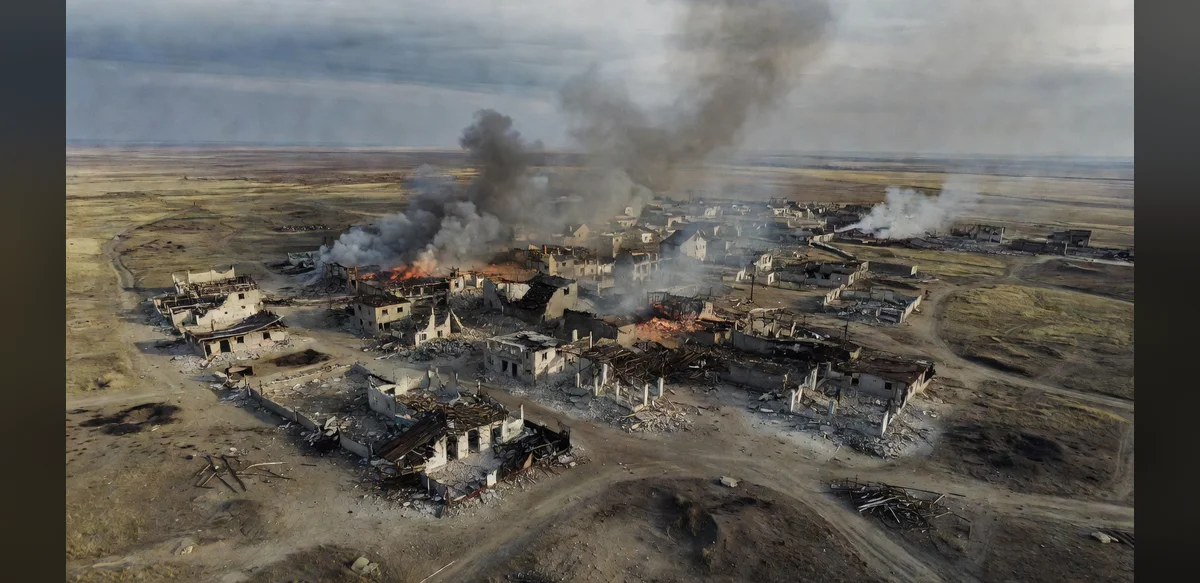
During its ground operation in southern Lebanon, the Israeli army has completely destroyed multiple villages by planting explosives in residences and triggering large-scale remote blasts. Analysis of three videos shared by the Israeli military and on social platforms reveals extensive detonations in the border communities of Taybeh, Naqoura, and Deir Seryan. Local Lebanese reports indicate similar actions in additional nearby villages, though satellite images to confirm these were unavailable.
These operations follow statements from Israel’s defense minister, Israel Katz, who advocated for demolishing all homes in border areas, mirroring tactics employed in Rafah and Beit Hanoun in Gaza to neutralize risks to northern Israeli settlements. In Rafah, southern Gaza, the military razed about 90% of residences. Experts have labeled such widespread home destruction in Gaza as domicide, a method aimed at making regions unlivable by systematically targeting civilian housing. Israel faces genocide allegations related to its Gaza campaign.
The Israeli forces maintain that the demolitions target Hezbollah’s infrastructure, including tunnels and military sites allegedly integrated into civilian buildings. Israel has announced plans to control large portions of southern Lebanon up to the Litani River, creating a security buffer zone. Displaced residents will be barred from returning until threats to Israel’s northern areas are eliminated, raising fears of prolonged displacement.
Human rights organizations argue that these large-scale remote explosions may constitute wanton destruction, classified as a war crime. International humanitarian law forbids the intentional demolition of civilian properties unless justified by military necessity. Ramzi Kaiss, a Lebanon researcher at Human Rights Watch, stated that potential military use of some structures by Hezbollah does not warrant the wholesale obliteration of entire border villages.
For locals from these areas, viewing footage of their homes being destroyed has been devastating, erasing not just buildings but also deep-rooted personal histories. Ahmad Abu Taam, a 56-year-old shop owner from Taybeh who sells construction materials, described watching the central square explode: ‘That’s where my business is—my livelihood, my past, everything. In an instant, it’s all blown away.’ He now feels like a refugee without a home.
Abu Taam was previously displaced during the 2006 conflict between Hezbollah and Israel. Although his village suffered damage then, he returned eagerly and rebuilt his store. He recalled photographing the town square adorned with lights upon residents’ return. ‘I put aside the hardship and started over. Coming back felt like reclaiming something precious. But now, it’s all erased—completely gone,’ he said.
Ahmad Ibrahim, a 50-year-old farmer from Deir Seryan, keeps only a handful of photos of his home, having left others behind when evacuating on March 2, assuming he would retrieve them later. ‘My entire existence is tied to that place; I’ve rarely ventured far. It was a charming, traditional village with warm, welcoming people—at least until the fighting,’ Ibrahim noted.
As spring arrives in Lebanon, Deir Seryan would typically flourish with blooming flowers after winter rains. Ibrahim lamented that his children are missing out on this season at home, instead enduring displacement. ‘They cherish memories of spring and summer nights—picking wildflowers and herbs in the fields, outdoor meals, and campfires for tea. It was an ideal spot for childhood,’ he added.
Mohammed Hashem, a 65-year-old physician, dedicated 15 years of long workdays to fund the construction of the Luna motel in Naqoura, completed in 2012. The multi-level hotel attracted international visitors, domestic tourists, and UN personnel on leave, drawn to the coastal town’s renowned beaches. ‘Summers saw full bookings. We earned positive reviews and honors. It was a satisfying life—peaceful and productive, truly a family venture,’ Hashem recalled.
Upon learning of the hotel’s destruction, Hashem received an influx of supportive messages from past guests. ‘Thousands of reactions poured in, with people sharing their fondness for the spot. Our visitors were always’

