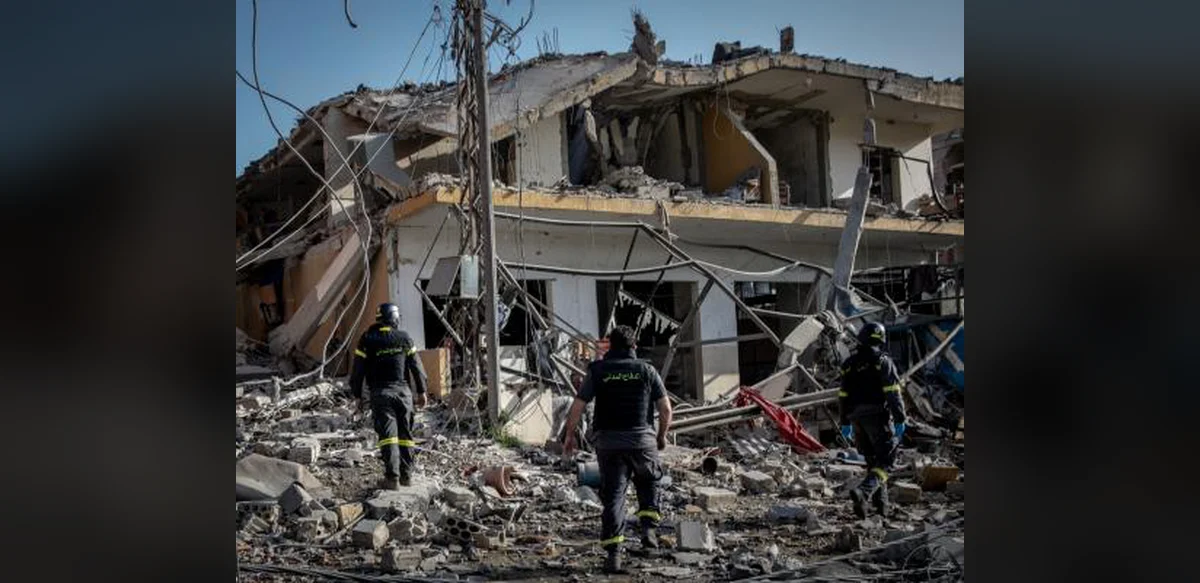
Direct discussions between Lebanon and Israel have been absent for many years, but recent conflicts involving Iran have reshaped regional dynamics, as explored in a new podcast from The Guardian. On Tuesday, the two nations are scheduled to start negotiations that might promote stability in the area. These talks follow Israeli strikes in Lebanon last week that resulted in 357 deaths, complicating a recently declared ceasefire between the US and Iran. The sessions in Washington will exclude Hezbollah, which Israel seeks to eliminate from Lebanese territory. Reporting from Beirut for The Guardian, William Christou highlights the unexpected nature of these direct government-level discussions. The two countries have maintained a state of conflict since the early 1980s, with no diplomatic ties and restrictions like barring entry to Lebanon for those with Israeli passport stamps. Nosheen Iqbal examines the reasons behind the talks, noting US pressure on Israel and Iran’s interest in a truce, which has led Hezbollah to permit the proceedings. However, concerns arise that cooperation between the Lebanese authorities and Israel to diminish Hezbollah’s influence could spark domestic instability in Lebanon. Christou notes escalating tensions. The podcast is available for listening. Shipping records from LSEG indicate that a US-sanctioned tanker passed through the Strait of Hormuz on Tuesday, challenging the American naval restriction. According to Reuters, the vessel Rich Starry is owned by Chinese interests and staffed by a Chinese crew. Bloomberg earlier reported that this medium-range ship, previously called Full Star, was added to Washington’s blacklist in 2023 for aiding Iran in bypassing energy export limits. It remains uncertain if the tanker stopped at Iranian facilities or transported goods during this passage. This marks the ship’s second effort to leave the Persian Gulf in under 24 hours. As the blockade started, it approached the strait near Iran’s Qeshm Island, reversed course, and then resumed its outbound journey shortly after, signaling its Chinese ownership and crew—a common precautionary tactic. This move will gauge US willingness to intercept ships linked to the globe’s top oil buyer. The international maritime and energy sectors have been anxious since President Trump declared the naval blockade of Iran, effective from 10 a.m. New York time on Monday, aimed at curbing Iran’s oil sales. Many contacts in the Middle East and Asia told Bloomberg they would hold off on actions until the blockade’s specifics are clarified. Earlier, US Vice President JD Vance stated that talks with Iran had advanced, particularly on demands to eliminate nuclear materials from Iran and establish safeguards against future uranium enrichment. In a Fox News interview, Vance noted Iranian concessions but said they required further approval from Tehran leaders. He added that US representatives emphasized President Trump’s openness to normalizing relations with Iran if it develops a standard economy, though details were not provided. Vance expressed optimism for a comprehensive agreement, contingent on Iran’s initiative. According to the Associated Press, Pakistan has suggested hosting another session of US-Iran negotiations in Islamabad soon, prior to the ceasefire’s expiration. Anonymous officials, unauthorized to speak publicly, indicated the plan hinges on the parties’ preferences for venue. One described the initial talks as part of a continuing diplomatic effort, not a singular event. The White House has not commented directly on potential new discussions. Press Secretary Karoline Leavitt stated that President Trump, Vice President Vance, and the team have firmly outlined US positions, and the blockade will heighten Iran’s urgency for an accord. The New York Times reports that Iran offered to halt uranium enrichment for up to five years, countering the US request for a 20-year suspension during weekend talks in Pakistan. The proposal was declined by the Trump administration, per Iranian and US sources. The information could not be independently confirmed. The Times noted that both sides exchanged ideas on pausing Iran’s nuclear program during the negotiations, though the report cuts off there.