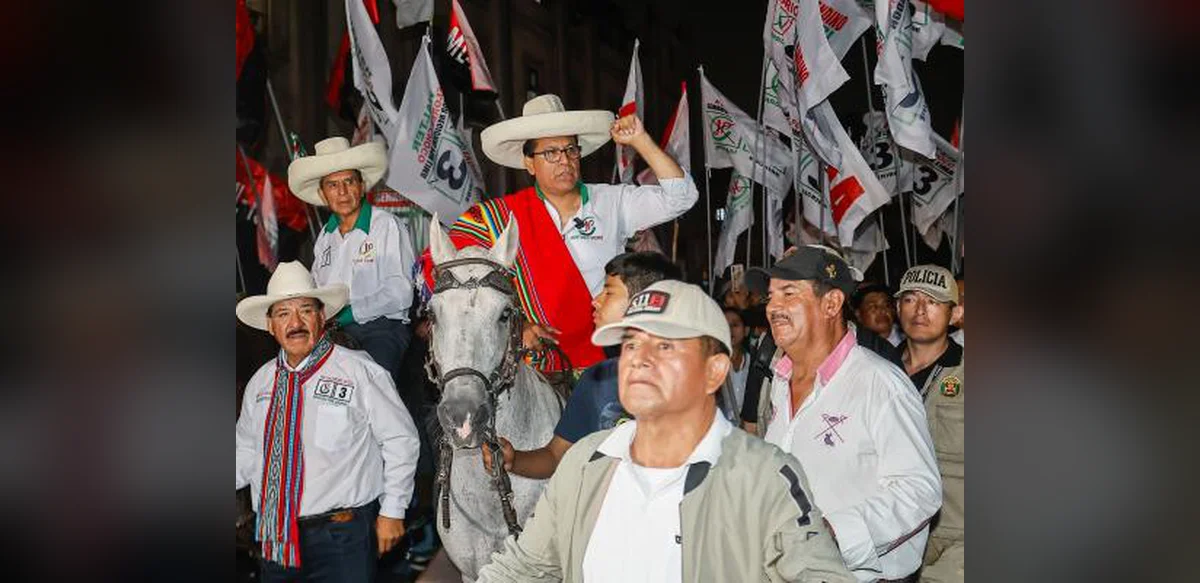
Voters in Peru will cast their ballots on Sunday, aiming to halt a period of unrest that has seen nine leaders in ten years, along with rising violent offenses, graft controversies, and deep skepticism toward government bodies and officials. Around 27 million qualified individuals will select from an unprecedented 35 contenders for the presidency, plus candidates for the two-chamber legislature, using a ballot paper almost half a meter long—the largest ever in the nation. Combating criminal activity ranks as the primary issue for electors, given unprecedented levels of murders and blackmail, though graft in politics follows closely. Four ex-leaders are imprisoned, largely due to graft allegations tied to a Brazilian building firm. Keiko Fujimori, who has run for president three times and is the offspring of deceased former leader Alberto Fujimori, maintains a slim advantage in surveys. Trailing her are comedian Carlos Álvarez and two ex-mayors of the capital: the far-right Rafael López Aliaga and media entrepreneur Ricardo Belmont. No contender exceeds 15% in polls, rendering a second round on June 7 highly probable, per Urpi Torrado from polling firm Datum Internacional. ‘This ranks among the least predictable votes ever,’ Torrado noted. ‘Unexpected outcomes are possible this weekend, as the runoff qualifiers remain uncertain.’ At 50, Fujimori is on her fourth presidential attempt, having advanced to runoffs in 2021, 2016, and 2011, each time defeated by slim margins. The conservative acted as first lady during her father’s authoritarian rule in the 1990s; he was found guilty of graft and rights violations, serving 16 years behind bars. Ricardo Belmont, capital mayor from 1990 to 1995, has climbed in surveys, attracting youth support through positive rhetoric and the phrase ‘hugs not bullets,’ adapted from Mexico’s prior president Andrés Manuel López Obrador. Political expert Gonzalo Banda, a researcher at University College London’s Institute of the Americas, labeled Belmont an outsider drawing backing from across the ideological spectrum. The 80-year-old has a history of prejudiced and discriminatory comments. López Aliaga, who recently stepped down as capital mayor, pursued an extreme conservative agenda filled with false information, inflammatory language, and intimidation toward media and rivals. Yet the 65-year-old transportation tycoon, against same-sex unions and vowing to deny terminations for young assault survivors, has declined in polls. Comedian Álvarez, famous for mimicking leaders over three decades, entered unexpectedly. His platform, however, is serious: he praises Donald Trump and El Salvador’s Nayib Bukele, advocating large-scale prisons and capital punishment in his anti-crime push. ‘It’s ironically fitting that Peru’s political decline might lead to a satirist of politicians becoming leader,’ Banda observed. Additional hopefuls include Roberto Sánchez, backed by removed ex-leader Pedro Castillo and donning a similar broad hat. Moderate options feature ex-defense chief Jorge Nieto and former academic head Alfonso López Chau. Torrado added: ‘No figure has arisen to inspire optimism or the belief that they can alter the nation’s direction or address its challenges. Citizens believe officials have ignored public needs in recent times.’