


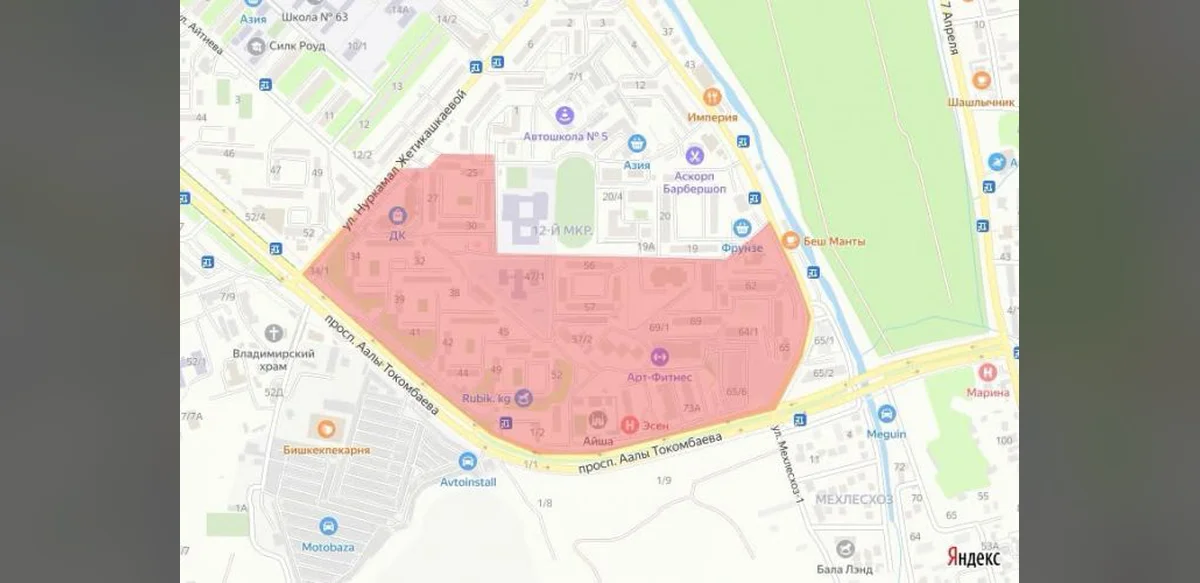
Municipal services have scheduled a temporary halt to drinking water delivery across one defined residential zone in the Kyrgyz capital. The interruption begins at nine in the morning and ends at eight in the evening on the twenty third of July. All households, educational sites, medical centers and assorted public buildings inside the twelfth microdistrict will be without supply for those eleven hours.
The decision covers apartment blocks, primary and secondary schools, kindergartens, clinics, hospitals and additional social facilities. Industrial workshops and commercial service points located inside the same boundaries are likewise included. Officials emphasize that the measure remains limited to this single microdistrict and does not extend to neighboring areas.
Preparations for the outage include advance storage of water for drinking, cooking and hygiene needs. Facility administrators have been notified so they can adjust daily operations and safeguard essential equipment that depends on continuous flow. Health institutions are expected to rely on previously filled reserves or approved alternative sources during the window.
Residents are encouraged to fill containers the evening before the suspension starts. Schools and preschools should verify that sufficient stocks exist for meals and sanitation. Industrial sites may need to pause processes that require steady water input until service resumes after eight in the evening.
The interruption forms part of routine network maintenance aimed at preserving long term reliability of the city supply system. Once work concludes, pressure will be restored gradually and quality checks performed before normal delivery restarts. No extension beyond the stated hours is currently anticipated.
Communication channels remain open for any urgent queries from affected parties. Updates will be issued through official municipal announcements if conditions change. The focus stays on minimizing inconvenience while completing necessary infrastructure tasks within the announced timeframe.
This schedule allows households and organizations ample opportunity to plan around the eleven hour gap. By storing water ahead and adjusting usage patterns, the impact on daily routines can be reduced. The authorities continue to monitor the situation to ensure restoration proceeds smoothly once the maintenance window closes.

