

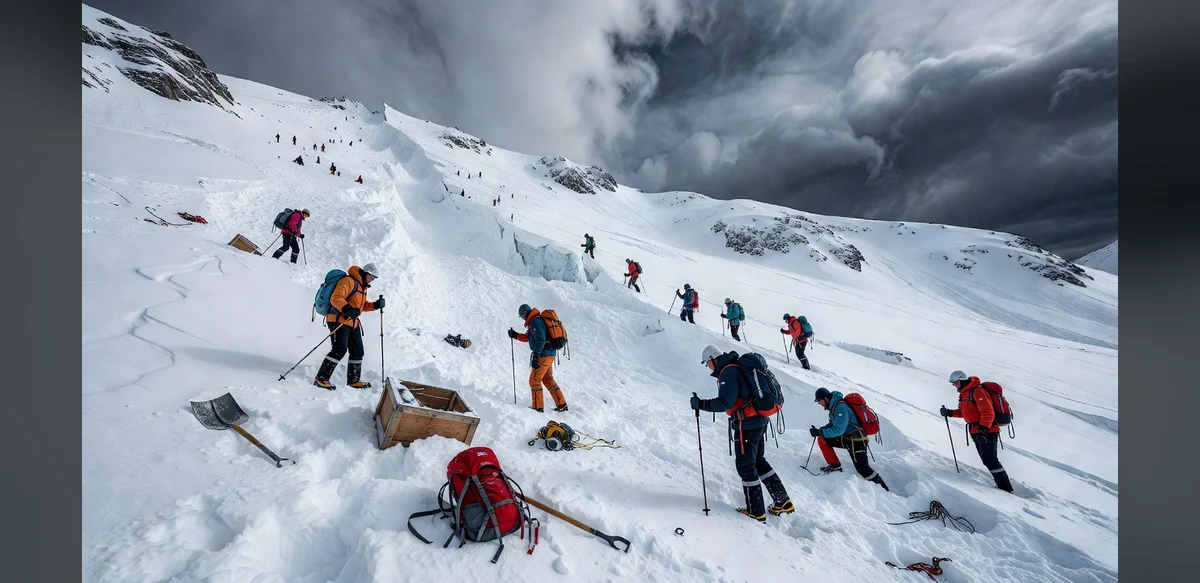
Rescue personnel operating in a remote mountainous area of Pakistan have successfully recovered the remains of three individuals from a group of ten climbers who went missing following an avalanche on Broad Peak. The incident occurred in a high-altitude region known for its challenging terrain and unpredictable weather conditions.
According to an official statement released by the regional administration in Gilgit-Baltistan, the recovered remains have been identified as belonging to a climber from Nepal and one from Oman. The statement provided limited additional details at this stage but confirmed that efforts to locate the remaining seven individuals are continuing amid difficult environmental circumstances.
Broad Peak, situated in the Karakoram range, attracts international mountaineering teams each season due to its significant elevation and technical routes. Avalanches remain a persistent hazard in such environments, often triggered by shifting snow layers or sudden changes in temperature. Local authorities have emphasized the importance of coordinated search operations involving specialized personnel equipped for high-altitude conditions.
The recovery process involved navigating unstable snowfields and managing logistical challenges associated with the remote location. Teams have been working in shifts to maximize coverage while prioritizing safety protocols. The regional government has coordinated with international embassies to facilitate identification and notification procedures for the families of those affected.
Mountaineering expeditions in this part of the world require extensive preparation, including acclimatization periods and reliance on local support staff. Incidents like the current one underscore the inherent risks climbers accept when attempting peaks in the greater Himalayan system. Weather monitoring and route assessment play critical roles in mitigating dangers, though complete predictability remains elusive.
Officials have not released further information regarding the status of the ongoing search for the seven unaccounted-for climbers. Updates are expected as conditions permit and additional findings emerge. The focus remains on thorough coverage of the affected area while supporting the welfare of all rescue participants.
This event adds to the record of mountaineering accidents documented in the region over recent years. Authorities continue to review safety guidelines and communication systems to improve response times in future situations. The international climbing community often follows such developments closely, recognizing the shared commitment to preserving life in extreme settings.
Local residents and support networks in nearby settlements have expressed solidarity with the affected families. Humanitarian considerations remain central to the response, with medical and logistical resources allocated as needed. The regional administration has reiterated its commitment to transparency as the operation progresses.
Further details may become available once the search reaches additional sectors of the mountain. All parties involved stress the need for patience and adherence to established safety measures throughout the process. The story continues to develop as teams persist in their efforts under demanding circumstances.


