

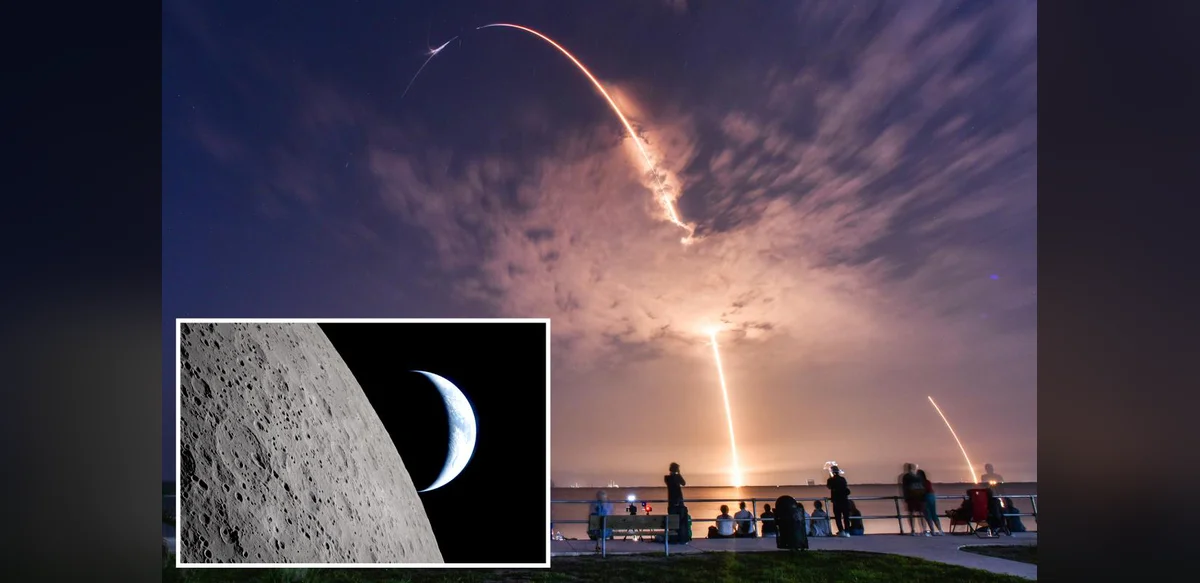
Astronomers and space researchers are preparing to observe an unusual event scheduled for next week when a spacecraft from a recent commercial mission is expected to collide with the lunar surface. The impact is described as unplanned and will mark the end of the vehicle’s journey after it was left in a trajectory that brings it toward the moon.
Officials involved in tracking the object have confirmed the timing and location of the anticipated collision. While the precise details of the landing site remain under review, the event is drawing attention because of the potential visibility of the resulting blast from Earth under favorable conditions. Observers with appropriate equipment may be able to detect the flash if atmospheric circumstances align.
The collision itself stems from the conclusion of a prior launch sequence in which the upper stage of the rocket was not directed into a long-term stable orbit or a controlled reentry path. Instead, its current course leads directly to the moon. Engineers note that such outcomes can occur when residual fuel and orbital dynamics are not adjusted after primary mission objectives are completed.
Scientists emphasize that the incident offers a rare opportunity to gather data on how objects strike the lunar surface. Instruments already positioned on or around the moon, along with ground-based telescopes, will monitor the event to record seismic signals, dust displacement, and any changes to the local terrain. This information is expected to contribute to broader studies concerning natural impacts and artificial debris that could affect future lunar operations.
Researchers have pointed out that understanding the effects of such collisions supports planning for sustained human presence on the moon. Data collected may help refine models used to assess risks from meteoroids or leftover hardware. Although the current event is not classified as a threat, the measurements obtained will add to the knowledge base used in evaluating potential hazards.
Public interest in the upcoming impact has grown as announcements circulated through scientific channels and media outlets. Amateur astronomers are being encouraged to review observation guidelines issued by professional organizations to determine whether they can contribute useful records. Safety reminders stress that direct viewing without proper filters or equipment is unnecessary and that professional observatories will provide the primary documentation.
The mission that placed the spacecraft on its current path was part of ongoing commercial spaceflight activities. These efforts continue to expand access to orbital and deep-space environments while also introducing new considerations for end-of-life vehicle management. Discussions within the industry have highlighted the importance of designing future missions with clearer disposal strategies to minimize unintended lunar or orbital encounters.
International space agencies have expressed interest in the data that will emerge from the event. Coordination among various monitoring stations is already underway to ensure comprehensive coverage of the impact moment and its immediate aftermath. Preliminary findings are anticipated within days of the collision, with more detailed analyses to follow over subsequent weeks.
While the scale of the blast is expected to be modest compared with natural meteor strikes, its predictability allows for targeted observation campaigns. This controlled aspect distinguishes the event from random impacts and increases its value for calibration of detection systems.
Overall, the scheduled lunar collision next week serves as a reminder of the complexities involved in managing objects in deep space. It also underscores the scientific benefits that can arise even from unplanned occurrences when proper monitoring resources are applied. Continued attention to such incidents will support safer and more informed exploration of the moon and surrounding regions in the years ahead.


