


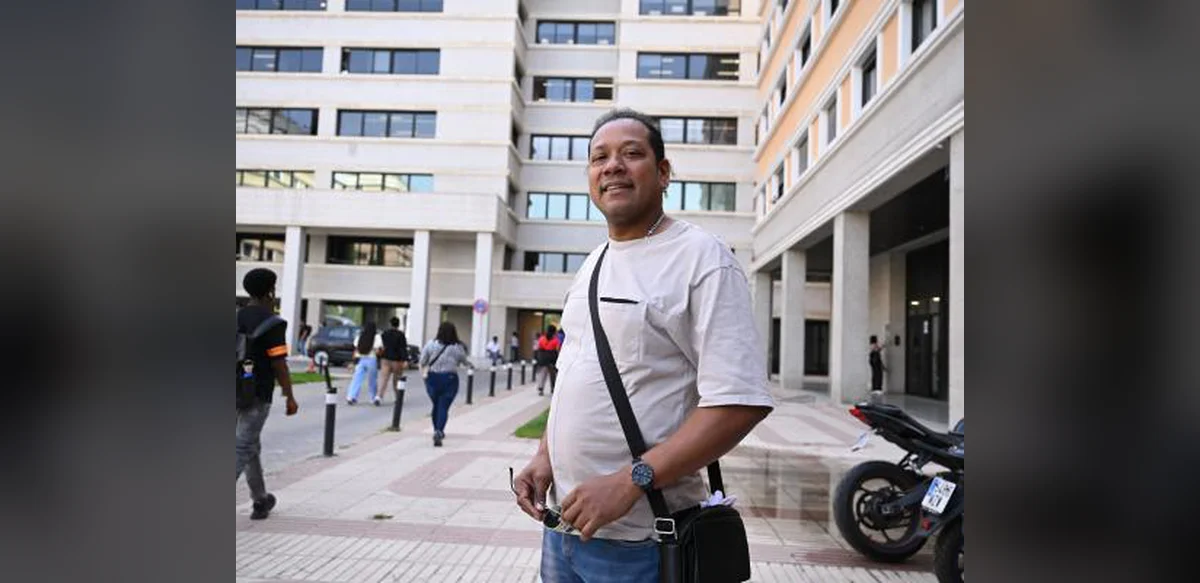
Near Madrid’s lively Calle Ponzano, known for its nightlife, a different scene unfolds at the regional transport authority’s offices. People exit the building into the spring sunlight, some disappointed and others pleased with certificates verifying their public transit usage via reloadable cards. This paperwork helps undocumented immigrants demonstrate residency in Spain, enabling them to legalize their status under a recent government policy expected to aid at least 500,000 individuals.
Among those benefiting is Gimbad Mosquera, a 46-year-old Colombian musician from Antioquia, who aims to perform with his vallenato group throughout Spain and Europe. Similarly, Shiva Pyuthani and Sirjana Ghising from Nepal obtained their transit records to pursue jobs in the service industry. ‘We came here to find employment and send earnings back to support our families,’ Ghising explained.
While several European nations tighten borders and intensify opposition to immigration, Spain’s socialist administration is promoting the economic and societal gains of migration through this large-scale legalization effort, which started last week and accepts applications until June’s end. Eligible participants receive a one-year residency permit if they can verify arrival before December 31 last year, at least five months of presence in Spain upon applying, and no criminal history in Spain or their home country.
The ruling socialists view this as an essential step to integrate workers from the shadow economy and grant them equal protections. However, the conservative People’s Party argues it could strain public resources, and the far-right Vox accuses Prime Minister Pedro Sánchez of attempting to supplant the local population and hasten an ‘invasion.’
Such debates seem distant to applicants navigating the process at the transport office. Mosquera, in Spain for 13 months, secured an appointment but still needed additional documents, including the transit certificate. ‘There’s a lot of uncertainty, and figuring out the steps is challenging,’ he noted. His Venezuelan partner, Yelitza Villega, found the procedure complex but less daunting than expected, though she mentioned that those with means hire attorneys for assistance.
A Peruvian woman, who preferred anonymity, explained that Latin Americans, forming the bulk of Spain’s undocumented workforce, exchange tips via messaging apps. ‘Staying informed is key,’ she said. ‘Attending NGO sessions with legal experts is helpful, as official guidance is limited. Some pay lawyers around €300 if affordable.’
She also highlighted early morning waits for vulnerability certifications from aid groups. Images from across Spain depict extensive lines at municipal and consular sites as the program launches. While officials anticipate aiding about 500,000, a Funcas study estimates 840,000 undocumented migrants, mostly from Latin America (including 290,000 Colombians, 110,000 Peruvians, and 90,000 Hondurans), plus 50,000 from Africa and 14,000 from Europe.
Law enforcement groups caution that the volume of requests might overload systems and burden officers with paperwork. Immigration staff recently canceled a planned strike after securing better terms from the government. Political disputes continue, with Sánchez recognizing the policy counters prevailing European trends.

