


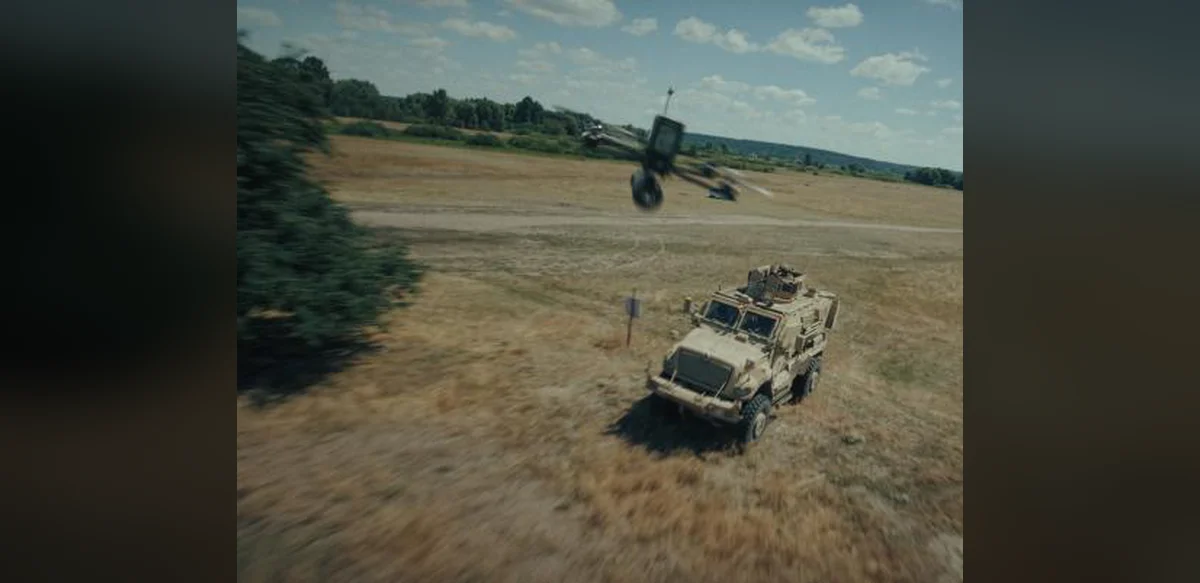
A new Ukrainian war film, Killhouse, is being described as a contemporary counterpart to Saving Private Ryan, adapted for the era of unmanned aerial vehicles. This action-packed thriller highlights advanced combat tools and debuted this week. It includes appearances by prominent Ukrainian figures, such as former military intelligence leader Kyrylo Budanov. Notably absent is any reference to Donald Trump. The story unfolds in 2024, during a period of alliance between the United States and Ukraine.
Director Liubomyr Levytskyi drew inspiration from an actual incident where a couple attempting to save family members faced a Russian assault. The man sustained severe injuries, and a nearby Ukrainian team deployed a drone carrying a note instructing: ‘Follow me.’ The woman trailed the device, evading landmines and gunfire, while Russian troops discarded her unresponsive husband into a ditch. Remarkably, he lived through the ordeal.
Levytskyi recounted how a journalist friend shared the tale, which profoundly affected him after viewing rescue footage. He initially created a 30-minute documentary titled Follow Me, which gained significant notice. Recognizing its impact, especially regarding innovative drone use, he expanded it into a full-length feature.
Filmed last year near Kyiv over two and a half hours, the movie incorporates creative elements, such as a young girl abducted by Russian forces. Settings include the White House command center, occupied areas in eastern Ukraine, and a hazardous rural farmhouse. The plot features a firefight and vehicle pursuit in central Kyiv.
US journalist Audrey MacAlpine, portraying a fictionalized self, noted that production halted multiple times due to air raid warnings, requiring the crew to seek shelter. Actor Denis Kapustin mentioned that some team members rested in bunkers during alerts. He described the film as highly self-referential and contemporary, reflecting the multifaceted aspects of modern warfare, including the competition for technological dominance.
Real soldiers acted alongside professionals, with special effects mimicking blasts. Post-production, Kapustin enlisted in the actual 3rd Assault Brigade, the unit depicted in his role, and now operates drones. One sequence shows Ukrainian commandos storming a structure and eliminating Russian adversaries. Kapustin explained that while much of the conflict occurs remotely, close-quarters combat happens in devastated eastern locations like Vovchansk, emphasizing strategies to minimize casualties.
Audience feedback in Ukraine has been favorable. At the Kyiv premiere, Maria Hlazunova from the Dovzhenko Centre praised the blend of real personalities like Budanov with narrative elements, calling it strongly nationalistic yet effective despite some overly sentimental parts.
Ukraine’s primary intelligence organizations, the SBU and DIU, supported the project by supplying vehicles like Humvees, MaxxPros, and a Black Hawk helicopter. The film displays domestically produced drones, including the Shark reconnaissance model. Producers claim it pioneers the use of authentic combat drone recordings in a feature film. They are developing an English edition for American markets and exploring a miniseries format for services like Netflix. Funded privately with a $1.1 million budget, the story poses an ethical dilemma: whether risking numerous lives to rescue one individual, here a captured child, is justified.
According to Ukraine’s military communications, the movie highlights overlooked aspects amid routine battle reports, showing troops venturing into dangerous areas to retrieve civilians. Levytskyi noted that Russian leader Vladimir Putin misjudged Ukraine’s determination during the 2022 invasion, expecting a swift victory. Over four years on, the conflict persists. He emphasized that unity among Ukrainians instills fear in opponents. Additional reporting by Jake Jacobs.

