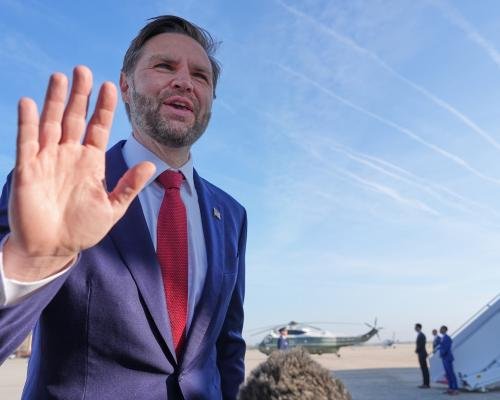
Vice President JD Vance has arrived in Islamabad, Pakistan, to lead efforts in brokering a peace agreement with Iran, marking his initial major role in the ongoing conflict. Previously critical of U.S. military involvement in the Middle East, Vance has remained relatively silent since the start of this operation. He now confronts Iranian representatives who are strengthened by their recent dominance over the Strait of Hormuz and their ability to withstand extensive attacks from U.S. and Israeli forces, the most significant in recent history.
This session represents the most senior-level interaction between the U.S. and Iran since the 1979 revolution. Vance’s objective is to transition from a fragile temporary halt in fighting to a stable resolution. However, he must navigate a tough decision: accept substantial compromises to Iran to maintain the truce and reopen the Strait of Hormuz, or terminate the talks, which could lead to resuming a conflict that lacks public support in the U.S.
The outcome may influence Vance’s potential 2028 presidential campaign, where his alignment with MAGA principles is under scrutiny due to his perceived lack of strong resistance to the war. Upon taking office, Vance advocated for a less interventionist approach and an end to prolonged U.S. engagements in the Middle East. These discussions risk pulling him deeper into the most extensive American action in the region since the Iraq War began.
Uncertainty surrounds whether the talks will proceed. Recent large-scale Israeli operations in Lebanon and disputes over that nation’s role in the ceasefire have frustrated Iranian officials. Additionally, Iran’s parliamentary speaker and key negotiator, Mohammad Bagher Ghalibaf, insisted that the U.S. must release frozen Iranian funds as a prerequisite for dialogue, a demand not yet acknowledged publicly by Washington. Ghalibaf stated on Friday that these conditions are essential before any negotiations start, just before the scheduled commencement in Islamabad.
Such statements could signal the start of intense bargaining. Iranian diplomats are known for their persistent, exhaustive negotiation tactics, described by Foreign Minister Abbas Araghchi as akin to marketplace haggling. This marks the first opportunity for them to apply this strategy to a U.S. vice president under pressure to reach an accord.
Prior to departing on Air Force Two for Pakistan, Vance indicated that his team had received explicit directives from President Donald Trump. He remarked to journalists that if Iran engages sincerely, the U.S. is prepared to respond positively, but any attempts to manipulate the process would meet resistance.
Experienced U.S. diplomats who have dealt with Iran note that Tehran’s hold on the Strait of Hormuz provides significant bargaining power against Washington. Although the U.S. could abandon the talks, it cannot ensure uninterrupted shipping through the Persian Gulf, giving Iran influence that might trigger global economic disruptions, including fuel scarcities and supply issues this summer.
Vance’s assignment in Islamabad comes after his visit to Hungary to support Prime Minister Viktor Orbán in an election he is poised to lose, potentially concluding his 16-year tenure and weakening a prominent ally in the international right-wing network endorsed by Vance. Hungarian officials sought a visit from Trump, but Vance was sent instead, drawing criticism for prioritizing a foreign political event amid the U.S. focus on the Iran conflict.
From the outset, Vance has played a secondary role in the administration’s communications regarding the Iran war. While Trump’s core team convened in Florida—dubbed ‘War-a-Lago’ by some—Vance participated remotely from the White House, alongside Director of National Intelligence Tulsi Gabbard, another advocate for restraint. Defense Secretary Pete Hegseth has provided regular updates on the situation, and Secretary of State Marco Rubio has been more vocal in supporting the effort than Vance.
President Trump described Vance’s perspective on the war as somewhat distinct from his own, noting Vance’s lesser enthusiasm but ultimate agreement on the necessity of action. Now, Vance is responsible for concluding the conflict he reportedly did not fully endorse.