

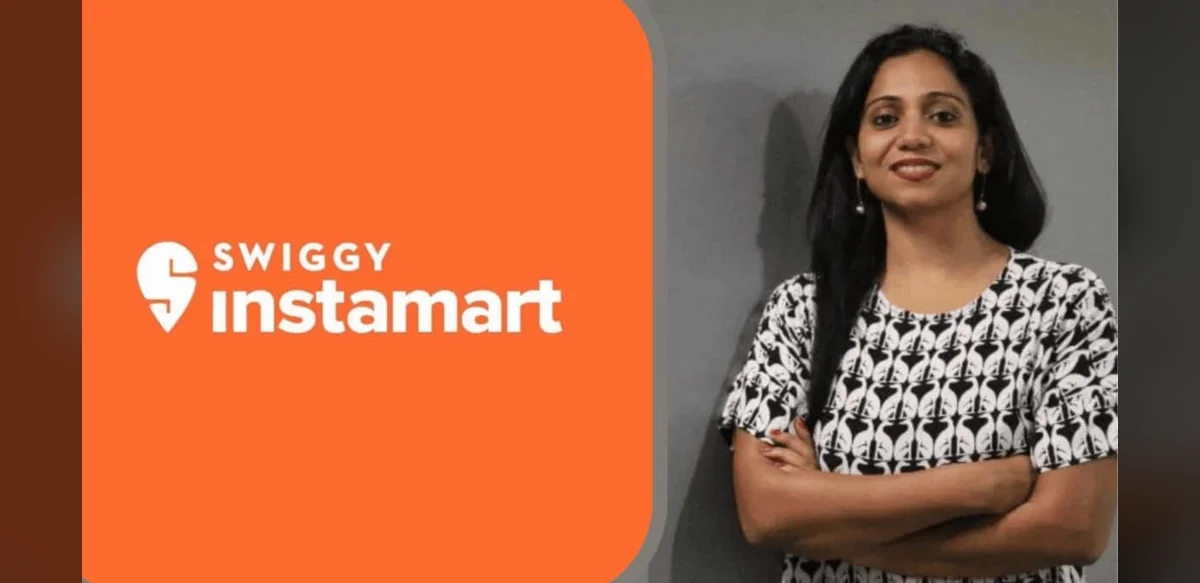
Nandita Sinha, who was born in Lucknow, has been appointed as the new chief executive of Swiggy Instamart with effect from August 3. The move places her at the helm of one of the leading quick-commerce platforms in India after her successful tenure as chief executive of Myntra.
Sinha completed her undergraduate studies at the Indian Institute of Technology Banaras Hindu University before pursuing further education at the Faculty of Management Studies. These academic credentials provided a strong foundation for her subsequent work in the technology and retail sectors.
Her professional journey has centered on e-commerce, where she has held positions that involved scaling operations, refining supply chains and expanding product categories. Observers note that her experience aligns closely with the demands of Instamart, which focuses on rapid delivery of groceries and household essentials.
Industry analysts view the appointment as part of ongoing efforts by Swiggy to strengthen its quick-commerce segment amid growing competition. Sinha is expected to bring operational discipline and customer-centric strategies developed during her time at Myntra.
The transition occurs at a time when quick-commerce services are expanding their geographic reach and assortment of goods. Sinha will oversee teams responsible for inventory management, last-mile delivery and technology integration.
Colleagues from earlier roles have described her leadership approach as methodical and data-driven. She is known for emphasizing measurable outcomes and cross-functional collaboration.
Sinha’s background in both engineering and management has allowed her to bridge technical and commercial aspects of digital retail. This combination is considered valuable for platforms that rely on real-time logistics and user-interface improvements.
The announcement has prompted discussion within the Indian startup ecosystem about talent movement between major consumer-internet companies. Several executives have highlighted the importance of experienced leaders in sustaining growth in competitive segments.
Swiggy Instamart operates dark stores and partners with local vendors to meet delivery targets that often fall within minutes. Sinha’s mandate is likely to include optimizing these networks while maintaining service quality.
Prior to her role at Myntra, Sinha accumulated experience across multiple e-commerce functions, including merchandising, marketing and business development. Each phase contributed to a comprehensive understanding of online retail dynamics.
Her appointment underscores the sector’s reliance on professionals who have navigated both established and emerging business models. Quick-commerce, in particular, requires rapid decision-making and adaptability to changing consumer patterns.
Looking ahead, Sinha is positioned to influence how Instamart evolves its offerings and infrastructure. Stakeholders will monitor key performance indicators such as order volume, delivery speed and customer retention under her guidance.
The broader quick-commerce market continues to attract investment as urban consumers seek convenience. Leaders with proven track records in scaling platforms are therefore in demand.
Sinha’s career trajectory from academic institutions in Uttar Pradesh and Delhi to senior roles in Bengaluru-based companies reflects common pathways in India’s technology sector. Her latest assignment adds another chapter to that progression.
Company statements emphasize continuity in strategic direction while welcoming fresh perspectives. Employees and partners have been briefed on the leadership change and its operational implications.
As Instamart prepares for the next phase of expansion, attention will focus on execution details that Sinha has historically prioritized. These include process standardization and technology-enabled efficiencies.
The appointment from August 3 marks a notable shift in the quick-commerce leadership landscape. Market participants will observe how Sinha applies lessons from fashion retail to the grocery and essentials category.
Overall, the move is seen as a logical alignment of individual expertise with organizational needs in a fast-evolving industry.


