


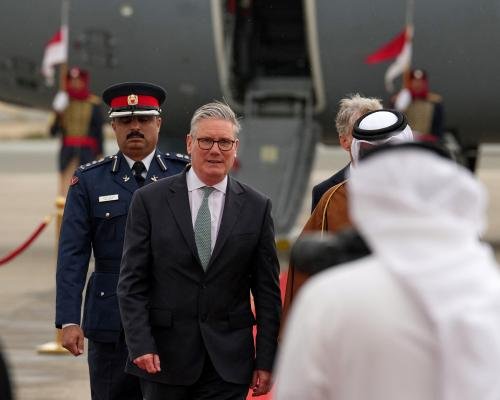
UK Prime Minister Keir Starmer held a conversation with US President Donald Trump regarding the development of a feasible approach to restore maritime traffic through the Strait of Hormuz after a ceasefire in the Middle East, according to reports. The discussion occurred while Starmer was in Qatar, where he had arrived the previous evening for scheduled meetings.
A statement from Downing Street indicated that Starmer outlined his engagements with regional Gulf leaders and military experts on securing open navigation in the strait. He also highlighted the UK’s initiatives to gather international partners for a workable solution. Both leaders acknowledged that with the ceasefire established and an agreement to reopen the strait, the focus shifts to achieving a lasting resolution. They stressed the importance of swiftly implementing a plan to restart shipping operations.
The day before, Starmer met with Bahrain’s King Hamad bin Isa Al Khalifa and Crown Prince Salman bin Hamad bin Isa Al Khalifa, who also serves as prime minister. In the official summary of the meeting, Starmer denounced Iran’s attacks on Bahrain and shared insights from his talks with other regional figures. He emphasized the need to maintain the ceasefire to foster enduring peace and affirmed the UK’s ongoing support for Bahrain and its allies. The discussions underscored a shared dedication to reestablishing safe passage in the Strait of Hormuz and exploring effective methods to achieve this. Additionally, Starmer and the crown prince noted the longstanding ties between the UK and Bahrain, including robust defense partnerships, and expressed interest in expanding these collaborations.
As Starmer concludes his three-day visit to Gulf nations, key insights are emerging. While no concrete resolution to the conflict with Iran has been outlined—given the UK’s secondary role in the matter—Starmer’s public statements on his regional meetings have been general. Details remain unclear on the timeline or process for fully reopening the Strait of Hormuz, with outcomes hinging on decisions by Iran and an unpredictable US administration.
However, Starmer has reflected on the UK’s response to the current period of international volatility, sharing his views in an opinion piece for a major newspaper. He argues that the crisis underscores the necessity for greater UK self-reliance, including a stronger economy, secure energy supplies, deeper economic ties with Europe, and enhanced defense cooperation across the continent. These align with existing Labour Party goals, but Starmer contends the Iran situation amplifies their urgency, calling it a pivotal opportunity for Britain to chart a fresh course—echoing sentiments he expressed about the COVID-19 crisis during his time in opposition.
In a detailed interview with a political journalist for a podcast, Starmer elaborated on these themes. He clarified that he is frustrated not directly with Trump, but with the fluctuations in UK household and business energy costs resulting from decisions by leaders like Putin or Trump. Starmer highlighted the unfairness of British families and companies bearing the brunt of global market volatility without alternatives. While maintaining a diplomatic tone toward Trump, even amid challenges, Starmer subtly indicated disagreement by directly attributing higher UK bills to Trump’s war-related choices and drawing a parallel to Putin’s actions.
Today’s schedule includes: At 9 a.m., Defense Secretary John Healey addresses the London Defence Conference. In the morning, Starmer continues meetings in Qatar before ending his Gulf trip and heading back to the UK. At 10 a.m., Scottish Labour leader Anas Sarwar launches his party’s campaign vehicle in Glasgow. At 11 a.m., Reform UK leader Nigel Farage reveals his party’s election motto during a campaign gathering.

