


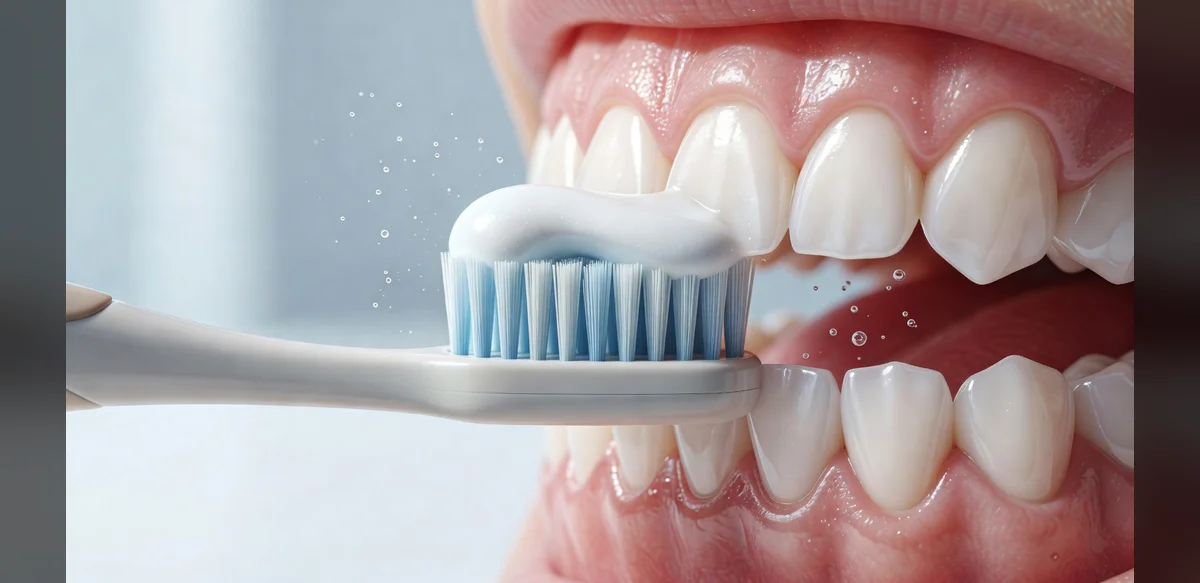
Periodontitis, a widespread issue, impacts more than just dental well-being. Experts at the Fraunhofer Institute have identified a substance that selectively inhibits the microbes causing this condition, without disrupting the overall mouth bacteria. This breakthrough has led to various dental hygiene items from the startup PerioTrap.
The mouth hosts over 700 bacterial species, yet only a few contribute to periodontitis. These problematic organisms accumulate in plaque near the gums, causing swelling known as gingivitis. Without intervention, it can advance to ongoing periodontitis, resulting in gum shrinkage and tooth detachment.
The dangers go further than oral issues. Pathogenic bacteria entering the blood may contribute to disorders like diabetes, rheumatoid conditions, arthritis, heart problems, persistent gut inflammation, and Alzheimer’s.
Limitations of Standard Approaches
Common dental rinses with alcohol or chlorhexidine eliminate harmful germs but also destroy useful ones. Post-treatment, the mouth’s bacterial community must reform entirely. During recovery, aggressive species like Porphyromonas gingivalis often dominate again, favoring inflamed areas. Helpful bacteria reproduce more gradually, potentially causing an imbalance called dysbiosis and disease recurrence.
Targeted Inhibition of Problematic Germs
Scientists from the Fraunhofer Institute for Cell Therapy and Immunology IZI in Halle found a compound that affects only disease-causing agents, sparing the broader bacterial environment. Named guanidinoethylbenzylamino imidazopyridine acetate, it halts the proliferation of bacteria such as Porphyromonas gingivalis instead of eradicating them.
Stephan Schilling, leader of the institute’s molecular drug biochemistry and therapy development unit, notes: ‘Instead of eliminating gingivitis culprits, it curbs their expansion. They cannot produce toxins, enabling good bacteria to claim spaces otherwise unavailable. Thus, the compound collaborates with healthy microbes to gradually restore and maintain mouth bacterial equilibrium,’ Schilling states.
Turning Discovery into Dental Paste
The core method emerged from an EU-supported study with global collaborators. In 2018, Periotrap Pharmaceuticals GmbH launched in Halle to convert this finding into everyday dental aids. Partnering with Fraunhofer IZI and the Fraunhofer Institute for Microstructure of Materials and Systems IMWS, they formulated a toothpaste that aids the mouth’s bacterial balance.
‘The item aims to avert periodontitis. Similar to regular toothpaste, it includes polishing agents and fluoride for cavity prevention,’ says Mirko Buchholz, a company co-founder.
Addressing Formulation Hurdles
Converting the substance into a practical component involved thorough evaluations. The end result had to suppress harmful germs reliably while being suitable for routine application. It needed to avoid toxicity, blood absorption, or tooth staining.
Fraunhofer IZI team members performed biochemical and structural analyses to comprehend the compound’s mechanism and refine the mixture. ‘This helps us understand the agents’ functions and establish the ideal blend of active elements in the toothpaste,’ Schilling describes.
Assessing Safety and Performance
Fraunhofer IMWS assisted by analyzing how various mixtures affect teeth and gums. Employing techniques like scanning electron microscopy and chemical assessments, they scrutinized compatibility and efficacy closely.
As Andreas Kiesow, manager of the medical and cosmetic product characterization group, says: ‘Scanning electron microscopy, chemical profiling, and quantitative data let us form precise insights on a material’s suitability and operation. Essentially, we determine if the toothpaste is effective.’
Adhering to Standards and Upcoming Items
All assessments complied with Good Laboratory Practice (GLP) protocols, aligning outcomes with rigorous domestic and global criteria. ‘Following GLP was crucial to the effort. We not only created an effective toothpaste with a novel component: we produced a premium dental care item meeting medical benchmarks,’ Schilling affirms.
Development of the technology persists. Beyond toothpaste, the researchers and PerioTrap group have crafted a gel for use following professional cleanings to inhibit harmful germs, promote a balanced microbiome, and maintain oral health.

