


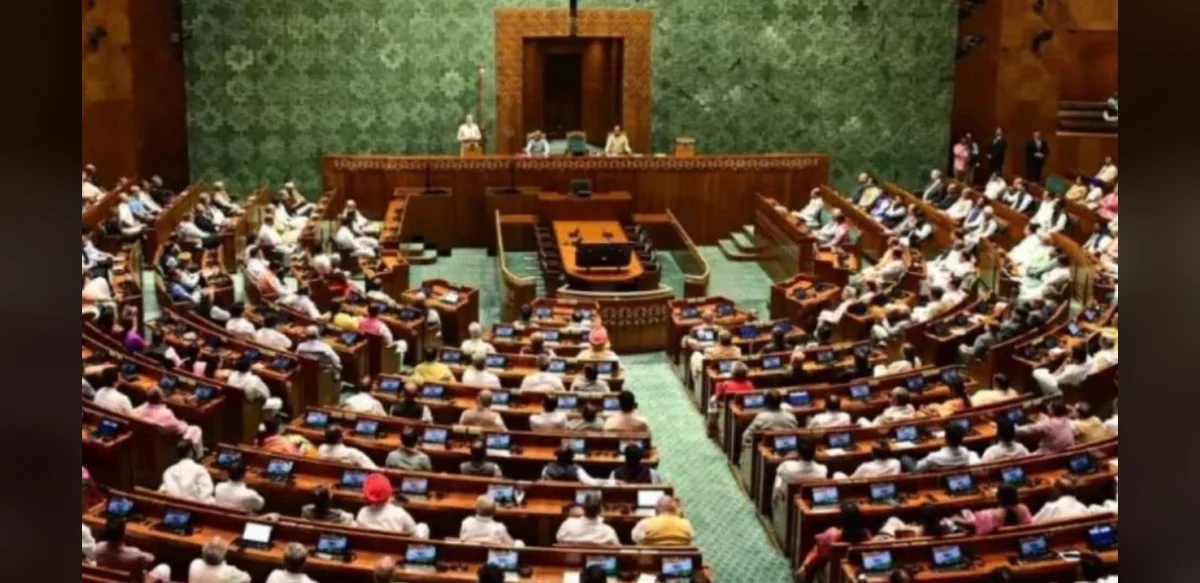
The rejection of the Constitution (131st Amendment) Bill, 2026, in the lower house of India’s parliament last Friday, along with the related bills on delimitation and union territories, does not resolve the ongoing dispute over constituency redrawing. Instead, it merely postpones the issue for another year. These measures aimed to accelerate the women’s reservation policy and apply it in an enlarged assembly.
In 2001, under the administration led by Atal Bihari Vajpayee, constituency adjustments were halted for 25 years through a change to Article 81, maintaining seat allocations among states based on the 1971 census data.
Article 81(3) defines ‘population’ as figures from the most recent census with published data. However, until results from the initial census post-2026 are released, it refers to the 1971 census for interstate seat distribution and the 2001 census for intrastate boundaries.
Article 81(2)(a) addresses how seats in the lower house are assigned to states, ensuring a consistent ratio of seats to population across them, fixed at 1971 levels.
Article 81(2)(b) covers the division of constituencies within states, aiming for uniform population-to-seat ratios, frozen at 2001 levels.
Under the current Article 81, without another extension of the interstate freeze before the current census data emerge, the hold will end automatically. Future redrawing would then use the latest population statistics, significantly altering state shares. This could disadvantage places like Kerala and Tamil Nadu while benefiting Uttar Pradesh, Bihar, Rajasthan, Gujarat, and Maharashtra, due to shifts in population ratios since 1971, upholding the principle of equal vote value.
A government announcement on December 12, 2025, outlined the census in two stages: houselisting from April to September 2026, followed by population counting in February 2027, with adjustments for certain regions. Data might be ready by late 2027, marking the first post-2026 census.
Experts, including senior lawyer Vikas Singh and former parliamentary official P D T Achary, noted to a major newspaper that without an extension, the freeze will lift once new census figures are out.
Southern states like Tamil Nadu may soon urge the central government for a new constitutional change to prolong the freeze, similar to those in 1976 and 2001. This time, the ruling party’s partner, the Telugu Desam Party, might align with them in this demand.

