


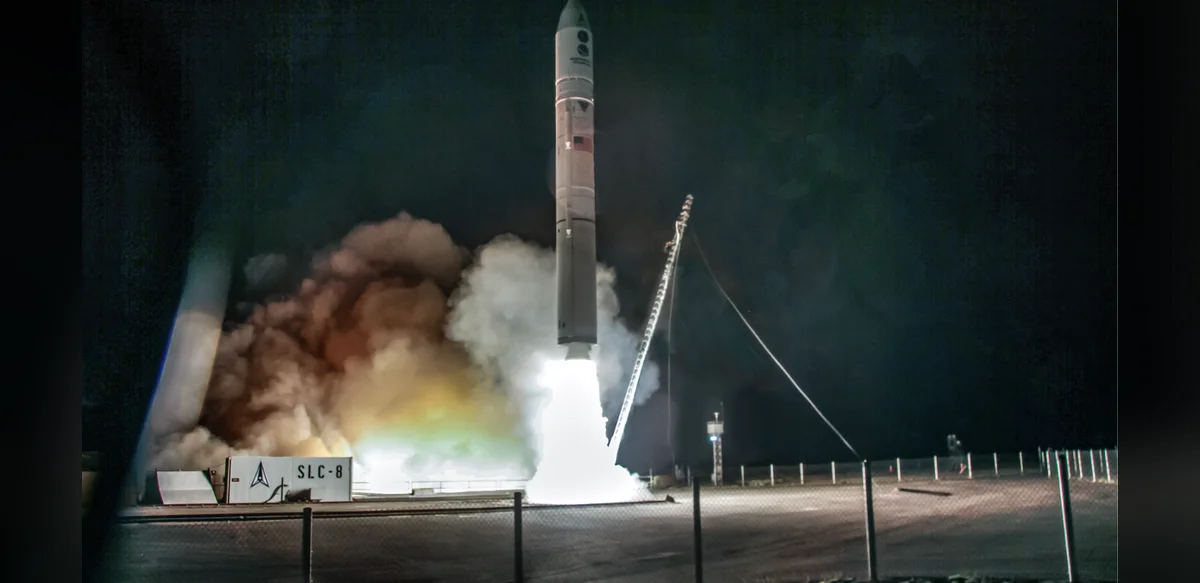
NASA has launched a new small-satellite project called CANVAS, which stands for Climatology of Anthropogenic and Natural VLF wave Activity in Space. This initiative explores how very-low-frequency radio waves interact between Earth and space. The 4U CubeSat lifted off on April 7, 2026, aboard a Minotaur IV rocket from Vandenberg Space Force Base. Equipped to detect signals from lightning and ground transmitters, it tracks energy movement from the ionosphere to the magnetosphere. The project aims to deepen understanding of space weather near Earth.
Project Details and Equipment
As described by NASA, the CANVAS CubeSat operates in low Earth orbit to monitor very-low-frequency radio waves produced by natural lightning and human-made sources. It features a three-axis magnetometer and a two-axis electric field sensor. These tools capture the magnetic and electric aspects of the waves, assessing their strength and path. By correlating this information with data from terrestrial lightning monitoring, the mission will create a worldwide overview of VLF wave behavior.
Importance and Potential Uses
The CANVAS effort will analyze how lightning and synthetic VLF signals affect the space environment close to Earth. These waves penetrate the magnetosphere, scattering electrons in the Van Allen belts that encircle the planet. Results could improve space weather forecasting models, aiding in the protection of satellites and the well-being of space travelers. Over its planned one-year duration, the satellite will collect global data on VLF activity.

