


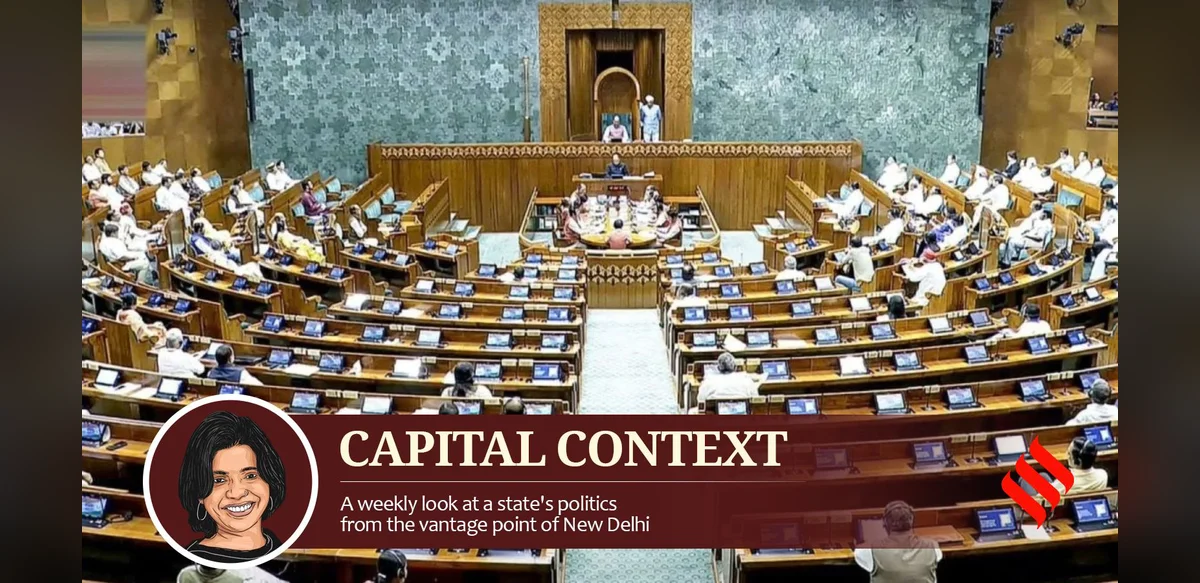
During a Lok Sabha session, Samajwadi Party leader Akhilesh Yadav sharply dismissed a proposal from Union Home Minister Amit Shah. Shah suggested halting proceedings briefly to introduce an amendment increasing state seats by 50%. Yadav stated that even a written commitment from the BJP to appoint a female Prime Minister would not inspire confidence, based on their 11 years in power. This exchange underscores the current political climate, where a significant lack of trust undermines conventional approaches to resolving disputes, despite differing views across parties.
Experienced parliamentarians recall a reliable informal system between governing and opposition groups that facilitated consensus on key national matters, such as seat redistribution. A senior BJP figure noted that in 2001, prior to the delimitation process, extensive talks occurred between leaders like then-Prime Minister Atal Bihari Vajpayee, Home Minister L.K. Advani, and Congress figures including Pranab Mukherjee. Decisions emerged from negotiations, but such channels have now collapsed.
A senior Congress representative highlighted the absence of adequate government communication or preliminary talks, even for major reforms. They criticized the BJP for forcing through laws, relying on its perceived majority despite losses in the 2024 elections, and favoring a centralized system over federal principles, with the Prime Minister holding ultimate authority.
The special Budget Session segment aimed to accelerate the women’s reservation law enacted in September 2023, involving 103 MPs in discussions. Ultimately, the NDA could not secure the two-thirds majority needed for the Constitution (One Hundred and Thirty-First Amendment) Bill, 2026, which accompanied measures on seat redistribution and union territories to enable women’s quotas in an enlarged assembly. This failure exposed growing divisions.
In retaliation, the BJP plans a broad initiative accusing the opposition of opposing women’s interests. However, opposition parties argue this tactic will falter due to concerns over seat redistribution, seen as a ploy to undermine federal equilibrium under the guise of women’s empowerment, and disapproval of how the government introduced the bills.
Akhilesh Yadav’s parliamentary comment, echoed publicly, aligned with actions by Tamil Nadu Chief Minister and DMK leader M.K. Stalin. In an extensive statement, Stalin outlined his party’s stance, urging immediate women’s reservation implementation while expressing worries about delimitation’s fairness, particularly for southern states. He called for consultations and consensus, suggesting the bill could have been separated from delimitation issues, but the NDA opted against it.
Events preceding the special session fueled opposition suspicions of widening mistrust. On March 22, amid the Budget session, Amit Shah contacted opposition leaders to explore expediting women’s reservation for the 2029 elections. Several parties declined, requesting an all-party gathering instead. Attendees listened but demanded further talks post-April 29, after West Bengal voting. Yet, the government scheduled the April 16-18 session and shared draft bills viewed by opponents as efforts to reshape the constitutional framework rather than solely advance women’s rights.
The government’s Lok Sabha setback is anticipated to influence politics broadly, with early effects in election-bound West Bengal and Tamil Nadu.

