


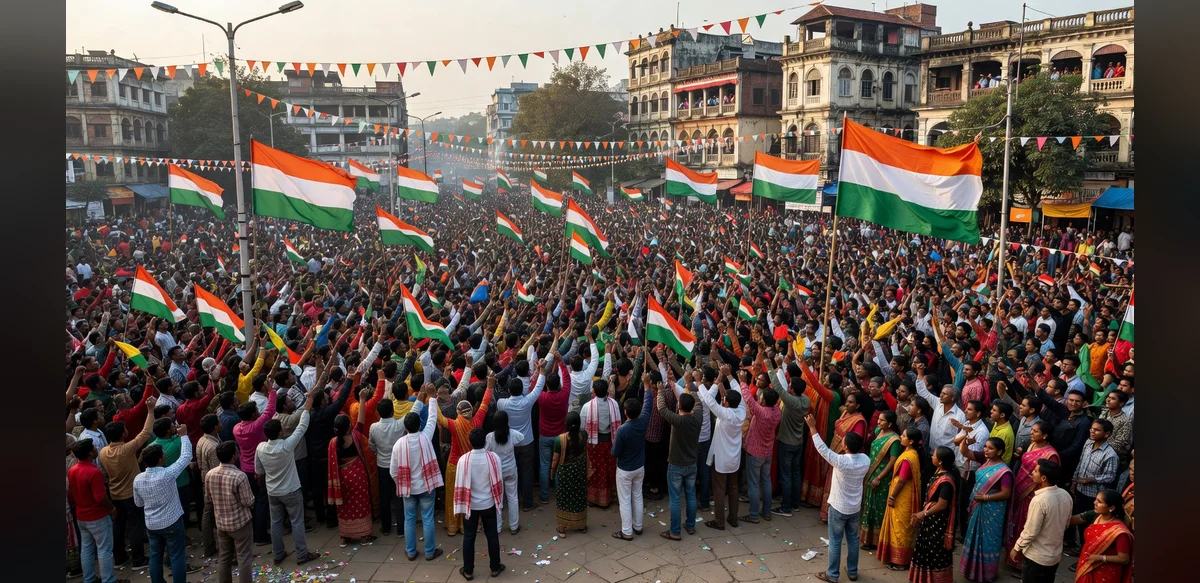
On August 31, 2025, large crowds of Bengali residents gathered at Rangirkhari in Silchar, Assam, to see Chief Minister Himanta Biswa Sarma. The Assamese-speaking leader received an exceptional level of support and affection, marking a historic moment in the state.
This event was more than a routine political appearance; it signified the erosion of the deep-rooted ethnic tensions between Assamese and Bengali Hindus.
Sarma has gained recognition as a unifying figure, akin to a ‘maternal uncle,’ for young people in both the Assamese-majority Brahmaputra Valley and the Bengali-majority Barak Valley. Such unity would have been unthinkable in politics just decades earlier.
Historical context reveals key events shaping relations between Bengalis and Assamese: the 1905 Partition of Bengal, the 1947 Partition of India, and the 1971 Bangladesh Liberation War.
Despite shared elements in food, script, and traditions, large-scale migrations and demographic shifts have fueled conflicts between the groups.
The partitions of 1947 and 1971 prompted significant influxes of Bengali Hindu refugees into Assam, escaping religious persecution in what became East Pakistan and later Bangladesh.
Migration persisted post-1971, heightening disputes with local Assamese over land, resources, and political influence.
From the 1950s to the 1980s, these tensions escalated into widespread violence and riots centered on language issues.
Certain political entities exacerbated divisions, promoting discord to fragment Hindu voters along Assamese and Bengali lines.
Sarma has disrupted strategies that divided Assamese and Bengali Hindus.
These groups often courted Bengali Muslim migrants from East Pakistan and Bangladesh, who entered Assam unlawfully for economic reasons, intensifying demographic pressures.
The tactic involved pitting Assamese and Bengali Hindus against each other on issues of language and identity, while unifying the ‘Miya’ vote—referring to Bengali Muslims from those regions—to secure electoral victories.
Consequently, ethnic frictions were sustained through inflammatory statements, policies, and rhetoric. This dynamic shifted when the BJP assumed power in Assam in 2016, initially under Sarbananda Sonowal and more assertively under Sarma.
A novel strategy emerged, distinguishing between Bengali Hindu refugees fleeing persecution and Bengali Muslim economic migrants. Public communications highlighted the differences in their impacts on demographics.
It was emphasized that equating those seeking religious safety with those migrating opportunistically after creating an Islamic state was unjust.
The Assamese Hindu population, previously led to view Bengali Hindus as adversaries by political actors, has rejected this narrative.
Under Sarma’s guidance, longstanding divisive propaganda has been dismantled. The state now identifies illegal immigrants arriving after March 24, 1971—the Assam Accord’s cutoff—as the primary concern, due to their economic motivations and cultural effects.
Bengali communities have embraced Sarma, who clearly separates infiltrators from refugees. Bengali Hindus, who sacrificed homes and wealth to preserve their faith, are receiving acknowledgment.
The chief minister has stated that no Bengali Hindu will be labeled a foreigner or face mistreatment. In September of the previous year, he noted that Hindu Bengalis arriving before 1971 are not suspects, and the Citizenship Amendment Act does not apply in Assam.
When the 2019 draft National Register of Citizens in Assam was released, it omitted approximately 12 lakh individuals.

