


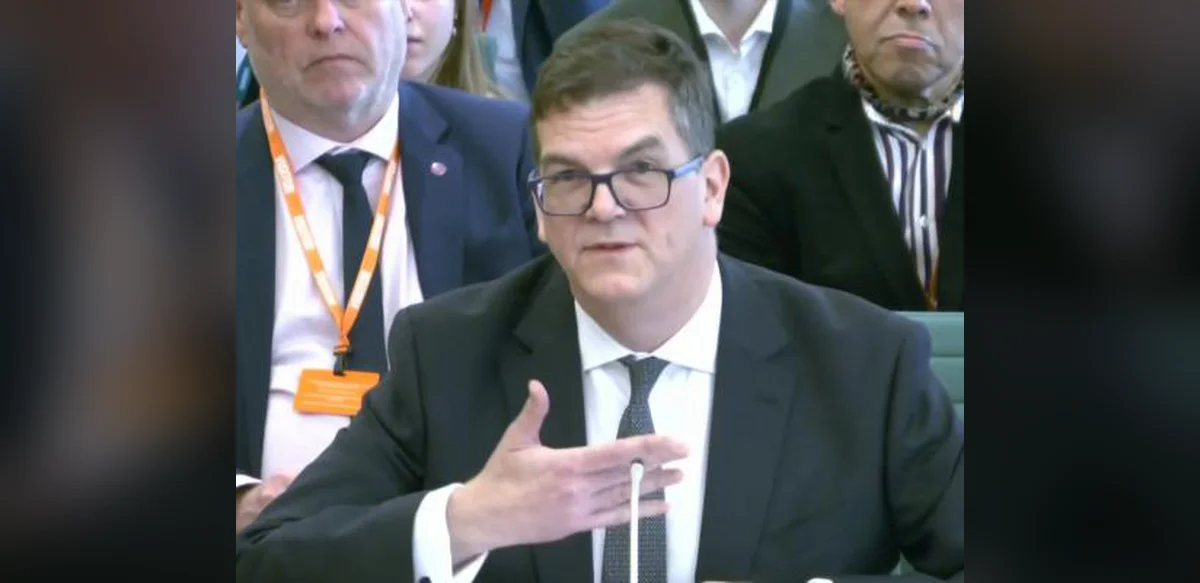
A dismissed civil servant has provided a critical assessment of the current administration, claiming that the prime minister’s office exerted significant influence on the civil service to approve Peter Mandelson’s nomination as ambassador to Washington, despite reservations from security evaluators. Olly Robbins, previously a senior figure at the Foreign Office, described the prime minister’s office as having a casual approach to security checks. He noted that Mandelson received entry to the Foreign Office premises and access to sensitive materials prior to obtaining official clearance.
During an extensive session lasting over two hours before the foreign affairs select committee, Robbins explained that the prime minister’s office fostered an environment of intense expectation, rendering it challenging to reject clearance for Mandelson, whose appointment had already been publicly declared. He also verified ongoing disagreements among high-level officials, including in the Cabinet Office, about disclosing records related to Mandelson’s evaluation via a parliamentary procedure, as previously reported.
Keir Starmer faces mounting criticism over the controversy surrounding Mandelson, including from members of his own cabinet. Energy Secretary Ed Miliband, a former Labour leader, publicly agreed that the appointment was inappropriate. Labour parliamentarians have expressed dismay at Starmer’s choice to place someone with Mandelson’s background in a key diplomatic role, suggesting his position as leader may be precarious.
The Intelligence and Security Committee, currently examining numerous files from Mandelson’s tenure in Washington, has obtained some vetting details, such as a brief overview of his personal, financial, and professional affairs. However, the committee is reportedly dissatisfied with the absence of essential records concerning Robbins’ reversal of a denial recommendation from UK Security Vetting and the lack of documentation from important discussions.
The committee’s review is anticipated to wrap up soon, after which the Cabinet Office will review and edit the materials. This means the documents will not be made public before parliament adjourns next week for the upcoming May elections, potentially prolonging the issue.
In the detailed hearing, Robbins informed lawmakers that he approved clearance without full knowledge of the security risks associated with the Labour peer. He did not review the UK Security Vetting form, which indicated high concerns and recommended denial, nor was he informed of its specifics. Additionally, the prime minister’s office sought a prominent diplomatic position for another close associate, Matthew Doyle, and instructed Robbins to withhold information from then-Foreign Secretary David Lammy.
Robbins stated he did not inform Starmer, Lammy, or others in the prime minister’s office about the denial recommendation, only confirming approval, which supports the prime minister’s assertion of unawareness. He described entering a scenario with strong demands for Mandelson to assume the role swiftly.
Denying clearance would have been extremely challenging, Robbins said, given the public announcement, royal approval, and agreement from the U.S. government. He attributed the pressure primarily to the prime minister’s private office, composed of civil servants, but suggested they were likely responding to higher directives.
Starmer responded later that day, describing Robbins as principled and professional but acknowledging a misjudgment. The prime minister’s office rejected claims of a lax stance on vetting. Darren Jones announced an investigation into leaks related to prior disclosures. Following the session, committee chair Emily Thornberry supported Robbins’ dismissal, expressing sympathy but affirming the decision.
Starmer had selected Mandelson for the position before Robbins began his role at the Foreign Office.

